
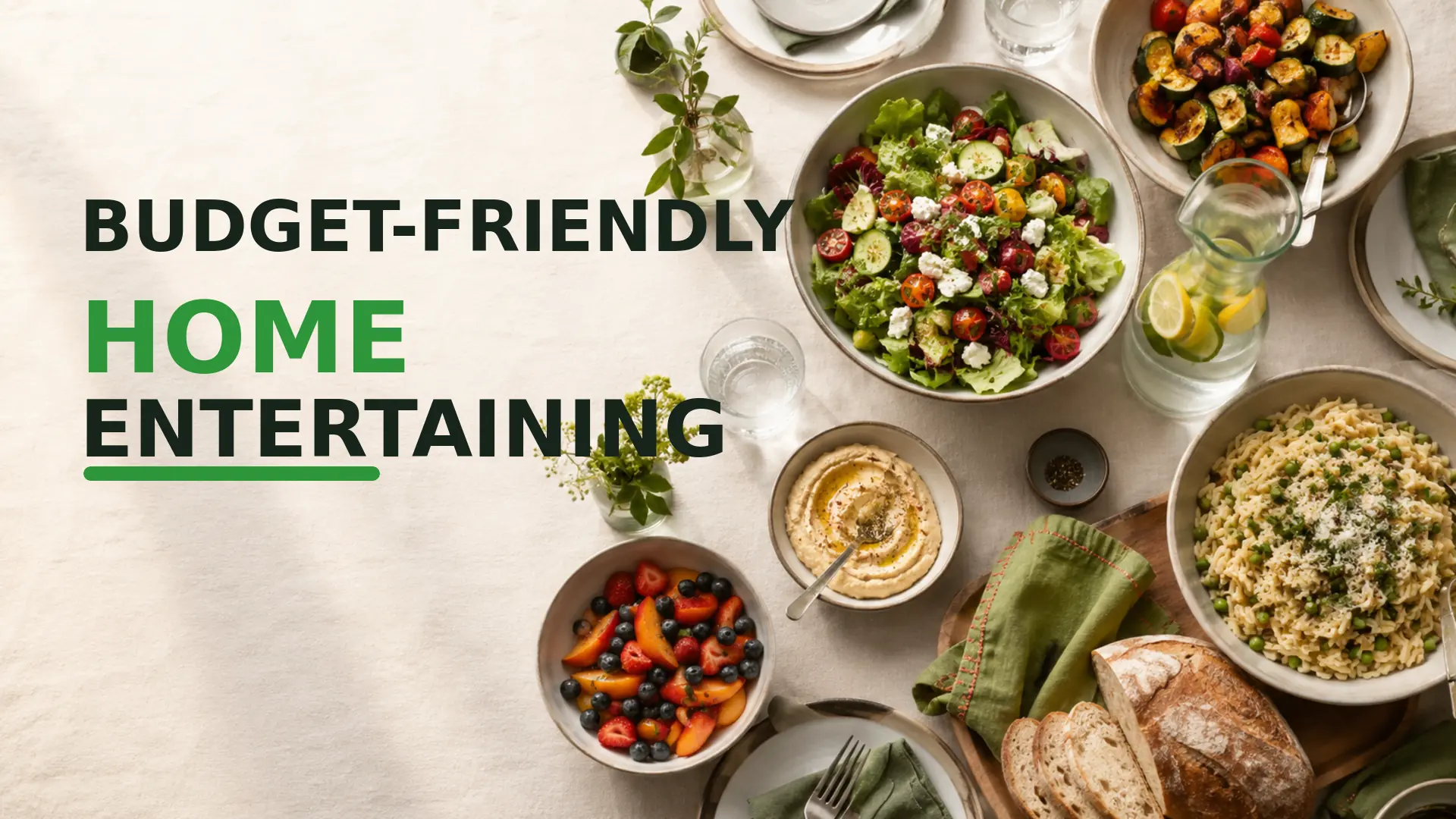
Budget-friendly entertaining at home does not require a fixed per-person target, a luxury menu or matching tableware. Start with the number of guests, dietary needs, your available time and a spending limit that works in your area. Then build one flexible menu around ingredients you can prepare confidently and serve family-style.
Food prices, package sizes and expectations vary, so there is no universal amount that feeds every group. A practical gathering balances enough food with sensible quantities, a few appealing choices and a plan for leftovers. Hospitality comes from making people comfortable—not from proving how much you spent.
Set a realistic home-entertaining budget
Choose a total amount before designing the menu. Separate food, drinks and non-food items so decorations or disposable supplies do not quietly consume the grocery budget. Check what you already have, including oils, spices, serving dishes, napkins and beverages.
- Guest count: confirm adults, children and tentative attendees.
- Dietary needs: ask about allergies, intolerances, religious requirements and other restrictions.
- Meal format: decide whether this is a full meal, brunch, snacks or dessert.
- Time: include preparation, cooking, cleanup and last-minute tasks.
- Contingency: leave a small amount for a missing ingredient or extra guest.
Choose one simple entertaining format
A coherent menu is usually easier to shop for than many unrelated dishes. Family-style meals, soup-and-bread suppers, pasta dinners, grain bowls and baked-potato bars can all scale, but the best choice is one that suits your guests and equipment.
A build-your-own meal can accommodate preferences when components are clearly separated. It is not automatically cheaper, though: too many toppings can increase both cost and waste. Limit the selection to a base, one or two main options, several vegetables, a sauce and an optional garnish.
Build the menu around a reliable main dish
Pick the main dish first, then add sides that share ingredients. A pasta dish with beans or meat can use the same herbs and vegetables as a salad. A soup can share bread and toppings with an appetizer. Overlap reduces the number of packages you must buy and makes leftovers easier to use.
For seasonal ideas, use this guide to buying seasonal groceries, while remembering that seasonal availability and prices differ by region.
Use a scalable quantity method
Begin with your normal household portions rather than a universal catering formula. Multiply by the number of guests, then adjust for the event: people may take smaller amounts when several dishes are offered, while a long gathering may need more food. Account for children, appetites, dietary substitutions and whether guests are arriving after another meal.
Write quantities beside every item on the grocery list. The principles in this guide to scaling portions and managing produce can be adapted for a larger table.
Plan for dietary needs without duplicating the menu
Ask guests directly rather than guessing. When possible, choose a main structure that most people can share and keep restricted ingredients separate. Label dishes or explain ingredients, use clean utensils, and understand that severe allergies may require more careful preparation than a home kitchen can reliably provide.
Do not present a dish as allergen-free unless you can control ingredients and cross-contact. If you are unsure, discuss safe options with the guest before the event.
Create a focused grocery list
Organize the list by menu component and store section. Mark what is already available, the required quantity, acceptable substitutions and which items can be purchased early. A reusable shopping-list template can be adapted for event planning.
- Main dish ingredients
- Vegetables and salad components
- Bread, grains or potatoes
- Sauces, seasonings and garnishes
- Drinks and ice
- One dessert or fruit option
- Storage containers or other genuinely needed supplies
Compare costs by usable quantity
Check unit prices, but do not buy a larger package unless the extra amount has a purpose. Compare fresh, frozen and shelf-stable formats based on the recipe, storage and expected use. Store brands and bulk packages may offer value, but neither is guaranteed to be cheaper.
If an ingredient is unusually expensive, replace it with something that plays the same role. Swap a costly garnish for herbs already used elsewhere, choose a local vegetable instead of an imported one, or simplify the menu rather than reducing essential portions.
Make drinks simple and inclusive
Water should be easy to find throughout the gathering. One alcohol-free pitcher drink—such as infused water or lightly flavoured sparkling water—can add a welcoming touch without requiring a full beverage station. If alcohol is served, offer appealing non-alcoholic choices and consider local laws, transportation and guest preferences.
Use a practical preparation timeline
Choose dishes that distribute the work. Shop for shelf-stable items early, prepare suitable sauces or desserts in advance, and leave only a few tasks for the final hour. Avoid trying several unfamiliar recipes at once.
- Several days before: confirm guests, menu and dietary needs.
- One or two days before: shop and complete make-ahead tasks.
- Event day: cook the main dish, prepare delicate items and set out serving utensils.
- Before serving: check safe temperatures and refrigerate foods that should remain cold.
Keep food safe during the gathering
Wash hands and surfaces, keep raw foods separate from ready-to-eat foods, cook foods to safe internal temperatures and avoid leaving perishable dishes at unsafe temperatures. Use smaller serving dishes that can be replenished from refrigerated or heated food when a meal will last for an extended period.
For balanced meal-planning context, Canada-based hosts can consult Canada’s Food Guide; readers elsewhere should use their national public-health and food-safety guidance.
Welcome contributions without making them mandatory
If guests ask what they can bring, offer specific optional choices such as bread, fruit, dessert or a preferred beverage. Avoid assigning costly items or assuming everyone has time to cook. A gathering can also be planned as a potluck when that expectation is communicated clearly from the beginning.
Plan for leftovers before guests arrive
Clear refrigerator space and prepare shallow containers before serving. Cool and store leftovers promptly, label them and decide which foods can become lunch, a second dinner or freezer portions. This guide to repurposing leftovers offers flexible next-meal ideas.
Finish with a relaxed, budget-friendly plan
Budget-friendly entertaining at home works when the menu, quantities and workload match the gathering. Set the budget first, choose one scalable format, coordinate dietary needs, keep drinks simple and prepare in stages. Guests are more likely to remember a comfortable shared meal than an expensive ingredient list.
Frequently Asked Questions
How do I entertain guests at home on a small budget?
Set the total budget first, choose one scalable meal format, limit the number of dishes, and concentrate spending on food guests will actually eat. Comfort and organization matter more than an elaborate menu.
What inexpensive meals work well for a group?
Chili, curry, baked pasta, tacos, grain bowls, soup with bread, and sheet-pan meals can scale efficiently. Select a dish you have cooked before and price it using local ingredients.
How much food should I prepare per guest?
Base quantities on the menu, event length, guest ages, and whether other dishes are served. Use recipe yields and confirmed attendance, then add a modest buffer rather than doubling everything.
How can I handle dietary restrictions without cooking separate meals?
Ask guests privately in advance, choose a flexible base meal, label components, and keep allergen-sensitive foods separate. Do not promise allergen-free preparation if the kitchen cannot prevent cross-contact.
Is a potluck appropriate for budget entertaining?
Yes, when contributions are optional or coordinated respectfully. Give guests clear categories to prevent duplicates, and do not make attendance depend on bringing food unless the event is explicitly a potluck.
What drinks should I serve at a low-cost gathering?
Offer water and one or two simple inclusive choices, such as infused water, tea, or a batch nonalcoholic drink. If serving alcohol, provide nonalcoholic options and follow local laws responsibly.
How far ahead can party food be prepared?
It depends on the dish. Make a timeline for shopping, chopping, cooking, chilling, and reheating, then follow trusted food-specific storage guidance rather than leaving all preparation for the event day.
How long can party food sit out safely?
FoodSafety.gov advises refrigerating perishable food within two hours, or one hour above 90°F (32°C). Keep hot food hot and cold food cold, and replace small serving dishes as needed.
How can I prevent expensive leftovers after entertaining?
Confirm attendance, avoid too many side dishes, use smaller serving trays, prepare a plan for freezing suitable foods, and have clean containers ready. Discard food that was not held safely.
What should be on a home-entertaining grocery list?
Organize the list by menu component and include quantities, drinks, ice, garnishes, storage containers, and dietary alternatives. Mark pantry items only after checking that enough remains.