
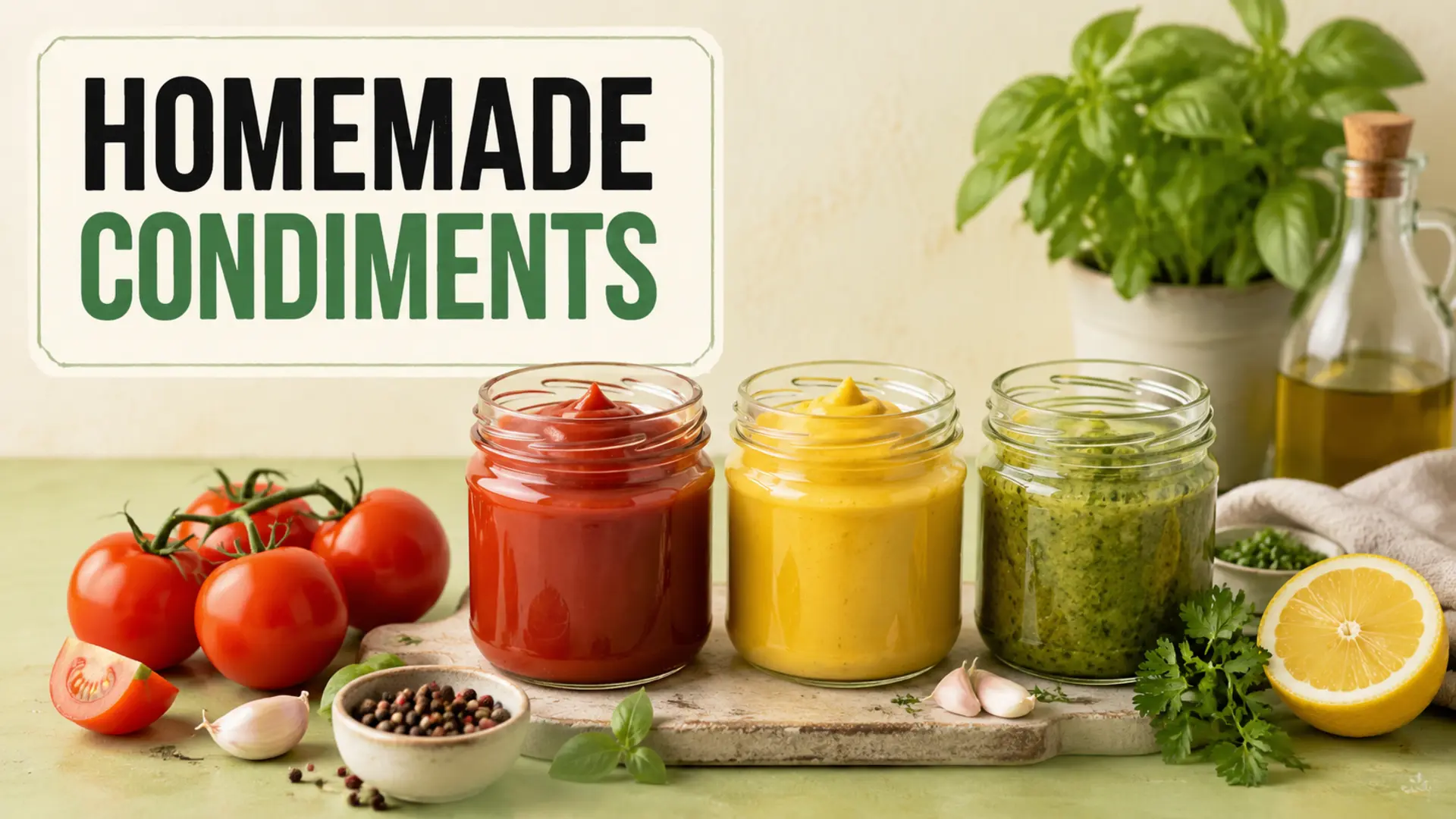
Homemade condiments let you adjust flavour, sweetness, salt, and portion size while using ingredients already in your pantry. They are not always cheaper than store-bought versions, but small batches can reduce half-used bottles and make weeknight meals more flexible. Start with simple formulas, taste as you go, and refrigerate perishable mixtures promptly.
Homemade condiments from flexible pantry staples
You do not need a cupboard full of specialty ingredients. Oil, vinegar or citrus, mustard, canned tomatoes, herbs, spices, yogurt, and a sweetener can cover many basic sauces. Check your pantry inventory first, then buy only the missing items.
Everyday vinaigrette
Whisk three parts oil with one part vinegar or lemon juice. Add a spoonful of mustard, salt, pepper, and dried or fresh herbs. Make only what you expect to use and shake again before serving.
Quick tomato barbecue-style sauce
Simmer canned crushed tomatoes with a splash of vinegar, a little sweetener, smoked paprika, garlic powder, and salt. Adjust the balance after the sauce thickens. This formula is easy to scale and works with ingredients commonly used in frugal pantry planning.
Yogurt and herb sauce
Combine plain yogurt with lemon juice, chopped herbs, black pepper, and a small pinch of salt. Use it as a dip, sandwich spread, or dressing. Keep it chilled and return it to the refrigerator promptly after serving.
Food safety and storage
- Use clean jars, utensils, hands, and work surfaces.
- Refrigerate mixtures containing eggs, dairy, fresh garlic, or cut produce.
- Label each container with the preparation date.
- Do not rely on appearance alone; discard a condiment if storage conditions are uncertain.
- For mayonnaise made with uncooked egg, use pasteurized eggs or egg products. FoodSafety.gov highlights this precaution, especially for people at greater risk of foodborne illness.
Storage time depends on ingredients, acidity, handling, and refrigerator temperature, so avoid a single blanket shelf-life claim. When in doubt, prepare a smaller batch.
Plan ingredients across several meals
Choose condiments that reuse ingredients from the week’s menu. Herbs can flavour a vinaigrette and yogurt sauce; canned tomatoes can become both sauce and soup. Our homemade broths and stocks guide offers another way to reuse kitchen staples.
Homemade condiments work best as a flexible meal-planning tool, not an all-or-nothing replacement for store products. Keep one or two reliable recipes, add their ingredients to your grocery list, and make only the amount your household can use.
Frequently Asked Questions
Are homemade condiments cheaper than store-bought versions?
They can be when ingredients are already used in other meals and the batch is finished. Include oil, spices, refrigeration, and discarded leftovers when comparing cost per usable serving.
What are the easiest condiments to make at home?
Simple vinaigrettes, yogurt-herb sauces, quick tomato sauces, bean dips, and small batches of flavored mayonnaise made with commercial mayonnaise are practical starting points. Choose recipes with familiar ingredients.
How long do homemade condiments last in the refrigerator?
There is no single timeframe. Ingredients, acidity, preparation, and contamination risk differ. Label the date, refrigerate promptly, follow a tested recipe, and discard the sauce when storage history is uncertain.
Can I safely preserve homemade condiments at room temperature?
Only use a scientifically tested canning recipe and process designed for that exact product and jar size. Refrigerator recipes should not be converted to shelf-stable products by guesswork.
Is homemade mayonnaise safe?
Recipes using raw or undercooked eggs carry a food-safety risk. Use pasteurized eggs or a tested method, keep it refrigerated, prevent cross-contamination, and serve vulnerable people only foods appropriate for them.
How can I keep vinaigrette from separating?
Separation is normal. Whisk or shake it before serving; mustard or another emulsifier can slow separation. Store it in a clean closed container and check ingredient-specific refrigeration needs.
Can homemade condiments reduce food waste?
Yes, when they use planned herbs, yogurt, citrus, or tomato products before spoilage and are made in a realistic quantity. Making too many sauces at once can create new waste.
What should I put on a homemade-condiment grocery list?
Choose one or two sauces for planned meals, then list exact amounts of oil, acid, aromatics, herbs, dairy, or tomato products. Favor ingredients that serve another meal as well.
How do I calculate cost per serving for homemade sauce?
Add the cost of each amount used, divide by the finished batch volume, then multiply by your usual serving size. Compare with the store product’s actual serving cost and likely waste.
When is buying a condiment the better choice?
Buy it when the recipe needs specialty ingredients, the household uses it slowly, safe storage is uncertain, or the commercial product offers consistent quality at a lower cost per eaten serving.