
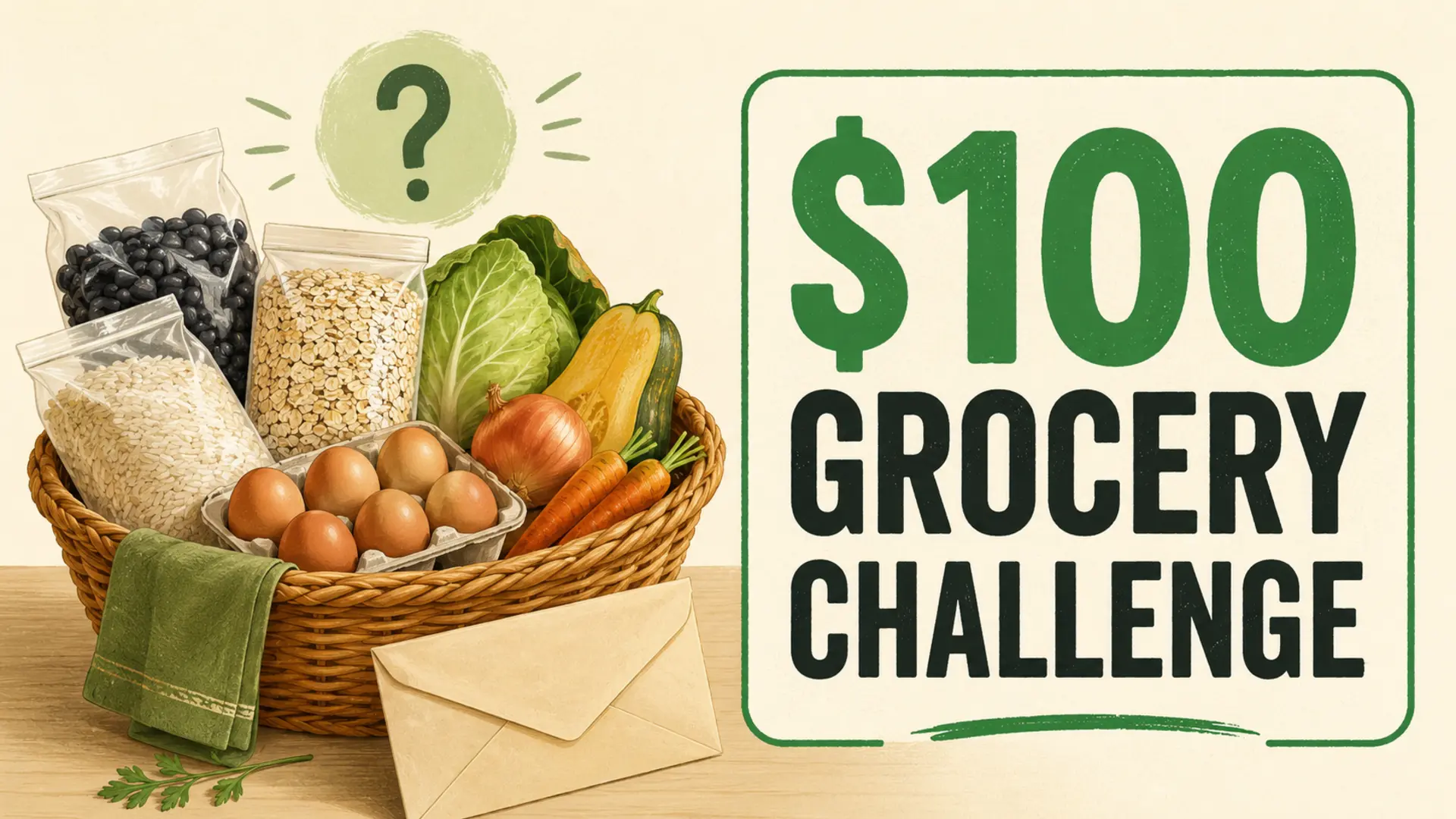
A $100 monthly grocery budget is an extreme target in many places and may not provide enough variety or nutrition for every person. Whether it is possible depends on local prices, household size, dietary needs, cooking facilities, existing pantry food, and access to assistance. Treat the idea as a budgeting exercise—not a universal recommendation or guaranteed meal plan.
Can a $100 monthly grocery budget work?
Start by dividing the total across the number of shopping periods in the month, then compare it with real prices at stores you can access. Include cooking oil, seasonings, beverages, and other basics that “cheap meal” estimates often leave out. If you already have pantry staples, separate their value from the new cash budget so the experiment remains honest.
Use a grocery price book or recent receipts rather than national averages. A fixed total can buy very different amounts depending on location and season.
Build an essentials-first list
A practical low-budget list usually combines several categories:
- Staple carbohydrates: oats, rice, pasta, potatoes, bread, or another locally affordable option.
- Protein foods: beans, lentils, eggs, canned fish, tofu, dairy, or suitable alternatives.
- Produce: seasonal fresh choices plus frozen or canned options without unnecessary waste.
- Flavour and cooking basics: oil, herbs, spices, onions, garlic, or sauces already used in your household.
Availability, allergies, medical needs, culture, and preference matter. Do not force a short generic list that does not work for the person eating it.
Test the budget before committing
- Plan one realistic week of meals.
- Price every ingredient and quantity.
- Check what is already at home.
- Identify substitutions before shopping.
- Track the final receipt and food left at week’s end.
Our reusable weekly shopping list can help organize the test. If produce waste is a concern, adapt ideas from the zero-waste produce challenge without copying its dollar target blindly.
Know when the target is too low
A grocery challenge should not require skipping meals, ignoring allergies, buying unsafe food, or eliminating medically necessary items. If the plan cannot meet basic needs, increase the budget where possible or look for community food programs and benefits in your area. Eligibility and services vary, so use official local resources.
Focus on learning, not a perfect number
The most useful outcome may be discovering which staples you use, which purchases create waste, and where flexibility matters. A $100 monthly grocery budget may be unrealistic for your circumstances, but the same process can still produce a more accurate and sustainable target. For a broader approach, see our guide to frugal pantry building.
Frequently Asked Questions
Is a $100 monthly grocery budget realistic?
For many people it is not. Feasibility depends on local prices, household size, dietary needs, pantry inventory, cooking access, and whether the amount excludes restaurant meals and household supplies.
What does $100 per month equal per week?
A calendar month averages more than four weeks, so a simple $25-per-week rule can run short. Divide the monthly amount across the actual shopping dates and keep a small reserve.
Can one person live on $100 of groceries for a month?
Some people with strong pantry supplies and low local prices may complete a temporary challenge, but it should not be treated as a universal healthy-food benchmark or proof that others overspend.
What foods belong on an essentials-first $100 grocery list?
Start with affordable staple grains, beans or lentils, eggs or another practical protein, vegetables and fruit, dairy or alternatives, cooking basics, and foods required for medical or cultural needs.
Should pantry food count toward the challenge?
Yes, if the purpose is honest budgeting. Record the food already available and the amount used; otherwise a well-stocked pantry can make a new-cash total look artificially low.
How can I test the budget before committing to it?
Price a complete week of realistic meals using current shelf prices, then multiply cautiously and account for irregular staples. Test for one shopping cycle without skipping needed food.
What costs are often excluded from grocery challenges?
Common omissions include cooking oil, spices, beverages, delivery fees, transportation, pantry carryover, food provided by others, supplements, and waste. Define the scope before comparing results.
How do I know the grocery target is too low?
The target is too low when it repeatedly causes inadequate food, missed dietary needs, dependence on credit, or unsafe substitutions. Increase it or seek assistance rather than treating deprivation as success.
Can food assistance be part of a realistic budget plan?
Yes. Eligible programs, food banks, campus services, and community resources exist to support adequate food. Using them should be recorded honestly, not treated as a failure of the challenge.
What is a better goal than hitting exactly $100?
Measure current spending, identify waste and low-value habits, and choose a sustainable reduction. A useful budget supplies enough appropriate food and can be repeated without crisis.