
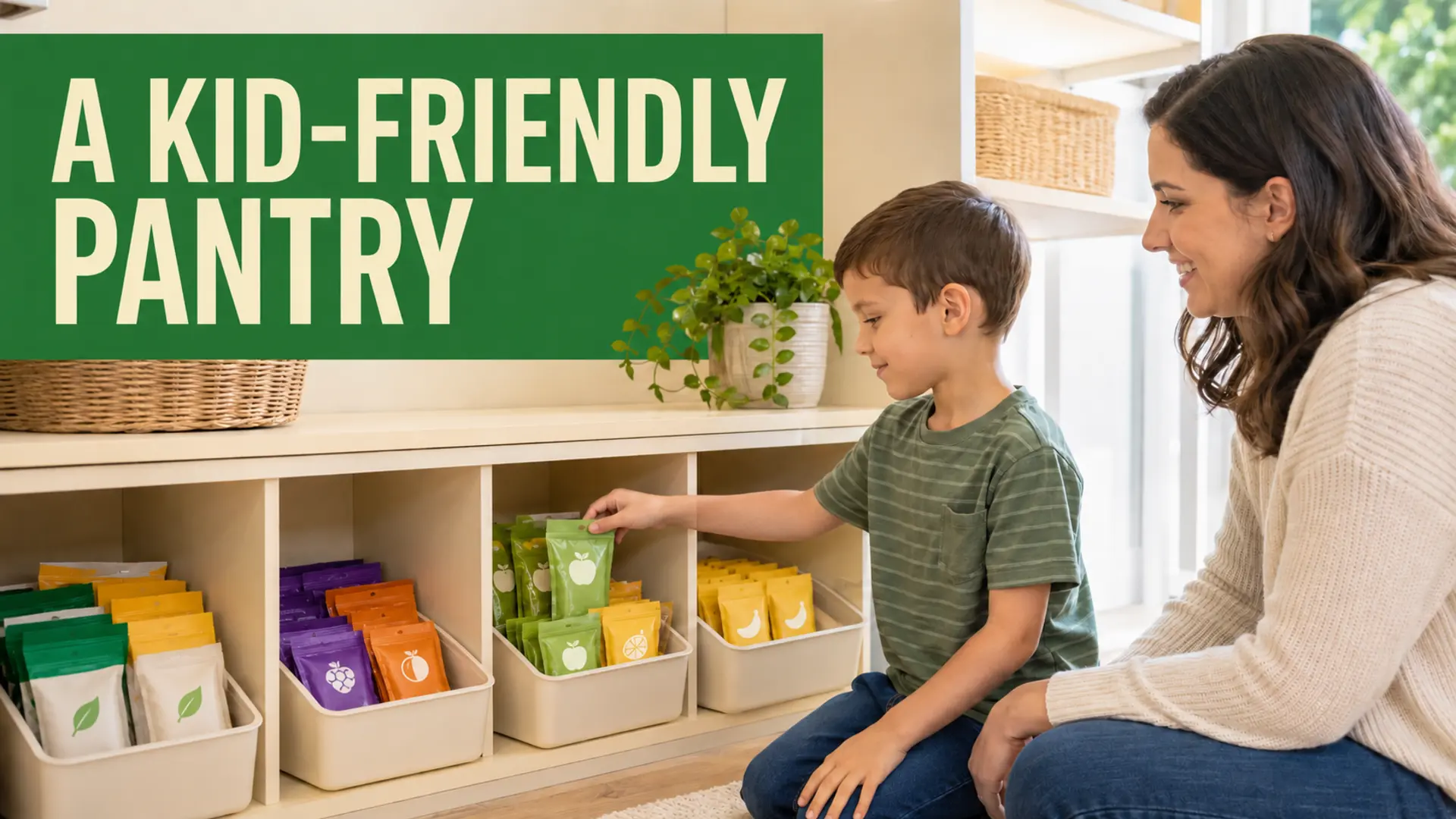
Kid-friendly pantry organization can help older children choose an approved snack or breakfast item while keeping adults in control of safety, portions, and restocking. The goal is not unrestricted access or complete independence. It is a clear, age-appropriate setup that lets children practice simple routines with suitable supervision.
Start kid-friendly pantry organization with safety
Before moving food to a lower shelf, look at the pantry from a child’s height. Keep medicines, vitamins, alcohol, cleaning products, sharp tools, appliances, matches, glass containers, and heavy cans inaccessible. The American Academy of Pediatrics advises storing dangerous cleaning products in a high, locked cabinet and keeping sharp kitchen tools separate from child-safe items.
Food choice also needs to match the child’s age and eating skills. The CDC identifies foods such as whole nuts, popcorn, spoonfuls of nut or seed butter, uncut grapes, hard pieces of raw fruit or vegetables, and some chewy foods as choking hazards for young children. Use current professional guidance and prepare foods in safe shapes and textures.
Choose one reachable self-serve zone
Dedicate one stable shelf or cabinet to foods the child may choose under your household’s rules. The correct height depends on the child and the room; avoid universal measurements. Children should not need to climb, stand on a chair, or pull down a heavy container.
- Use lightweight, shatter-resistant bins with smooth edges.
- Keep frequently chosen items toward the front.
- Do not stack heavy containers above the child-accessible area.
- Secure freestanding shelving to the wall where appropriate.
- Store anything requiring cooking or sharp utensils elsewhere.
Select suitable snacks and breakfast foods
Stock a small variety that reflects the child’s age, allergies, dietary requirements, and family routine. Shelf-stable options might include unsweetened fruit cups, suitable whole-grain crackers, or individually portioned cereal. Fresh fruit that stores safely at room temperature can sit in a separate basket.
Not every packaged snack belongs in a self-serve bin. Check allergen statements and consider choking risk, added sugar, sodium, and portion size in the context of the child’s overall diet. For more planning ideas, see the kid-friendly snack shopping guide and the nut-free school lunchbox checklist.
Use simple labels children can understand
Use a picture, color, or short word to show what belongs in each bin. Keep the system straightforward: one bin for snacks, one for breakfast foods, and perhaps one for items that must be paired with something from the refrigerator. Avoid complicated labels that require an adult to interpret every choice.
Labels are also useful during cleanup. A child who can recognize the bin can help return unopened items to the correct place and alert an adult when something is running low. Link this habit to a shared running-low checklist so restocking needs are captured before the next shopping trip.
Set clear boundaries for self-service
Decide when self-service is appropriate and explain the rule in plain language. One household might allow a choice after school; another may ask the child to check with an adult first. There is no universal “one-snack rule” or ideal time window. Match the routine to meals, appetite, medical needs, and advice from the child’s healthcare professional.
- Show which foods are available without extra preparation.
- Explain how many items may be chosen at one time.
- Ask children to sit while eating and avoid eating while walking or playing.
- Continue supervising younger children closely.
- Review the choices as the child grows and skills change.
Create a simple restocking routine
Keep only a manageable amount in the self-serve zone and store backups in an adult area. Before shopping, check dates, rotate older items forward, remove damaged packages, and add genuinely needed foods to the grocery list. This helps prevent duplicate purchases and keeps the shelf easy to scan.
Invite children to help with low-risk tasks such as matching labels, counting unopened packages, or placing lightweight items into bins. Participation can build familiarity without giving children responsibility for food safety or household nutrition decisions.
Adjust the pantry as your child grows
Kid-friendly pantry organization should evolve. A setup for an eight-year-old will differ from one for a toddler, and children with allergies, disabilities, or feeding concerns may need a customized approach. Reassess reach, food suitability, supervision, and storage whenever the household routine changes.
A useful self-serve pantry is small, safe, and predictable: approved foods in reachable shatter-resistant bins, dangerous items secured elsewhere, simple labels, and clear family boundaries. Those basics create room for age-appropriate independence without treating safety as an afterthought.
Safety resources: Review the CDC’s guidance on food choking hazards and the American Academy of Pediatrics’ kitchen-safety recommendations.
Frequently Asked Questions
What foods are safe in a self-serve pantry for kids?
Choose foods the child can chew safely and open without sharp tools: age-appropriate crackers, unsweetened cereal, fruit cups packed in juice, or other household staples. Avoid choking hazards for young children and keep foods requiring refrigeration out of a pantry bin.
At what age can children use a self-serve snack area?
There is no single age. Readiness depends on following rules, opening containers safely, recognizing permitted foods, and asking for help. Start with one or two supervised choices, then add independence gradually. Young children still need close supervision while eating.
How should I organize pantry shelves for children?
Create one clearly labeled reachable zone with a small number of approved choices. Keep heavy containers, glass, medicines, alcohol, cleaning products, sharp tools, and choking hazards locked or well out of reach. Store everyday adult ingredients separately to reduce confusion.
What snacks should be kept out of reach of toddlers?
Keep whole nuts, popcorn, hard candy, gum, large chunks of food, and other choking hazards inaccessible. The CDC’s choking-hazard guidance explains how food shape, size, and texture affect risk. Children should sit and be supervised while eating.
How can picture labels help a kid-friendly pantry?
A photo or simple icon helps a pre-reader identify categories and return items to the right bin. Pair the picture with the written word so the system grows with the child. Keep labels specific enough to distinguish “anytime snack,” “ask first,” and meal ingredients.
Should kids have unlimited access to the snack shelf?
That depends on age and household routine. Clear windows, such as one snack between meals, often work better than an unclear unlimited rule. Keep water accessible, explain which foods require permission, and coordinate with health professionals when a child has medical or feeding needs.
How do I portion bulk snacks for self-service?
Use small reusable containers or teach an older child to measure one serving into a bowl. Do not encourage eating directly from a large package, which makes quantity hard to notice. Label foods with allergen requirements and keep packages available when ingredient information is needed.
How often should a child-accessible pantry be restocked?
Check it on a set day, note what was eaten and wasted, and refill only the useful amount. Rotate older packages forward and check dates and package damage. A small selection refreshed weekly is easier to manage than an overfilled bin.
How do I prevent siblings from taking each other’s special foods?
Use separate labeled bins for allergy-safe, medical, school, or personal items, and explain why some foods are not shared. Color coding can help, but children should not be the only safety barrier. Adults must control storage and cross-contact risks when allergies are involved.
How should the pantry setup change as children grow?
Increase choice and responsibility in stages. A younger child may select from two bins; an older child can read labels, portion food, add items to the list, and help restock. Reassess hazards, reach, allergies, and household rules rather than treating the first setup as permanent.