
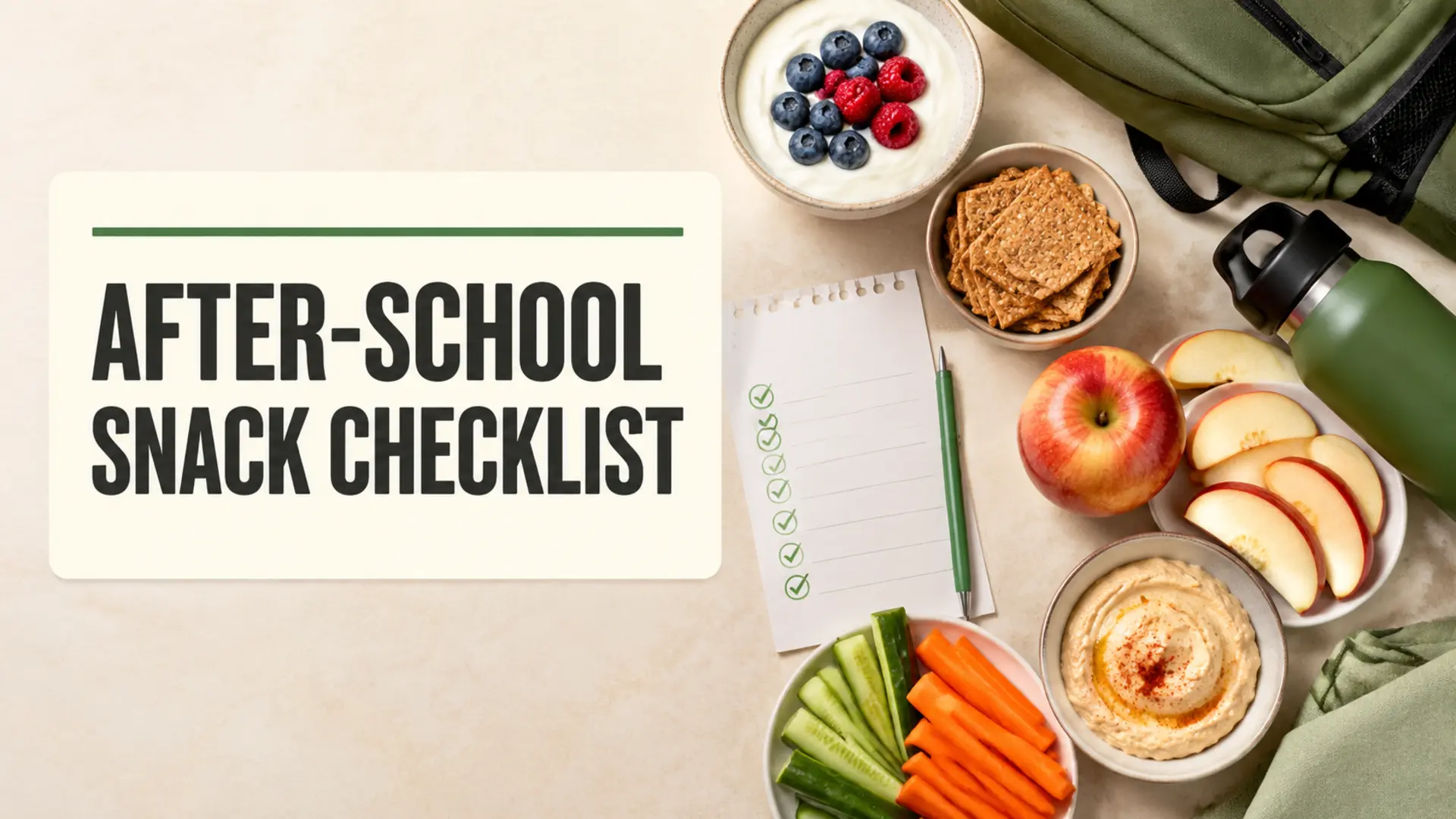
An after-school snack checklist makes it easier to keep practical choices on hand without turning every afternoon into a separate shopping decision. The goal is not a perfect formula or a rigid menu. It is a flexible mix of foods your child can eat safely, your household can store properly, and your schedule can support.
After-School Snack Checklist for the Grocery Store
Choose a few items from the categories below rather than buying every option. Start with foods your family already enjoys, then add variety gradually.
- Fruit: apples, pears, bananas, berries, oranges, melon, or unsweetened frozen fruit.
- Vegetables: cucumber, bell pepper, snap peas, carrots, cherry tomatoes, or vegetables your child prefers.
- Protein-rich options: yogurt, cheese, eggs, hummus, beans, tofu, seed butter, or nut butter where allergies and school rules allow.
- Grains and starches: whole-grain crackers, toast, pita, tortillas, oats, or lightly seasoned popcorn for children old enough to eat it safely.
- Drinks: water and, where appropriate for your family, milk or a suitable alternative.
Build Flexible Snack Pairings
A simple way to plan is to pair two familiar foods. Try fruit with yogurt, vegetables with hummus, toast with seed butter, or crackers with cheese. These are examples, not rules; appetite varies with age, activity, lunch timing, and the next meal.
Keep portions adjustable. A child who ate a late lunch may want something small, while a child coming home from sports may be hungrier. Offering a manageable starting portion with more available can reduce waste while respecting appetite.
Plan for Allergies and Age-Appropriate Textures
Read ingredient labels every time when managing a food allergy because recipes and manufacturing practices can change. Avoid cross-contact by using clean utensils, separate containers when needed, and the care plan provided by your child’s healthcare professional.
Food should also match the child’s chewing skills. The CDC’s choking-hazard guidance recommends changing the size, shape, and texture of certain foods for young children and supervising them while they eat. Whole nuts, popcorn, hard raw vegetable pieces, whole grapes, and spoonfuls of nut or seed butter may be unsafe for younger children. Follow current local health guidance for your child’s age and needs.
Choose Options That Fit Your Routine
Think about where the snack will be eaten. Home snacks can include foods that need a bowl, plate, or quick preparation. Snacks for activities, childcare pickup, or travel should be portable and easy to keep at a safe temperature.
- No-prep: a banana, a shelf-stable fruit cup, or crackers.
- Quick assembly: yogurt and berries, toast with seed butter, or cucumber with hummus.
- Make ahead: cooked eggs, bean-and-cheese tortilla wedges, overnight oats, or a family recipe portioned for later.
For more ideas that suit school restrictions, use the nut-free lunchbox shopping checklist.
Store Perishable Snacks Safely
Refrigerate perishable foods promptly and follow the storage directions on the package. If yogurt, cheese, eggs, cut produce, hummus, or cooked food will be away from refrigeration, carry it in an insulated bag with a cold source and discard food that has not been kept safely cold.
Wash produce under running water before preparation, use clean containers, and date make-ahead items. Keep allergen-specific foods clearly identified and stored according to your household’s safety plan. Canada’s Food Guide also offers broadly useful healthy snack planning ideas that can be adapted to local foods and preferences.
Create a Simple Self-Serve Zone
If your child is ready to choose independently, place approved items where they can reach them safely. A small refrigerator bin for chilled choices and a pantry basket for shelf-stable options can make the routine easier. Keep choking hazards, allergens, glass containers, sharp tools, and foods requiring adult preparation out of reach.
Our guide to kid-friendly pantry organization explains how to create a supervised self-serve area without giving unrestricted access to unsuitable foods.
Shop From What You Already Have
Before adding snacks to your grocery list, check the refrigerator, freezer, pantry, and fruit bowl. Use the most perishable items first, and buy quantities your household can reasonably finish. A short plan for three or four snack combinations is often more useful than a large assortment that goes uneaten.
When dinner planning is also busy, these five-ingredient family meal ideas can help you coordinate ingredients across snacks and meals.
A Practical Weekly Snack Routine
- Ask children which available options they actually enjoy.
- Check current supplies before shopping.
- Select a few fruits, vegetables, protein-rich foods, and grain choices.
- Prepare only what will keep safely for the next few days.
- Review what was eaten before repeating the list.
An after-school snack checklist works best when it remains flexible. Keep a small selection of familiar foods, plan for allergies and age-appropriate textures, store perishables safely, and adjust the next shopping list based on what your family used.
Frequently Asked Questions
What makes a balanced after-school snack?
A practical snack often pairs two food groups, such as fruit with yogurt, vegetables with hummus, whole-grain toast with egg, or crackers with cheese. Portion and energy needs vary by age, activity, dinner timing, and health needs, so treat these as flexible combinations rather than fixed prescriptions.
How many after-school snacks should I buy for one week?
Count the days children will be home, multiply by the number of children, then subtract sports, clubs, or caregiver days. Buy a modest backup rather than seven different choices. Review what was actually eaten before repeating the list to prevent stale packages and spoiled produce.
What are inexpensive after-school snacks?
Budget-friendly options include bananas, apples, seasonal fruit, oats, popcorn for children old enough to eat it safely, eggs, toast, canned beans, plain yogurt, carrots, and homemade trail-style mixes where allergies and age permit. Compare unit prices and portion bulk foods into reusable containers.
Which after-school snacks can children prepare themselves?
Depending on age and skill, children may serve washed fruit, yogurt, cheese, cereal with milk, prepared vegetables, crackers with hummus, or a pre-portioned snack box. Start with supervised practice, use safe containers, and keep knives, heat, heavy items, and choking hazards under adult control.
How can I plan snacks for a child with food allergies?
Read every label every time, keep safe foods clearly identified, prevent sharing, and manage cross-contact during storage and preparation. Follow the child’s written medical and emergency plan. Do not assume products described as school-safe or free-from are appropriate for every allergy.
What after-school foods are choking hazards for younger children?
Whole grapes, popcorn, whole nuts, hard candy, gum, chunks of meat or cheese, and thick spoonfuls of nut butter can be hazardous. Modify shape and texture using the CDC’s choking-prevention guidance, and supervise children while eating.
How do I keep after-school snacks cold until children get home?
Refrigerate perishable snacks promptly and use an insulated bag with cold packs if food travels. Keep the refrigerator at 40°F/4°C or below. Discard perishables left at room temperature for more than two hours, or one hour in temperatures above 90°F/32°C.
How can I create a self-serve after-school snack zone?
Place a small selection of approved pantry items in one labeled bin and refrigerated choices on an accessible shelf. Separate foods reserved for meals and allergy-safe items. Children should know portion, timing, cleanup, and “ask first” rules before using the area independently.
What snacks work before sports practice?
Choose familiar, easy-to-digest foods timed to the child’s needs, such as fruit, toast, yogurt, cereal, or a small sandwich, plus water. Avoid experimenting with unfamiliar products right before activity. Individual sports, medical conditions, and intensive training may require guidance from a qualified dietitian.
How do I stop children getting bored with the same snacks?
Keep a repeatable base and rotate one element: change the fruit, dip, bread, or yogurt flavour rather than buying many unrelated products. Let children choose two options for the week. Familiarity plus limited choice reduces waste while still providing variety.