
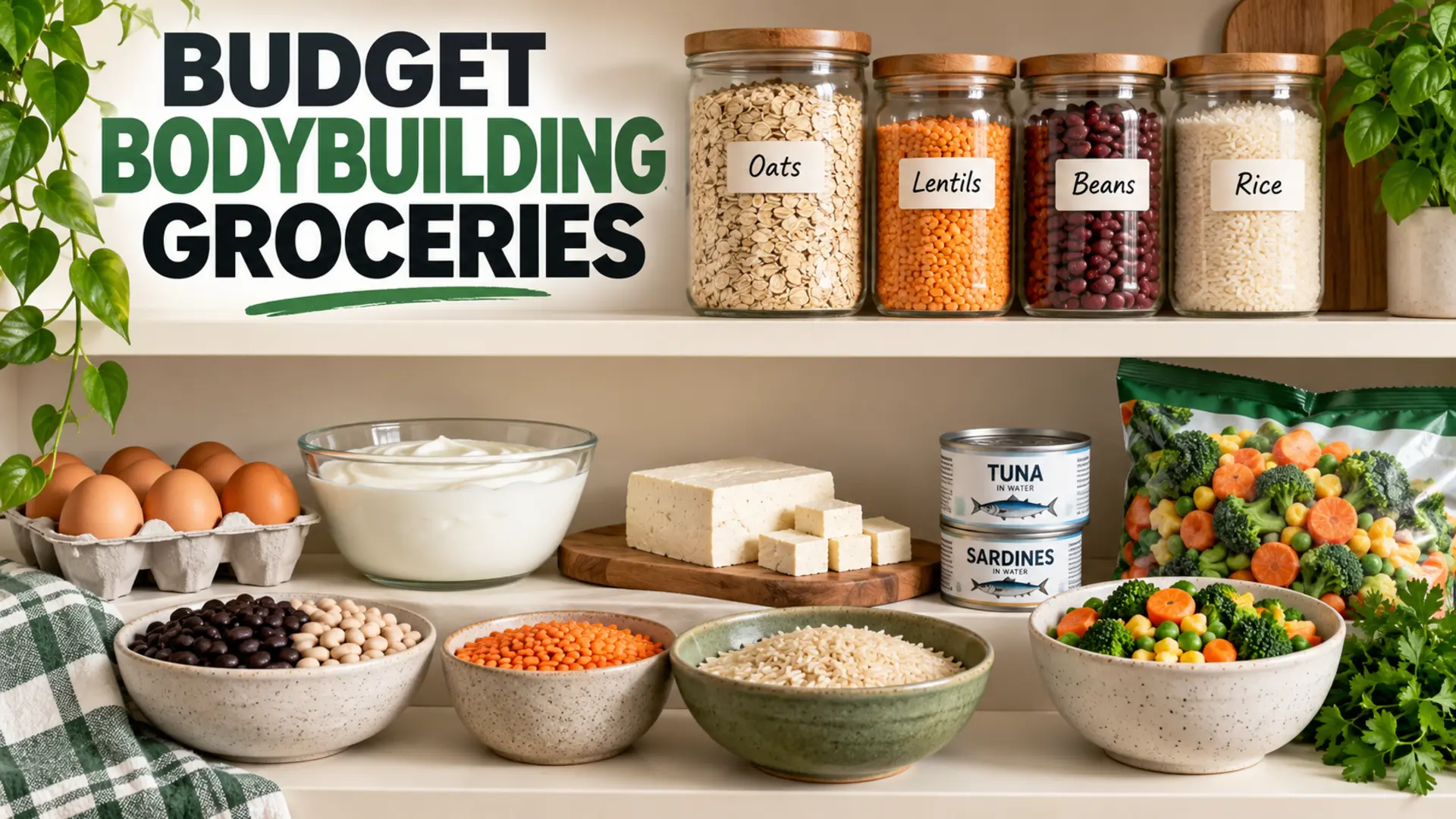
A budget bodybuilding grocery list should reflect local prices, body size, training demands, and cooking facilities. A fixed weekly dollar figure cannot buy the same foods everywhere, so focus on unit value, edible yield, and minimal waste.
Budget bodybuilding grocery list staples
- Protein: eggs, beans, lentils, tofu, yogurt, milk, canned fish, chicken, and other sale-priced foods.
- Carbohydrates: oats, rice, pasta, bread, potatoes, fruit, and legumes.
- Produce: frozen vegetables, seasonal produce, cabbage, carrots, and bananas.
- Fats and flavour: oils, nuts, seeds, peanut butter, herbs, spices, and sauces.
Compare cost per useful serving
Check unit prices but also consider bones, drained weight, spoilage, preparation time, and storage. Larger packages save money only when they can be used safely.
Prepare flexible meals
Rotate oats and eggs, rice-and-bean bowls, lentil pasta sauce, tofu stir-fries, yogurt snacks, and fish or chicken with vegetables. Protein targets are individual; a dietitian can help when precision matters.
Keep food safe
Cool cooked food promptly, refrigerate or freeze suitable portions, and transport perishables with cold packs. See the high-protein grocery checklist and store-comparison guide for more planning detail.
Conclusion
Affordable training meals come from repeatable staples and sensible storage—not a universal price promise or supplement-heavy plan.