
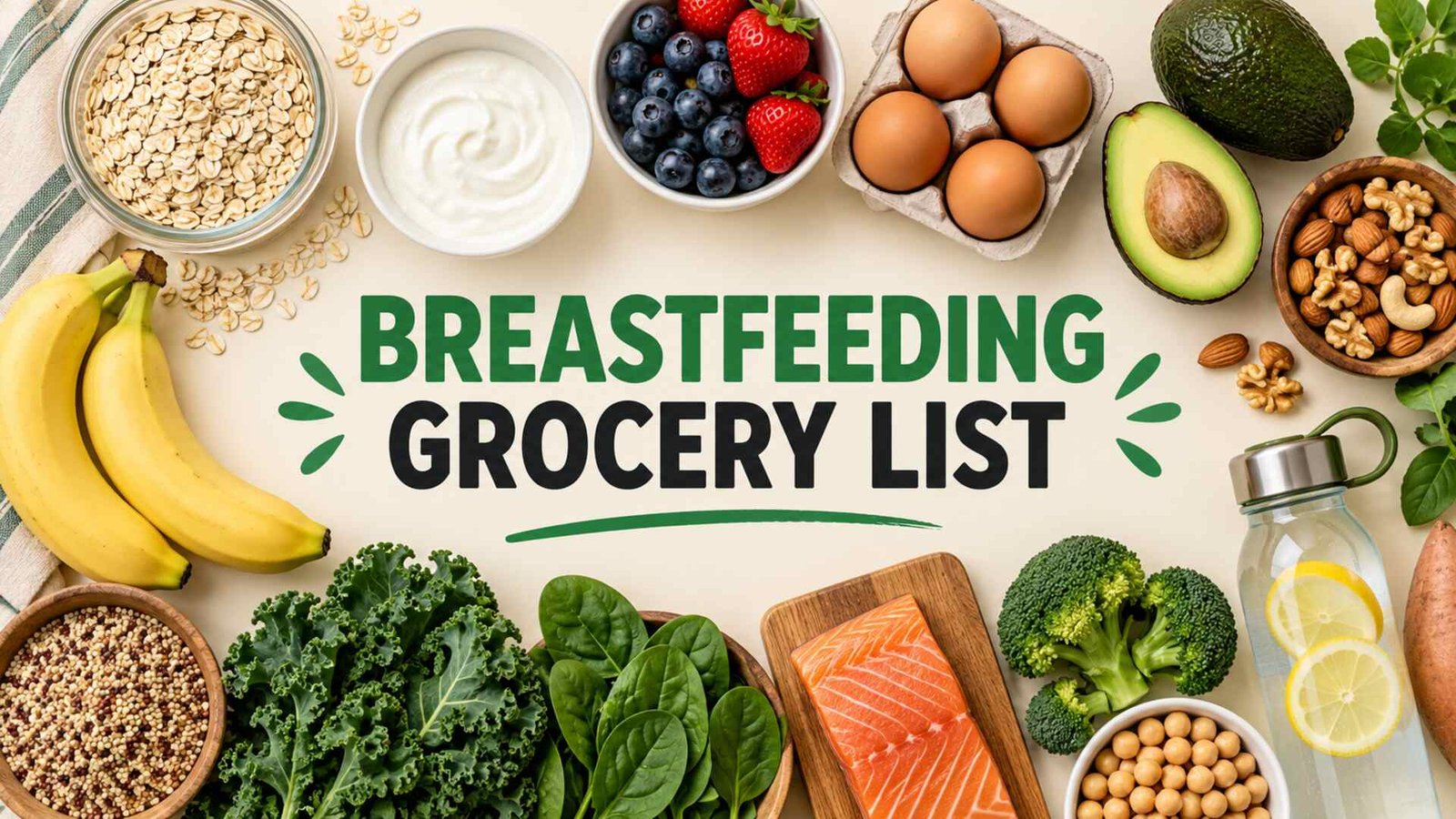
A breastfeeding grocery list should support regular meals, convenient snacks, and hydration without making promises about milk supply. Energy and nutrient needs differ by person, feeding pattern, recovery, health conditions, and activity, so personalized advice should come from a qualified healthcare professional.
Breastfeeding grocery list for everyday meals
Choose varied foods you enjoy and can prepare with limited time. Useful categories include vegetables and fruit, whole grains, protein foods, pasteurized dairy or fortified alternatives, and pantry staples.
- Breakfast: oats, eggs, whole-grain toast, yogurt, fruit, and nut or seed butter where safe.
- Lunch and dinner: beans, lentils, tofu, poultry, fish, cooked grains, frozen vegetables, soups, and stews.
- Snacks: fruit, cheese, yogurt, hummus, crackers, cooked eggs, or prepared vegetables.
- Drinks: water and other beverages appropriate for your health needs.
Avoid “milk-boosting” guarantees
Foods such as oats, flax, or brewer’s yeast are often marketed for lactation, but no single grocery item guarantees a higher milk supply. If you have concerns about feeding, infant growth, pain, or supply, seek help from a healthcare professional or qualified lactation specialist.
Make food easy to reach
Create a small snack area near the places where you usually feed the baby, but store perishable foods in the refrigerator. Choose containers that open easily and keep choking hazards away from children. The postpartum freezer prep checklist can help build a meal backup.
Plan for allergies and dietary needs
Read labels every time when food allergies are present. Do not remove major food groups solely to prevent infant allergies unless a healthcare professional recommends it. For household systems, see this guide to managing food allergies at home.
Use a flexible shared list
Divide the list into staples, fresh items, freezer foods, and urgent restocks. Another adult can shop more confidently when brands, substitutions, quantities, and allergy restrictions are clear. A shared running-low checklist keeps essentials visible.
Keep food safety in the routine
Wash hands before food preparation, separate raw and ready-to-eat foods, cook animal products safely, refrigerate perishables promptly, and follow your local authority’s storage guidance.
A useful breastfeeding grocery list is practical, varied, and easy to adapt. It supports the person doing the feeding without turning ordinary foods into medical promises.
Frequently Asked Questions
Do breastfeeding parents need more calories?
Energy needs often rise during lactation, but the amount varies with body, activity, feeding pattern, postpartum recovery, and health. Avoid treating a fixed calorie target as universal. A clinician or registered dietitian can give individualized advice, especially with weight, supply, recovery, or medical concerns.
What foods belong on a breastfeeding grocery list?
Choose convenient foods from several groups: whole grains, vegetables and fruit, beans, eggs, fish or meat if used, dairy or suitable alternatives, nuts or seeds where safe, and easy snacks. The list should support regular meals, hydration, culture, allergies, budget, and recovery.
Which high-calorie snacks are practical while breastfeeding?
Options include yogurt with oats, toast with nut or seed butter, cheese and crackers, hummus with pita, avocado toast, trail mix where allergies permit, smoothies, eggs, or leftovers. Keep perishables refrigerated and place one-handed foods nearby only when they can be stored safely.
Do oats, cookies, or herbal products increase milk supply?
No ordinary food can guarantee a supply increase. Milk production depends on effective and frequent milk removal plus individual health factors. Some herbs and supplements can interact with medicines or affect parent or baby. Seek lactation and medical assessment before relying on marketed boosters.
How much water should a breastfeeding parent drink?
Drink to thirst and keep water accessible, especially during feeds. More water does not automatically increase milk supply, and forcing excessive fluid can be uncomfortable. Needs change with heat, activity, diet, and health; seek care for signs of dehydration or other concerns.
Can I drink caffeine while breastfeeding?
Many breastfeeding parents can use moderate caffeine, but babies—especially younger or premature infants—may be sensitive. Count coffee, tea, energy drinks, chocolate, and medicines. Ask a healthcare professional about the limit appropriate to you and reduce intake if the baby seems unusually wakeful or irritable.
Do I need to avoid allergenic foods while breastfeeding?
Routine avoidance is not generally necessary unless the parent has an allergy or a qualified clinician recommends elimination for a suspected infant reaction. Restrictive diets can reduce variety and nutrients. Get medical and dietetic guidance before removing major foods such as dairy, egg, wheat, or soy.
What fish can I eat while breastfeeding?
Fish can provide useful nutrients, but mercury levels vary. Follow current national guidance on lower-mercury choices, serving amounts, and species to avoid. Local advisories matter for self-caught fish. Do not rely on a broad online list without checking your location.
How can a shared grocery list support a breastfeeding parent?
Keep recurring breakfast, snack, drink, and easy-meal items visible, and let a partner or helper own restocking. Note brands only when ingredients matter. The system should reduce decisions and make food accessible without promising that particular purchases will improve milk production.
Where can I get reliable breastfeeding support?
Use the parent’s healthcare professional, the baby’s clinician, and a qualified lactation specialist. The CDC breastfeeding overview provides evidence-based background, while urgent feeding, dehydration, pain, weight, or supply concerns require individualized assessment.