
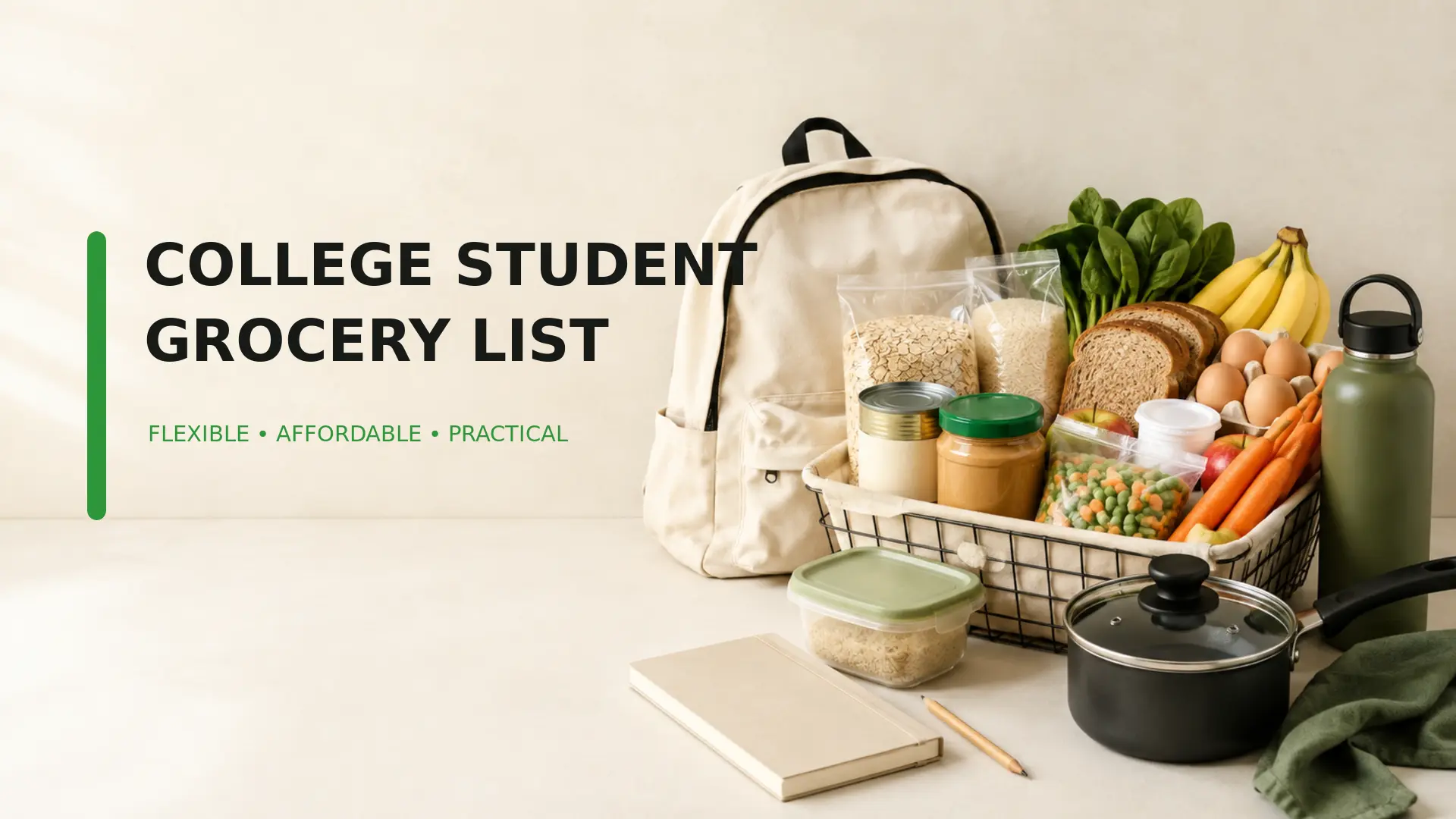
A practical college student grocery list should cover complete meals, snacks and backup foods while matching your budget, cooking access, schedule and dietary needs. Start with foods you already know how to prepare, compare local unit prices and choose a mix of fresh, frozen, canned and shelf-stable ingredients. No single list or weekly price works for every student.
Build a college student grocery list around your reality
Before shopping, check where food can be stored and prepared. A shared apartment kitchen, residence hall microwave and commuter backpack create different needs. Confirm which appliances are permitted, whether refrigerator and freezer space are reliable, and how many meals you will actually eat on campus.
- Count breakfasts, lunches, dinners and snacks until the next shop.
- Subtract meal-plan, campus and social meals.
- Note class, work, commute and study times.
- List allergies, medical diets, cultural preferences and texture needs.
- Check pantry, refrigerator and freezer supplies first.
Use six flexible food groups
Choose a few items from each group rather than chasing a list of “superfoods.” The amounts depend on appetite, household size and how often you cook.
- Grains and starches: oats, rice, pasta, bread, tortillas or potatoes
- Protein foods: beans, lentils, eggs, tofu, yogurt, canned fish, poultry or another preferred option
- Vegetables: durable fresh vegetables, frozen mixes or low-waste canned options
- Fruit: bananas, apples, oranges, seasonal fruit, frozen fruit or unsweetened canned fruit
- Fats and flavour: peanut or seed butter, cooking oil, cheese, seeds, sauces, herbs and spices
- Convenience foods: soup, ready rice, frozen meals or other backups that fit your needs
Students who prefer more plant-based meals can adapt the ideas in our budget-friendly plant-based shopping list.
Choose foods that become several meals
Prioritize ingredients that work across different formats. Oats can become breakfast, baked snacks or a topping. Rice can support bowls, stir-fries, soups and side dishes. Beans can fill wraps, salads and stews. Eggs or tofu can work at any meal. This flexibility reduces the chance that one cancelled plan leaves ingredients unused.
Plan three simple meal formulas
- Bowl: grain or potato + protein food + vegetables + sauce
- Wrap or sandwich: bread or tortilla + filling + crunchy produce + spread
- Soup, pasta or skillet: starch + protein food + vegetables + seasoning
Repeat components without repeating the exact meal. For example, rice and beans can become a warm bowl one day and a wrap filling later. Cook only quantities you can cool, store and reheat safely.
Make breakfast and snacks easy
Breakfast and snacks are easier to skip or buy impulsively when nothing is ready. Choose options that fit your morning and travel routine:
- oats with fruit and yogurt or a nut or seed butter
- eggs or tofu with toast
- fruit with cheese, yogurt or roasted legumes
- hummus with vegetables or crackers
- a sandwich or leftovers packed in a suitable container
Check allergen rules in classrooms, laboratories and shared residences. Use insulated bags and cold packs when food cannot be refrigerated promptly.
Compare cost without relying on fixed prices
Prices differ by city, country, season and store. Compare unit prices and usable servings, then record what you paid. Include delivery, membership and transit costs when relevant. A larger package saves money only when the unit price is lower, storage is available and the food will be used.
Use the framework in our guide to grocery cost per person to build a baseline from your own receipts rather than a universal student budget.
Balance fresh, frozen and shelf-stable foods
Fresh produce offers variety, but frozen and canned foods can reduce preparation time and waste. Choose a few fresh items for the first days, durable produce for later, and frozen or shelf-stable backups. Check labels when comparing products and choose options appropriate for your dietary needs.
Plan for limited cooking equipment
If you have only a microwave, look for microwave-safe grains, canned legumes, frozen vegetables, eggs prepared according to safe appliance instructions, soups and refrigerated proteins. With a saucepan or hot plate, add oats, rice, lentils, pasta and simple one-pot meals. Follow residence rules and manufacturer directions; never use prohibited appliances or leave cooking unattended.
Use a two-level shopping list
Separate essentials from optional items. Buy essentials first, then use the remaining budget for variety, treats or restocking. A reusable weekly shopping template can reduce planning time during busy terms.
Essential list
- two grains or starches
- two or three protein foods
- three vegetables, including a frozen or canned option
- two fruits
- one cooking fat and a few seasonings
- one quick backup meal
Optional list
- extra snack variety
- specialty ingredients
- beverages
- convenience upgrades
- food for an unconfirmed social plan
Store food safely in shared spaces
Label food with your name and date where appropriate, use sealed containers and clean shared surfaces. Refrigerate perishable foods promptly and follow current local guidance for cooling, storage and reheating. Canada’s Food Guide provides broadly useful meal-planning and cooking guidance; students elsewhere should consult their national food-safety authority.
Use campus and community support when needed
If the available budget cannot provide enough food, contact the school’s student-services office, financial-aid team, campus pantry, meal-support program or local community organization. Eligibility and services differ, and using available support is a practical response to food insecurity. Our emergency grocery-list guide also explains how to prioritize an inventory when funds are temporarily tight.
Make your college grocery plan repeatable
A useful college student grocery list supports adequate food, not a perfect diet or an arbitrary low total. Review what you ate, what spoiled and what you bought on campus. Keep the foods that fit your routine, replace those that did not and adjust quantities as classes, housing and finances change.
Frequently Asked Questions
What should be on a healthy college grocery list?
Build around grains or starchy foods, protein foods, vegetables, fruit, dairy or alternatives. USDA MyPlate offers a flexible starting framework rather than a rigid student meal plan.
What are cheap protein foods for college students?
Beans, lentils, eggs, peanut butter, canned fish, tofu, yogurt, and sale-priced poultry can be practical choices. Compare cost per usable serving and select options that fit allergies, culture, storage, and cooking access.
How can students eat well without a full kitchen?
Choose foods suited to available equipment: oats, microwavable grains, canned beans, frozen vegetables, eggs where permitted, yogurt, fruit, sandwiches, and pre-cooked proteins. Follow residence appliance and food-storage rules.
Are frozen vegetables good for a student budget?
Yes. They keep longer, require little preparation, and allow small portions. Compare unit prices with fresh and canned vegetables because the lowest-cost option varies by product and store.
How do I make a one-week college grocery list?
Choose two breakfasts, two lunch formats, three simple dinners, and planned snacks. Reuse ingredients across meals, check class days and campus commitments, and buy quantities that fit your storage space.
What are easy student meals with few ingredients?
Try oatmeal with fruit, eggs and toast, bean-and-rice bowls, lentil pasta, soup with a sandwich, baked potatoes with beans, yogurt bowls, or frozen vegetables added to noodles.
How can students prevent food waste in a shared refrigerator?
Label food, store it in a defined area, plan fragile ingredients early in the week, freeze extra portions, and communicate about shared items. Buy smaller quantities until your routine is predictable.
Should students buy groceries in bulk?
Only for foods they use regularly and can store securely. Dorm moves, limited cabinets, roommates, and changing schedules can make a smaller package cheaper overall despite a higher unit price.
How can I avoid buying expensive food on campus?
Pack one portable meal or snack for long days, keep an emergency shelf-stable option in your bag, and plan around the actual class schedule. Budget for occasional campus meals rather than assuming perfect preparation.
Where can a student get help when food money runs short?
Check campus food pantries, student services, meal-plan support, community food programs, and government benefits for which you may qualify. Seeking help early protects both nutrition and academic focus.