
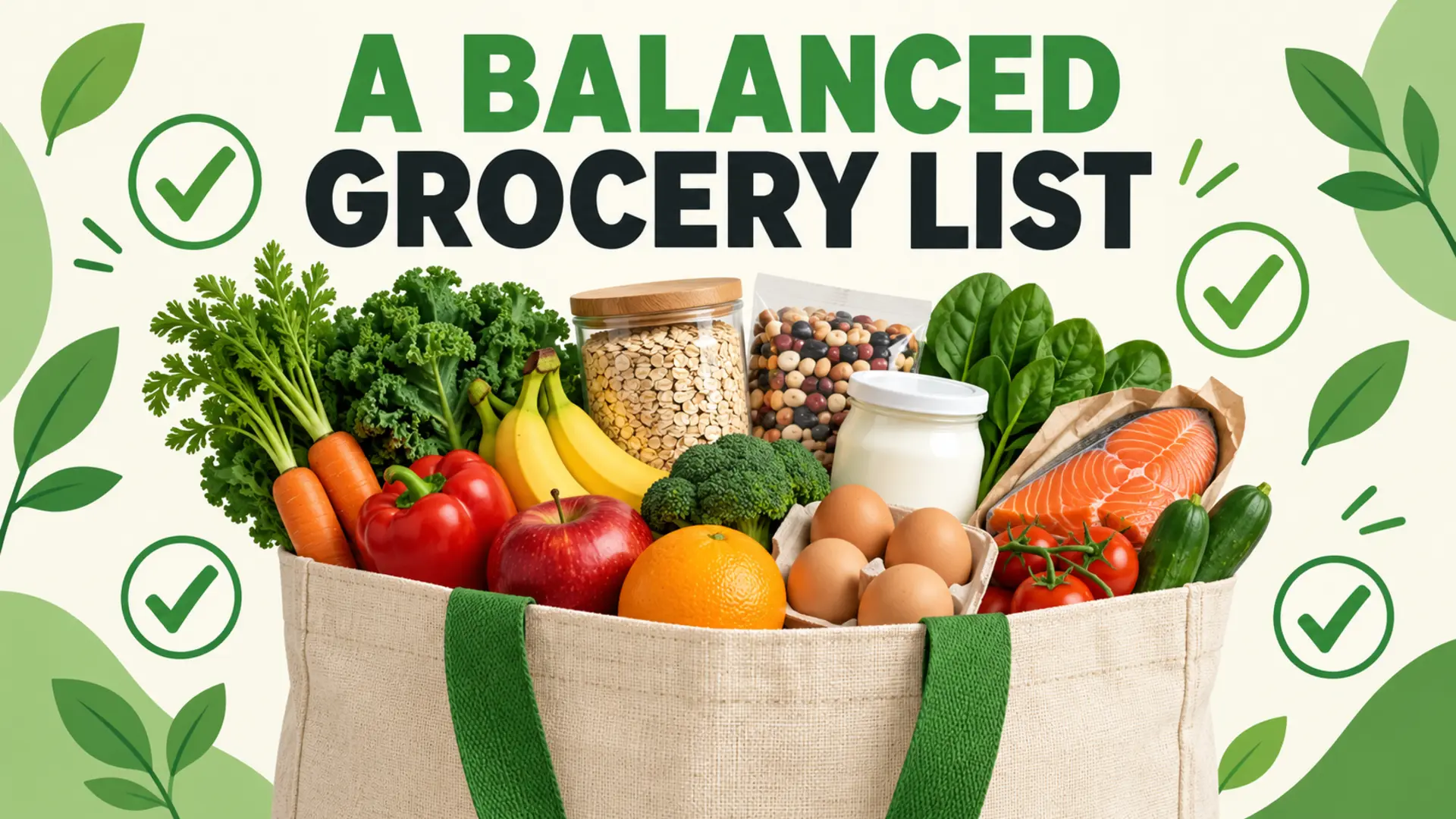
A balanced grocery list focuses on variety, practicality, and enjoyment—not food purity. “Clean eating” has no single scientific or legal definition, and rigid rules about ingredients, processing, or organic labels can make shopping stressful and unnecessarily expensive.
Build a balanced grocery list by category
- Vegetables and fruit: fresh, frozen, canned, or dried options that fit your meals.
- Grains and starches: oats, rice, pasta, bread, tortillas, potatoes, and culturally familiar staples.
- Protein foods: beans, lentils, tofu, eggs, dairy or alternatives, fish, poultry, meat, nuts, and seeds.
- Fats and flavour: oils, herbs, spices, sauces, dressings, olives, avocado, nuts, and seeds.
- Convenience foods: useful frozen meals, canned soups, prepared ingredients, and snacks.
Processing is not automatically negative
Freezing, canning, fermenting, pasteurizing, and fortifying can improve safety, storage life, convenience, or nutrient availability. Evaluate a food by its role in your overall pattern, not by whether it has more than five ingredients or comes from an interior supermarket aisle.
Use labels for comparison
Check allergens first when safety is involved. Then compare serving size, nutrients relevant to your needs, ingredients, price, and likely waste. Organic, grass-fed, wild, local, or regenerative options may matter to some shoppers, but they are not required for a nutritious pattern.
A flexible week of meals
- Sheet-pan vegetables with chicken, tofu, or beans.
- Pasta with tomato sauce, lentils, and greens.
- Rice bowls with vegetables, eggs, fish, or edamame.
- Soup with bread and a side salad or fruit.
- Breakfast-for-dinner with eggs, oats, yogurt, or suitable alternatives.
Reduce cost and waste
Plan around food already at home, choose produce in forms you can finish, and freeze extras promptly. Use the family grocery reset to review routines and the pantry reset guide to identify priority ingredients safely.
Conclusion
A balanced grocery list leaves room for convenience, culture, preference, and changing needs. Add variety gradually, avoid moral labels for food, and seek qualified guidance when a medical condition requires specific restrictions.