
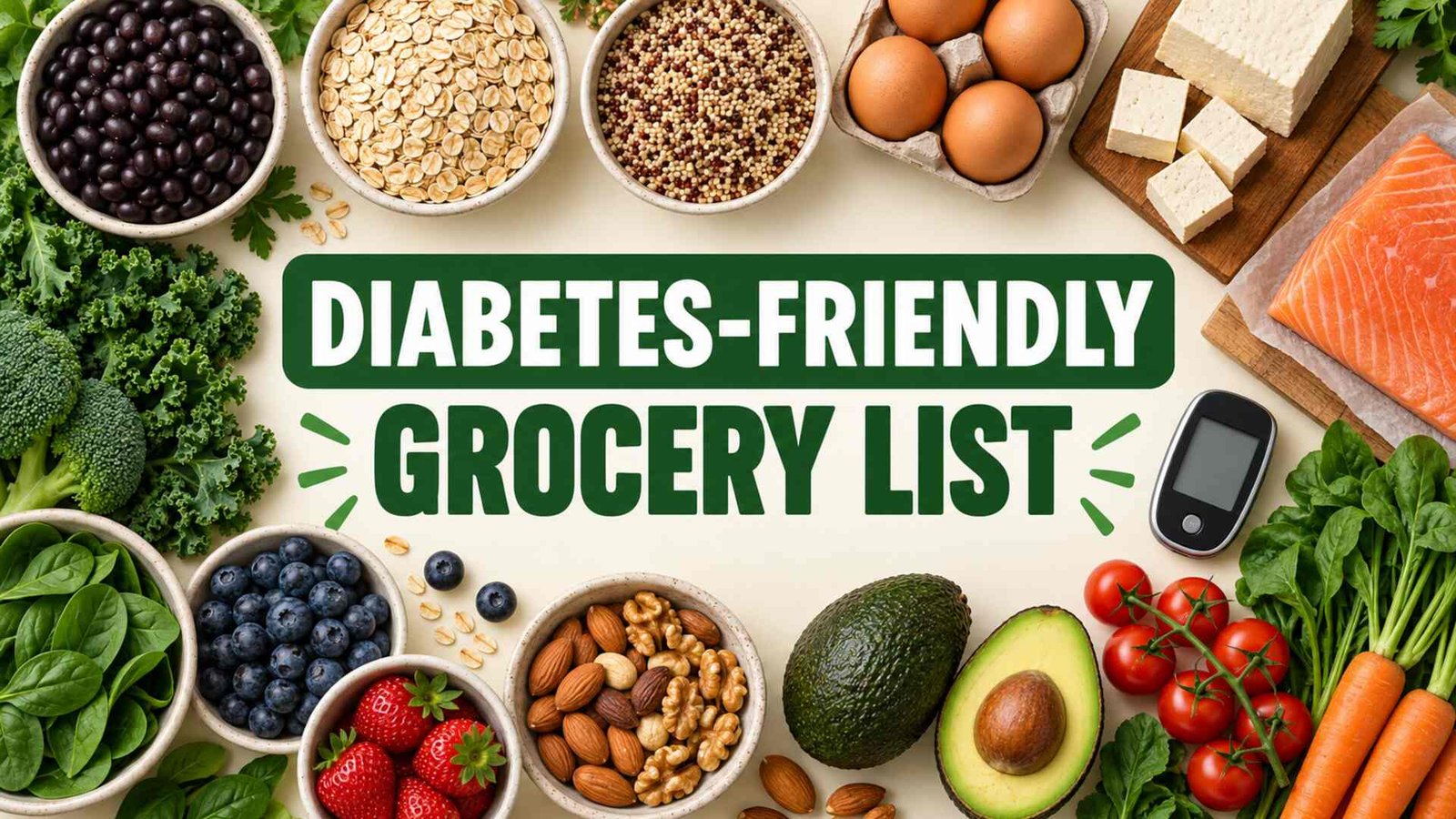
A diabetes-friendly grocery list should support your individualized care plan without promising that any food will produce the same glucose response for everyone. Medication, meal timing, carbohydrate amount, activity, sleep, and health conditions can all affect blood glucose.
Build a diabetes-friendly grocery list
- Non-starchy vegetables: leafy greens, broccoli, peppers, cucumber, cabbage, and frozen vegetable mixes.
- Protein foods: eggs, fish, chicken, tofu, beans, lentils, plain yogurt, nuts, and seeds.
- Carbohydrate foods: oats, whole grains, potatoes, beans, fruit, and breads that suit your plan.
- Fats and flavour: olive oil, avocado, nuts, seeds, herbs, spices, citrus, and vinegar.
Think in complete meals
Combining carbohydrate foods with protein, fibre-rich foods, and fats can make meals more satisfying, but it does not guarantee a flat glucose curve. Use portion guidance from your healthcare team and monitor in the way they recommend.
- Oats with plain yogurt, berries, and seeds.
- Lentil soup with vegetables and wholegrain bread.
- Fish or tofu with potatoes and greens.
- Bean bowls with grains, vegetables, and avocado.
Read labels without rigid cut-offs
Compare serving sizes, total carbohydrate, fibre, added sugars where shown, sodium, and ingredients. “Diabetic,” “keto,” or “no added sugar” claims do not automatically make a product suitable. Sugar alcohols may cause digestive symptoms, and labelling rules vary by country.
Skip universal blood-sugar hacks
Apple cider vinegar can irritate the digestive tract, affect teeth, and interact with some medicines; it is not a replacement for prescribed treatment. Cooling starches, bedtime snacks, and meal timing can affect people differently. Discuss changes with your clinician, particularly if you use insulin or medicines that can cause low blood sugar.
Shop for realistic routines
Keep a few quick options on hand and buy amounts you can store safely. The hidden added sugars guide explains label comparisons, while the high-protein grocery checklist provides flexible meal-building ideas.
Conclusion
A diabetes-friendly grocery list is personal and adaptable. Choose varied foods, interpret labels in context, and let your glucose-management plan and healthcare team guide portions and timing.