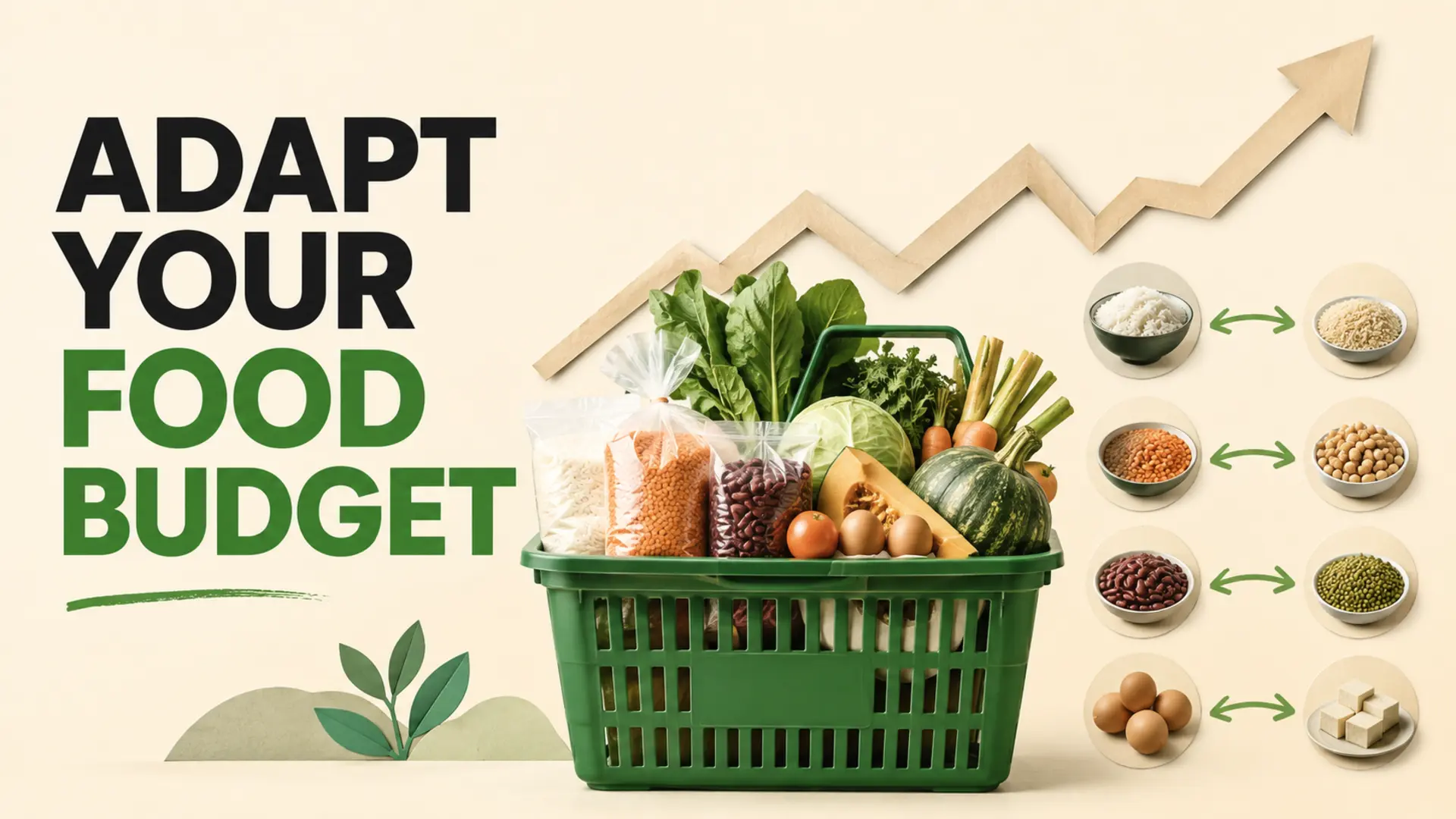
Inflation affects your food budget when the prices of groceries you regularly buy rise faster than the amount you have available for shopping. The change is rarely identical across every category, which means a useful response is to compare your own recent receipts and adjust where your household has realistic alternatives.
There is no permanently “inflation-proof” food. Prices vary by country, season, weather, supply conditions, retailer and package size. Instead of relying on universal price predictions, build a flexible plan that can respond to what is happening locally.
How Inflation Changes a Food Budget
- The same basket costs more: regular purchases consume a larger share of the budget.
- Promotions feel less predictable: a sale price may still be higher than an older regular price.
- Package sizes can change: comparing only the sticker price may hide a higher unit cost.
- Substitution becomes more important: households may need flexible alternatives within a meal category.
- Waste becomes more expensive: unused food represents a larger lost portion of the budget.
Start With Your Own Grocery Data
Review several recent receipts and group purchases into categories such as produce, proteins, grains, dairy or alternatives, pantry foods and household supplies. Identify which categories changed most for you and which purchases are flexible.
A grocery price book can track package size, unit price, store and date. Your own current history is more useful for decisions than an old list of supposedly cheap foods.
Use Unit Prices Before Switching Products
Compare products using the same weight, volume or count. A smaller checkout price is not necessarily better value, and a large package is not a saving if part of it goes unused. Follow our guide on using unit pricing for a consistent comparison method.
Make Flexible Food-Budget Pivots
Switch Within a Meal Role
If one protein, vegetable or grain becomes difficult to fit into the budget, compare alternatives that serve a similar role in the meal. Beans, lentils, eggs, tofu, fish, poultry or other options may work depending on dietary needs and local prices. The substitution does not need to copy the original ingredient exactly.
Use More Flexible Recipes
Bowls, soups, stir-fries, curries, pasta dishes and sheet-pan meals can often accommodate different seasonal vegetables and proteins. Build the shopping list around categories where substitutions are acceptable.
Test Store Brands Selectively
Compare ingredients, quality, package size and unit price rather than assuming every store brand is equivalent or always cheaper. Try one product at a time and keep the versions your household will actually use. See our guide to comparing name-brand and generic groceries.
Reduce Convenience Premiums Where Practical
Whole produce, larger plain packages or home-prepared components may cost less per unit than pre-cut or individually portioned options. However, convenience can be worthwhile when it supports accessibility, saves meaningful time or prevents waste.
Protect Nutrition Without Following a Rigid List
Keep meals varied using foods available in your region and appropriate for your household’s health, culture and dietary requirements. Frozen and canned produce can complement fresh options. Beans, lentils, eggs, dairy or alternatives, grains and different proteins can all contribute according to the overall meal pattern.
For personal medical or nutrition needs, use qualified local guidance. Budget substitutions should not ignore allergies, prescribed diets or food-safety requirements.
Plan Around Availability, Not Just Promotions
Sales flyers can help identify flexible ingredients, but a promotion is useful only when the product fits your plan. Compare unit prices, purchase conditions and what is already at home. Avoid buying extras solely because the label suggests urgency.
Reduce Food Waste Before Cutting Variety
- Check the refrigerator, freezer and pantry before shopping.
- Plan earlier meals around the most perishable ingredients.
- Buy quantities based on household use rather than the lowest unit price alone.
- Freeze suitable food before quality declines.
- Schedule a leftover or clean-out meal.
Our guide to fixing the connection between food waste and your household budget offers a practical review routine.
Adjust the Budget in Stages
- Set a realistic spending range based on recent receipts.
- Protect essential dietary and household needs first.
- Choose two or three flexible categories to compare.
- Test substitutions without overbuying.
- Review the result after several shopping trips.
Avoid Common Inflation Responses That Backfire
- Buying oversized packages that exceed storage or consumption.
- Driving to several stores without accounting for time and travel.
- Removing every convenient item even when it prevents takeout or waste.
- Using outdated target prices as permanent rules.
- Changing too many foods at once and buying replacements nobody likes.
Keep Your Food Budget Adaptable
Inflation affects food budgets differently across locations and households. Track your own prices, compare consistent units, use flexible meal formats and reduce avoidable waste. Small adjustments based on current evidence are more sustainable than trying to predict which groceries will always remain cheap.