
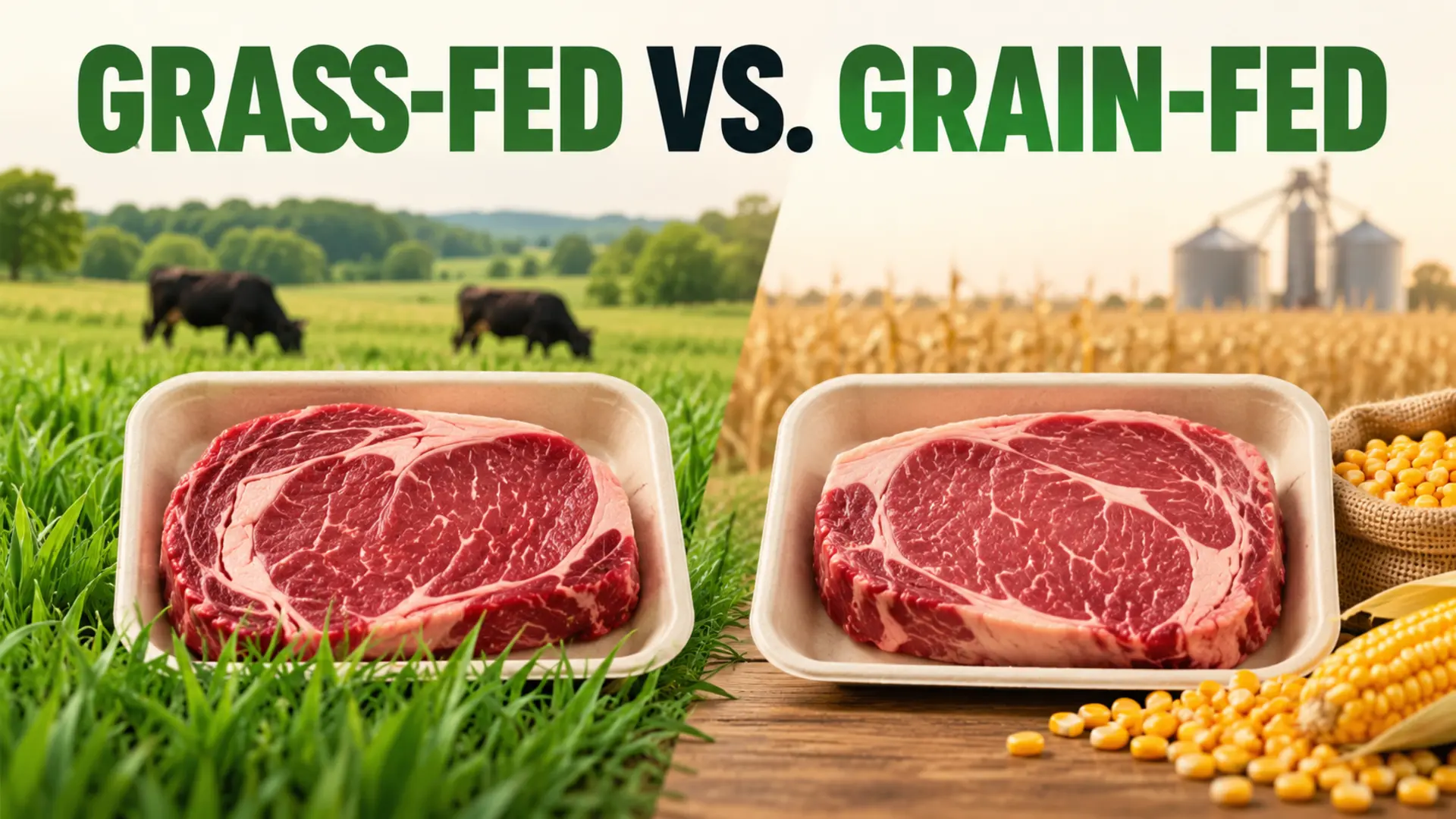
When comparing grass-fed vs grain-fed meat, the best choice depends on priorities such as budget, flavour, availability, farming practices and how the meat will be cooked. Neither label alone proves that a product is healthier, more humane or more sustainable.
Grass-fed vs grain-fed meat: label questions
- Does the label describe the animal’s entire diet or only part of its life?
- Is the claim independently verified or defined by local regulation?
- Does it also specify origin, production standard or animal-welfare certification?
- What is the price per unit and usable portion?
Nutrition and quality
Fat composition and flavour can differ, but the practical significance depends on the cut, portion and overall eating pattern. Marbling, tenderness and cooking performance also vary within both systems. Avoid treating one production label as a complete nutrition score.
Environmental and welfare context
Impact depends on land management, feed production, transport, stocking density and regional conditions. A grass-related claim does not answer every environmental or welfare question. Look for transparent, specific information from credible standards.
Use our nutrition-label guide for package comparisons and the one-stop versus specialty-store guide when weighing access and travel costs.
Buy and handle meat safely
Choose intact packaging, keep raw meat cold, separate it from ready-to-eat foods and follow current local food-safety guidance for storage and cooking.
Conclusion
The grass-fed vs grain-fed meat decision is a trade-off, not a universal ranking. Compare credible label details, total cost, cooking needs and the production practices that matter most to you.