
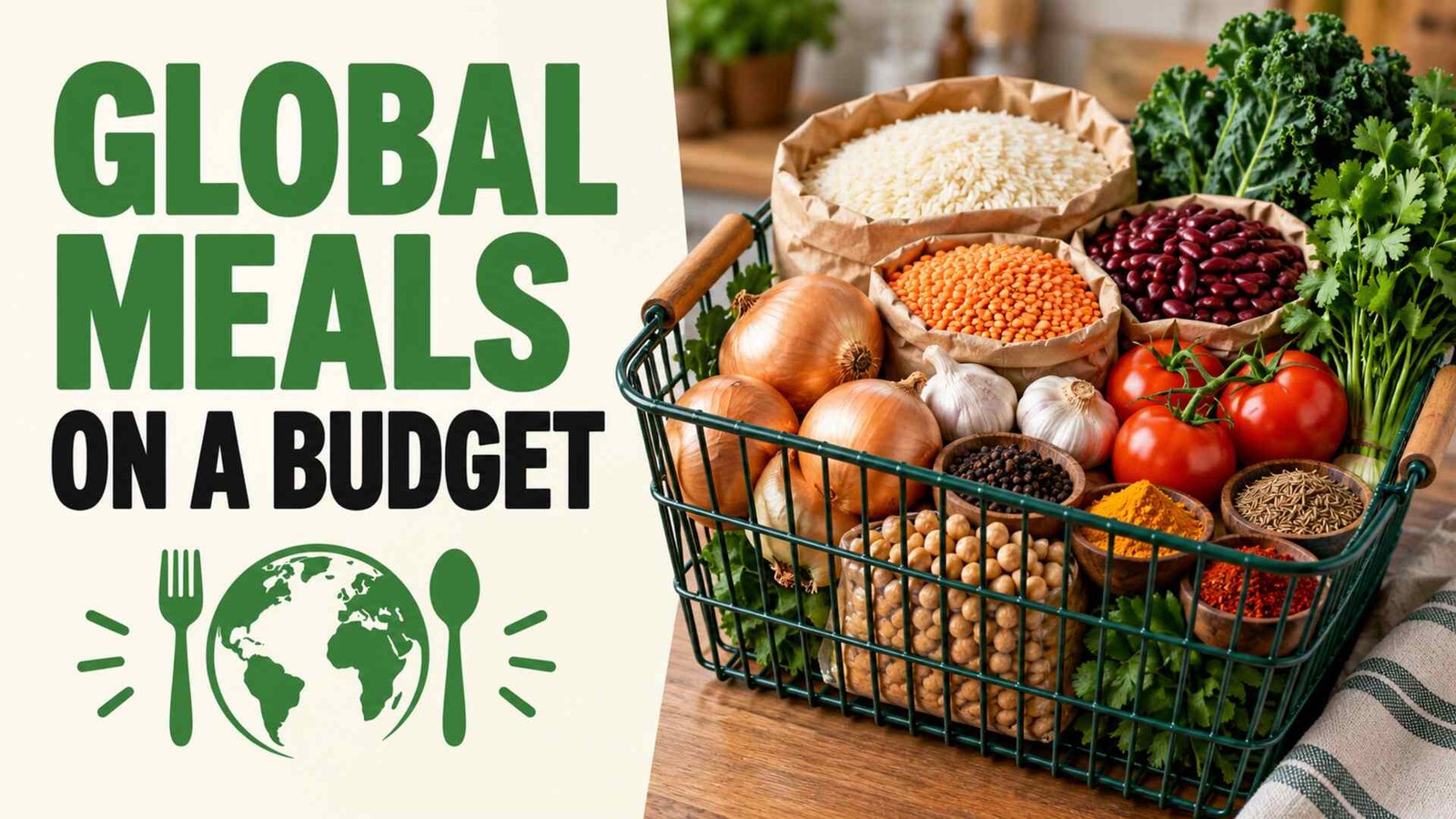
Planning global meals on a budget works best when you reuse versatile ingredients without treating different cuisines as interchangeable. Prices, household sizes and availability vary, so this framework focuses on flexible choices instead of a universal dollar amount.
Global meals on a budget: start with overlap
- Choose two or three recipes: select dishes from reliable sources and note their distinct seasonings and techniques.
- Reuse flexible staples: rice, lentils, beans, onions, garlic, tomatoes and seasonal vegetables can appear in many meals.
- Compare unit prices: check package size, usable quantity and expected waste rather than assuming bulk is cheapest.
- Keep specialty purchases focused: buy a condiment or spice when several planned dishes will use it.
- Plan safe leftovers: cool, label and refrigerate cooked food according to local food-safety guidance.
Build the basket around local prices
Replace fixed-price promises with a spending limit that reflects your location and current store prices. Compare fresh, frozen, canned and dried options, accounting for preparation time and storage space. Check dietary needs and allergens before choosing substitutes.
Our guide to making a grocery list provides a practical planning sequence. The bulk-buying guide explains how to avoid volume waste.
Respect each cuisine’s context
Using the same onion or grain across meals does not make the finished dishes equivalent. Retain each recipe’s name, origin and core method, and learn from cooks connected to that tradition. Describe adaptations honestly when ingredients are unavailable.
A flexible plan can reduce duplicate purchases, but it cannot guarantee a precise savings amount or eliminate waste. Review what remains at week’s end and adjust the next list.