
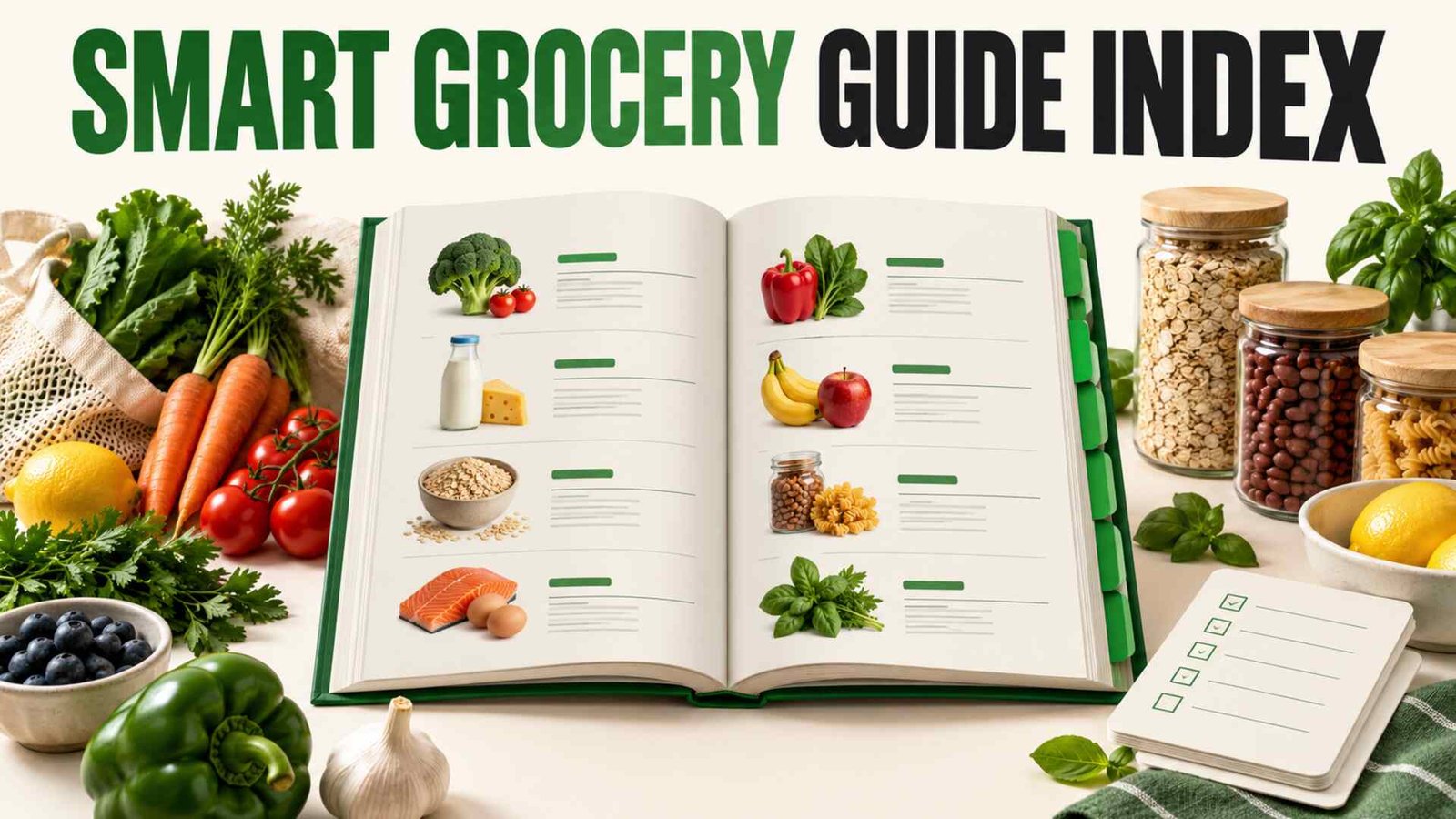
The Smart Grocery List guide index organizes the site’s practical grocery content into broad themes. Use it as a starting point, then open the article that best matches your household, budget, dietary needs and local food-safety guidance.
Smart Grocery List guide index by topic
- Meal planning: weekly lists, flexible menus, ingredient overlap, batch preparation and realistic portions.
- Budget shopping: unit-price comparison, store formats, sales, package sizes and avoiding unnecessary bulk purchases.
- Family and household planning: shared lists, preferences, accessibility, school or workplace meals and age-appropriate food safety.
- Dietary needs: label reading, allergen awareness and questions to discuss with a qualified healthcare professional.
- Storage and waste reduction: pantry rotation, refrigerator organization, leftovers and tested preserving methods.
- Global grocery guides: region-specific pantries, specialty-market navigation and respectful recipe-led shopping.
Start with practical planning guides
The grocery-list planning guide covers the basics. Use the monthly pantry audit to check what you already have, and explore the complete blog archive for additional topics.
How to use health and sustainability content
Nutrition and medical needs are individual. Site articles provide general education and should not replace advice from a qualified clinician or registered dietitian. Sustainability also depends on local farming, packaging, transport, disposal systems and household use; broad labels do not guarantee an outcome.
Use the index as a reference, not a guarantee
No guide can promise exact savings, zero waste, clinical results or mastery of every food tradition. Check current product labels, appliance directions and local public-health advice. For cultural topics, prioritize sources and cooks from the communities discussed.
Return to this Smart Grocery List guide index when you need a new planning route, then choose only the advice that fits your situation.