
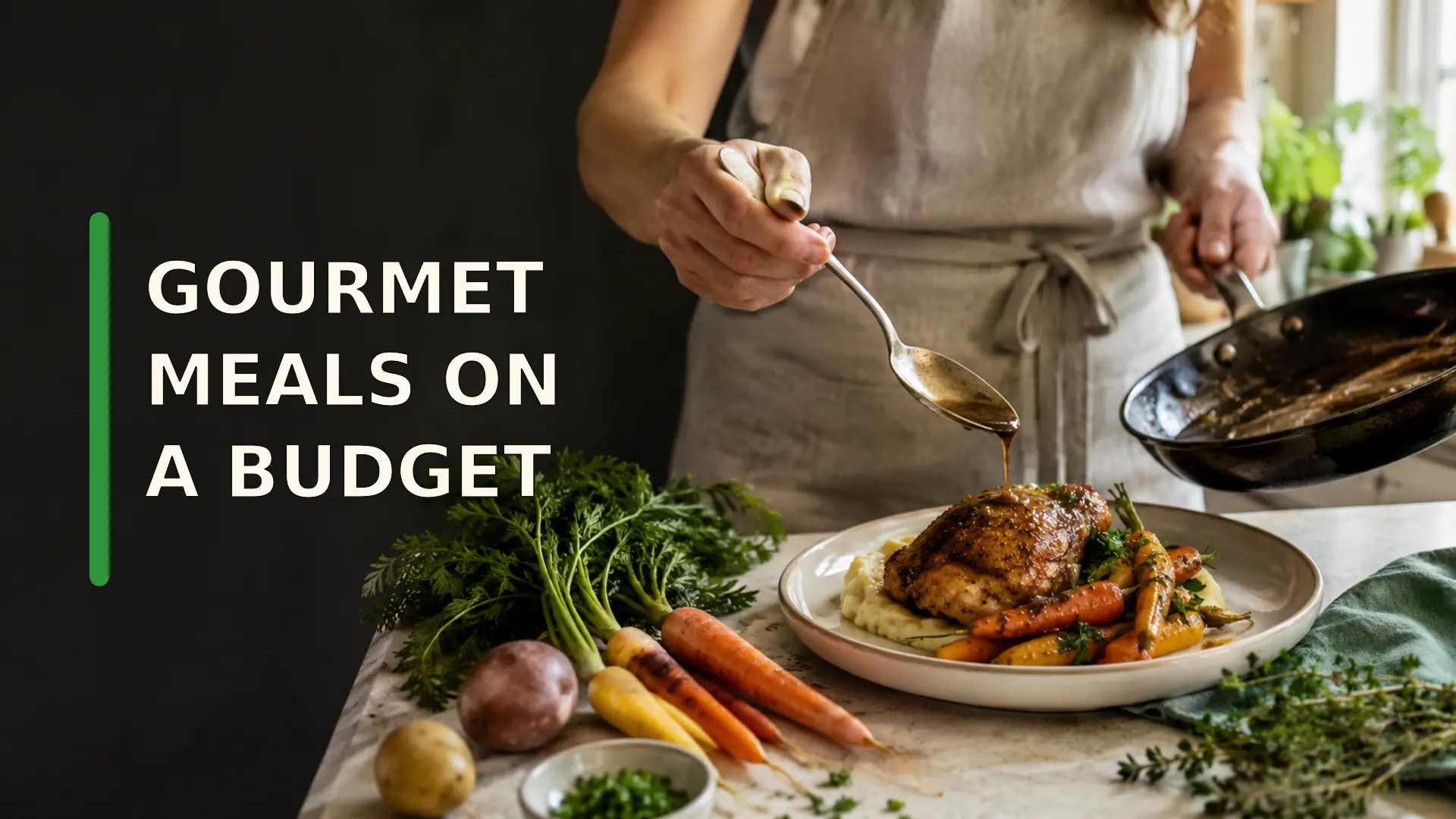
Gourmet meals on a budget come from thoughtful technique, contrast and presentation—not a guaranteed price per serving or a list of luxury ingredients. Start with affordable foods available in your area, build flavour in stages and compare the real cost of the finished meal with an equivalent takeaway option. The result can feel special while remaining practical for an ordinary home kitchen.
What makes a budget meal feel special?
A polished meal usually combines a few deliberate choices: good browning, balanced seasoning, contrasting textures, a simple sauce and neat plating. None requires rare ingredients. Crisp roasted vegetables, creamy beans, toasted grains or a bright herb finish can create the same sense of care as an expensive centrepiece.
Choose one feature to emphasize rather than adding many costly extras. A pan sauce, crunchy topping or colourful vegetable side often has more impact than buying several specialty products that may not be used again.
Plan gourmet meals on a budget from your pantry
Begin with ingredients already on hand, especially grains, pasta, beans, canned tomatoes, stock ingredients, spices and cooking oils. A quick pantry and freezer audit prevents duplicate purchases and helps identify an ingredient that can anchor dinner.
- Choose a base: potatoes, rice, pasta, grains, bread or legumes.
- Add a main element: vegetables, beans, eggs, tofu, fish, poultry or another suitable protein.
- Select one flavour direction using seasonings you already own.
- Plan one contrasting texture and one fresh or acidic finish.
Brown ingredients without overcrowding the pan
Dry the surface of suitable ingredients, preheat the pan and leave enough space for moisture to escape. Crowding encourages steaming instead of browning. Work in batches when necessary and adjust heat to prevent scorching. Browning can add savoury depth to mushrooms, tofu, chicken, fish and many vegetables.
Use an appropriate amount of oil for the pan and ingredient. If browned bits remain after cooking, they can become the start of a sauce—provided they are deeply browned rather than burned.
Make a simple pan sauce safely
After removing a cooked ingredient, lower the heat and add a small amount of stock, water, tomato liquid or another recipe-appropriate liquid. Scrape up flavourful browned bits, then simmer until the sauce has the concentration and consistency you want. Finish with herbs, mustard, citrus or vinegar according to the dish.
When cooking meat or poultry, confirm doneness with a food thermometer before serving. FoodSafety.gov’s safe minimum internal temperature chart lists temperatures and required rest times for different foods. Follow your local food-safety authority when guidance differs.
Balance richness with acid and freshness
If a dish tastes heavy or flat, a small amount of lemon, lime, vinegar, tomato or another acidic ingredient may brighten it. Add gradually and taste between additions. Acid does not replace salt in every situation, but it can make flavours clearer without relying on extra fat.
Fresh herbs are useful, but they are not mandatory. Chopped green onion, a spoonful of herb sauce, citrus zest, toasted spices or a crisp vegetable garnish can create aroma and colour. Choose something that will also be used in another meal.
Create texture with inexpensive ingredients
- Toast breadcrumbs with herbs for a savoury topping.
- Roast chickpeas or seeds when suitable for the eater’s dietary needs.
- Crisp potatoes or polenta to contrast with a soft stew.
- Add raw cabbage, cucumber or carrot for freshness and crunch.
- Purée beans or vegetables into a smooth base or sauce.
Texture gives a simple plate variety, but keep garnishes edible and connected to the meal. Avoid buying a decorative ingredient that has no purpose beyond one photograph.
Use flexible meal templates instead of fixed prices
Pan-seared main with seasonal vegetables
Pair a locally affordable protein or mushroom with potatoes, grains or beans and whichever vegetables offer good value. Use browned pan flavours for a light sauce and finish with herbs or acid.
Creamy grain or bean bowl
Cook rice, barley, polenta or beans until tender, then add sautéed vegetables and a flavourful topping. A small amount of cheese or a dairy-free alternative can be optional rather than the main expense.
Tomato and legume stew with crisp toast
Combine beans or lentils with tomatoes, aromatics and greens, adapting the seasoning to your pantry. Toasted bread, seeds or seasoned crumbs add contrast. For more ideas, see our guide to planning meals with beans, lentils and rice.
Calculate the cost of the meal honestly
Use the portion of each package consumed, not the full purchase price. Add ingredients used in meaningful quantities and account for leftovers that will become another meal. Prices vary by location and season, so publishable fixed-dollar promises quickly become misleading.
Compare the homemade meal with a genuinely similar alternative, including delivery fees, transport, drinks and usable leftovers when relevant. The homemade-versus-takeout cost framework provides a repeatable calculation.
Shop for one flexible menu, not one exact recipe
Write the meal structure on your list and allow substitutions within it. For example, list “seasonal roasting vegetable” instead of requiring one specific variety. Set a maximum unit price for optional ingredients and skip them when they do not offer enough value.
Planning around current offers can help, but a promotion is useful only when the ingredient fits the menu. Our guide to planning dinners around supermarket flyers shows how to connect specials with complete meals.
Plate with intention
Use a plate large enough to avoid crowding, keep rims clean and group components so the meal is easy to eat. Add sauce deliberately rather than covering every texture. A modest portion can look generous when colour and height are balanced, but plating should never disguise inadequate food.
A practical formula for elevated home cooking
For repeatable gourmet meals on a budget, choose an affordable base and main ingredient, brown one component well, add a simple sauce or seasoning layer, create texture, finish with freshness and plate neatly. Track the actual cost, adapt to local prices and keep food safety central. Technique and planning—not unrealistic price promises—make an everyday dinner feel considered.
Frequently Asked Questions
What makes a budget meal taste gourmet?
Strong technique and contrast matter more than expensive ingredients: proper browning, balanced salt and acidity, a simple sauce, varied texture, fresh finishing elements, and deliberate plating can elevate familiar foods.
Which inexpensive ingredients feel special in a meal?
Mushrooms, onions, lentils, beans, eggs, seasonal vegetables, chicken thighs, polenta, pasta, canned tomatoes, citrus, herbs, and toasted breadcrumbs can create depth without requiring premium cuts.
How do I make a pan sauce on a budget?
After safely cooking the main ingredient, remove excess fat, deglaze browned bits with stock or another suitable liquid, reduce briefly, and finish with seasoning, acidity, or a small amount of fat.
Can vegetarian meals feel gourmet without costly substitutes?
Yes. Center the meal on well-browned mushrooms, lentils, beans, eggs, roasted vegetables, creamy grains, or pasta. Add texture and a bright finish instead of relying on expensive imitation products.
How can I plate food attractively at home?
Use an appropriately sized plate, leave some open space, arrange components rather than piling them, add sauce neatly, and finish with a small edible garnish already used in the recipe.
What is the cheapest way to add texture to dinner?
Toast breadcrumbs, seeds, chickpeas, or nuts when affordable; crisp potato skins; char vegetables; or add shredded cabbage. Use a small amount as contrast rather than buying a separate premium topping.
How do I balance richness in an inexpensive meal?
Add acidity or freshness with lemon, vinegar, tomatoes, pickled vegetables, yogurt, or herbs. Taste gradually—the goal is balance, not making every dish sharply acidic.
Can I cook a gourmet-style meal with one pan?
Yes. Sear a protein or vegetable, cook aromatics, create a sauce from the pan, and serve with a simple starch or salad. Sequence ingredients so each cooks safely and avoids overcrowding.
How should I calculate the cost of a special home-cooked meal?
Price the amount used from every ingredient, including oil, garnishes, and pantry items, then divide by portions actually eaten. Compare that total with the complete fast-food order, including tax and fees.
What is a reliable formula for an elevated budget dinner?
Choose an affordable base, brown one main component, add a flavorful sauce, include contrasting texture, finish with freshness, and plate carefully. Shop for flexible ingredients that can support another meal.