
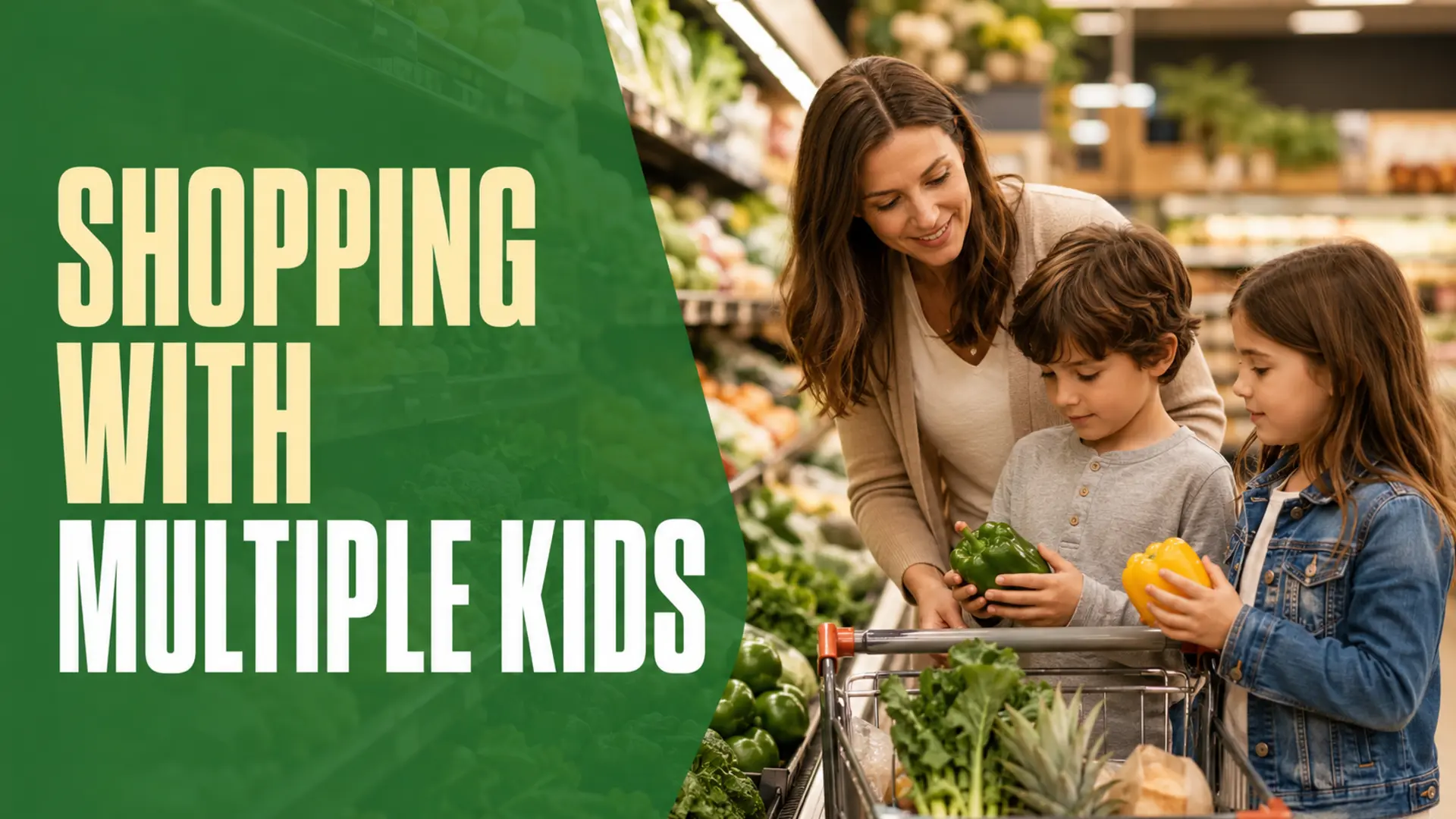
Grocery shopping with multiple kids is easier when the trip is planned around your children’s energy, your actual list, and a few clear jobs they can complete. The goal is not a perfect outing every time. It is a manageable routine that keeps everyone safe, limits avoidable detours, and gives children a useful role.
Prepare before grocery shopping with multiple kids
Check the refrigerator, freezer, and pantry before you leave. Plan only the meals and staples you need, then organize the list in store order. A focused list reduces backtracking and makes it easier to notice when a child needs a break. This pantry-audit guide can help you build the habit.
Choose a time when your children are reasonably rested and have eaten recently. Bring water and a simple snack if appropriate for your family. If one child is unwell, overtired, or overwhelmed, consider a shorter trip, pickup, or another adult’s help.
Set expectations before entering the store
Explain the plan in one or two sentences: what you are buying, where children will stay, and how they can help. Tell them what is not on the list and what choices they may make, if any. Keep the rule specific and achievable, such as staying beside the cart or using an indoor voice.
Give each child an age-appropriate job
Children are more likely to stay engaged when the task is concrete. Adapt the job to the child’s age, attention span, and the store environment.
- Toddlers: point to a picture on a short list, hold a lightweight item with permission, or identify a colour in the produce aisle.
- Young children: count a small number of apples, match a package to a picture, or place non-breakable items in the cart.
- Older children: read selected list items, compare two package sizes with an adult, or help sort groceries into bags.
- Any age: practise staying with the adult and pausing when the cart stops.
Give one job at a time and explain what “done” means. Avoid assigning a child responsibility for the entire list, the budget, or another child’s safety.
Make the route simple and flexible
Use an aisle-organized list and start with the sections that matter most. If the trip becomes difficult, skip nonessential items and return later or add them to the next shop. A supermarket-aisle list makes that decision easier because priorities are visible.
Small games can keep children focused without turning the store into a race. Ask them to find a specific fruit, notice three green vegetables, or check whether an item matches the picture. Keep the activity calm and stop it if it distracts from safety.
Keep cart and store safety first
Use the cart’s child seat and safety strap according to the manufacturer’s instructions. Children should not stand in the cart or ride on its sides. The Nationwide Children’s shopping-cart safety guidance recommends using a stable cart, the restraint strap, and alternatives for children who are too young for the seat.
Keep children close in crowded aisles, around automatic doors, and near loading areas. Never leave a child unattended in a vehicle or store area while returning a cart or collecting an item.
Review what worked after the trip
When you get home, note which jobs helped and which moments caused friction. Adjust the route, list length, timing, or responsibilities for next time. Let children hear specific praise, such as “You stayed beside the cart while we found the bread.” Small improvements add up.
For more ways to make grocery responsibilities practical, read how to divide household shopping with your partner and explore the kids’ grocery financial-literacy guide. Grocery shopping with multiple kids will still have unpredictable moments, but a prepared list, clear boundaries, and realistic expectations make the routine easier to repeat.
Frequently Asked Questions
How can I make grocery shopping with multiple kids less stressful?
Shop from a short, aisle-ordered list, explain the plan before entering, and give each child one specific job. Choose a time when children are rested and fed when possible. A smaller, predictable trip is easier to manage than combining shopping with several unrelated errands.
What should I pack before taking several children grocery shopping?
Bring your list, payment method, reusable bags, water, and any essential child supplies. For younger children, add a simple non-messy snack, wipes, and a comfort item. Packing before departure prevents avoidable delays and reduces the need to improvise in the store.
What grocery store jobs can children do at different ages?
A preschooler can spot colors or hold a picture list; an elementary-age child can find a named item and compare sizes; an older child can check prices or mark items complete. Match the job to the child’s ability and keep adult supervision over carts, aisles, and checkout.
How do I stop siblings from arguing in the grocery store?
Assign separate roles and state the rules before entering: stay nearby, use indoor voices, and ask before touching products. Avoid making siblings compete for the same task. If conflict starts, pause, restate the next small job, and shorten the trip if regulation is slipping.
Is it safe for a child to ride in the shopping cart?
Use only the cart’s designated child seat and restraint, and follow its age and weight instructions. Never allow a child to stand in the basket, ride underneath, or climb on the sides. Keep the cart within reach and do not place an infant carrier on top.
Should every child get to choose one grocery item?
A choice can build cooperation if the boundary is clear. Offer two or three suitable options, such as choosing one fruit, yogurt flavor, or lunch vegetable. This keeps the child involved without turning the trip into an open-ended request for treats or unplanned purchases.
How can I handle a grocery-store meltdown without abandoning the whole list?
Move to a quieter spot, address hunger, fatigue, or overstimulation, and use a calm, brief response. Decide which items are essential and skip the rest if needed. A saved digital list makes it easier to finish later through another trip, pickup, or delivery.
What is the best store route when shopping with several children?
Group the list by the layout of your usual store and take one continuous route. Pick up shelf-stable goods first, then chilled and frozen foods near the end. Avoid backtracking, and keep a short optional section that can be skipped if the trip needs to end early.
How can grocery shopping teach kids useful skills?
Children can practice reading labels, counting produce, comparing unit prices, following a budget, and checking items off a list. Explain one decision at a time rather than narrating the whole trip. Repeated small responsibilities build competence more reliably than one complicated assignment.
When is grocery pickup a better choice for a family with multiple kids?
Pickup can be useful during illness, severe weather, nap conflicts, or weeks with an overloaded schedule. It also helps when browsing leads to overspending. In-store shopping still has learning value, so families can choose the method that fits that week rather than treating one approach as mandatory.