
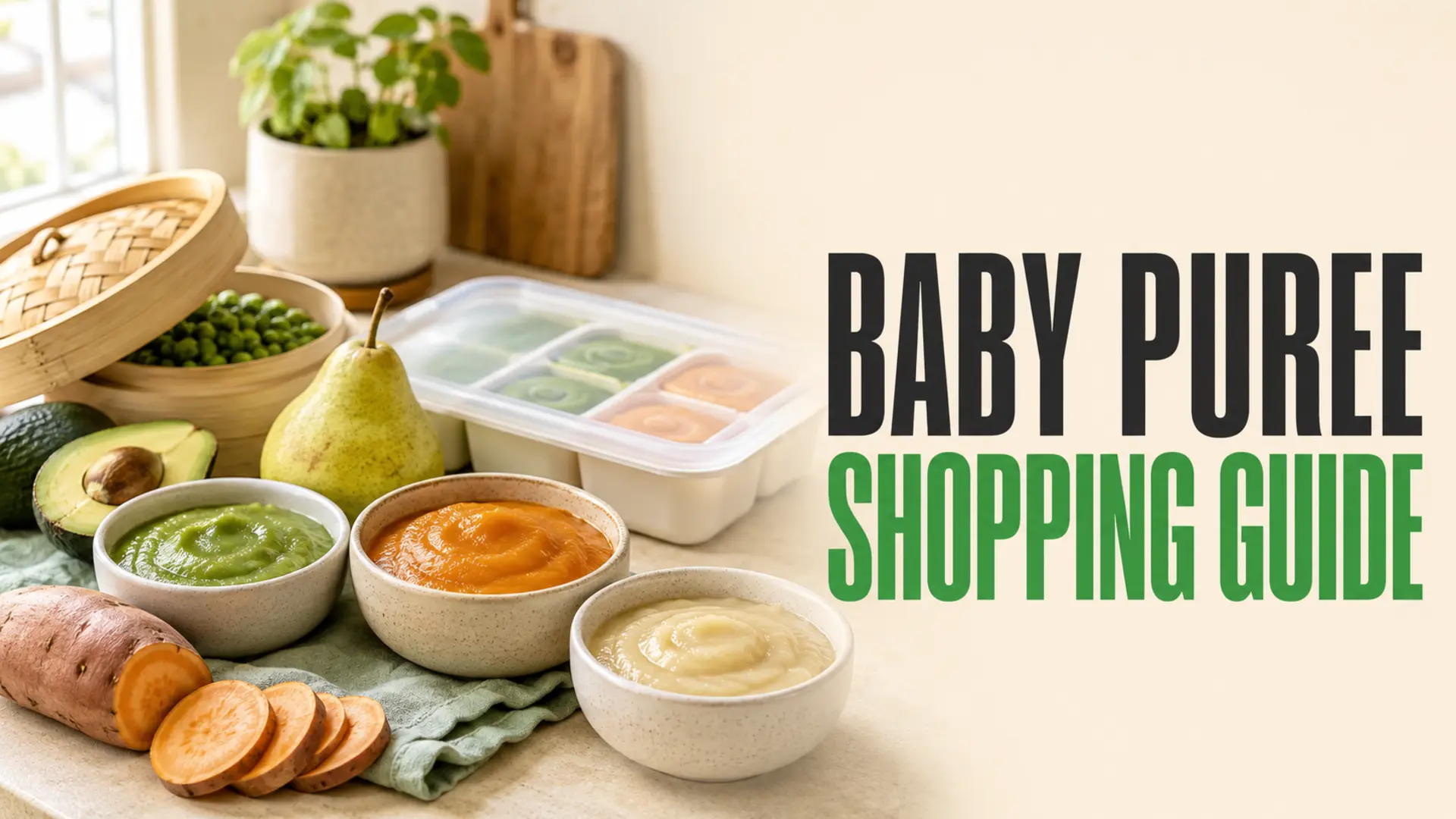
A baby puree shopping list should help you buy a small variety of ingredients, prepare textures suited to your baby, and store each batch safely. It should not prescribe a fixed feeding stage or replace advice from your child’s healthcare professional. Babies develop at different rates, and family feeding guidance can vary by country and individual needs.
Before using a baby puree shopping list
Confirm that your baby is developmentally ready for complementary foods. The CDC’s solid-food guidance says this commonly happens at about six months and lists readiness signs such as head control, sitting with support, opening the mouth for food, and swallowing rather than pushing food out.
If your baby was born prematurely, has feeding or swallowing difficulties, severe eczema, a known allergy, or another medical concern, ask the appropriate healthcare professional how and when to introduce foods. Continue breast milk or infant formula as advised while complementary foods are introduced.
Baby puree shopping list: useful categories
Start with quantities your household can prepare and use safely. Organic produce is optional; freshness, safe handling, affordability, and variety matter more than a premium label.
- Iron-rich choices: iron-fortified infant cereal, well-cooked beans or lentils, tofu, cooked egg, fish, poultry, or meat prepared to a safe texture.
- Vegetables: sweet potato, squash, peas, carrots, broccoli, cauliflower, or other familiar seasonal vegetables.
- Fruit: pear, apple, banana, avocado, peach, berries, or other ripe fruit suited to blending or mashing.
- Grains and starches: oats, potato, rice, pasta, or other family staples that can be prepared without hard pieces.
- Preparation supplies: clean containers with lids, freezer-safe portion trays, labels, and a washable spoon.
Do not assume a food must be introduced in a particular order. Include variety over time and follow current professional guidance for introducing common allergens. Introduce unfamiliar ingredients in a way that lets you notice a possible reaction, and seek urgent medical care for symptoms of a severe allergic reaction.
Choose texture by ability, not a marketing stage
Purees can be one early texture, but babies also need opportunities to progress to mashed, lumpy, finely chopped, and appropriately soft finger foods as their skills develop. The CDC texture guide explains how textures can change over time.
Cook firm ingredients until tender, remove bones, pits, tough skins, and hard seeds, and blend or mash to the texture recommended for your baby. Always seat the baby upright and supervise eating. Pureeing food does not remove allergy or food-safety risks.
A practical small-batch cooking routine
- Wash your hands, utensils, work surface, and produce.
- Prepare different ingredients separately when you want to track acceptance or possible reactions.
- Steam, bake, or simmer until the food reaches a safe, tender texture.
- Blend or mash with a clean utensil, adding only an appropriate liquid when needed.
- Divide the food into small, labelled portions instead of repeatedly reheating one large container.
- Cool and refrigerate or freeze promptly according to current food-safety guidance.
If you are new to preparing several foods at once, the batch-cooking guide for beginners can help you organize equipment and timing. Keep baby food separate from raw meat, seafood, and eggs during preparation.
Store, thaw, and reheat carefully
Label each container with the ingredient and preparation date. The NHS baby-food storage guidance advises cooling batch-cooked food quickly, refrigerating or freezing it, and using refrigerated food within its recommended period. Follow its separate instructions for rice, thawing, and reheating.
Thaw only what you expect to use, avoid refreezing thawed portions, and discard food left from a bowl the baby has eaten from. Check that reheated food is evenly heated and then cooled to a safe serving temperature before offering it.
Review the list as your baby progresses
Keep notes on ingredients tried, textures accepted, and any guidance from your healthcare professional. A regular pantry audit can prevent duplicate purchases, while this guide to freezing food efficiently can help organize family ingredients outside the baby-food portions.
A useful baby puree shopping list changes with your child. Buy manageable amounts, introduce variety gradually, prioritize iron-rich choices, move textures forward when appropriate, and treat safe preparation and storage as part of every batch.
Frequently Asked Questions
When can a baby start eating purees?
Many babies are ready for complementary foods around 6 months, when they can sit with support, control their head and neck, and bring food to the mouth. Readiness varies, so discuss timing with the baby’s health professional, especially for babies born prematurely or with feeding concerns.
What foods belong on a beginner baby puree shopping list?
Start with a small variety of single foods: iron-rich meat, beans or iron-fortified cereal; vegetables; fruit; and full-fat plain yogurt if dairy is appropriate. Buy modest quantities because babies eat little at first and textures should progress as their skills develop.
Do baby purees need to be completely smooth?
A very smooth texture may suit an early eater, but babies should gradually experience thicker mashed and lumpy textures as skills develop. Do not rely on age labels alone. The texture should match the baby’s oral-motor ability and be soft enough to swallow safely.
How long can homemade baby puree stay in the refrigerator?
Use a conservative food-safety approach: cool cooked puree promptly, refrigerate it in shallow covered containers, and use it within one to two days. If you will not use it quickly, freeze small portions. Discard food that has contacted the baby’s spoon because saliva introduces bacteria.
Can homemade baby puree be frozen in ice-cube trays?
Yes. Freeze freshly prepared puree promptly in a clean covered tray, then transfer the solid portions to a labeled freezer-safe container. Add the food and date. Thaw only what you need in the refrigerator or by a safe rapid method, and do not refreeze thawed portions.
How should I reheat frozen baby puree?
Thaw in the refrigerator when possible, then heat until steaming and stir thoroughly to remove hot spots. Let it cool to a safe serving temperature and test it before feeding. Microwave heating can be uneven, so extra stirring and standing time are important.
Should I add salt, sugar, honey, or juice to baby puree?
Babies do not need added salt or sugar. Never give honey before 12 months because of infant botulism risk. Juice is not needed for infants. Use the natural flavor of the food, and ask a health professional before adding supplements or ingredients intended to treat constipation.
How should common allergens be introduced to a baby?
When a baby is developmentally ready for complementary foods, introduce age-appropriate forms of common allergens one at a time in small amounts, then keep tolerated foods in the diet. Whole nuts and thick spoonfuls of nut butter are choking hazards. Seek individualized advice for severe eczema or known allergy.
What equipment is actually needed for batch-cooking baby food?
A saucepan or steamer, cutting board, knife, fork or blender, clean storage containers, labels, and a refrigerator or freezer are enough. Separate raw meat from ready-to-eat foods, wash hands and surfaces, and cook animal foods to the recommended safe internal temperature.
How can I reduce waste when making baby purees?
Cook one or two ingredients in small batches, freeze measured portions, and use compatible family-food ingredients before seasoning the adult meal. Record which foods the baby accepts. This avoids buying a large produce assortment that may spoil before a new eater can use it.