
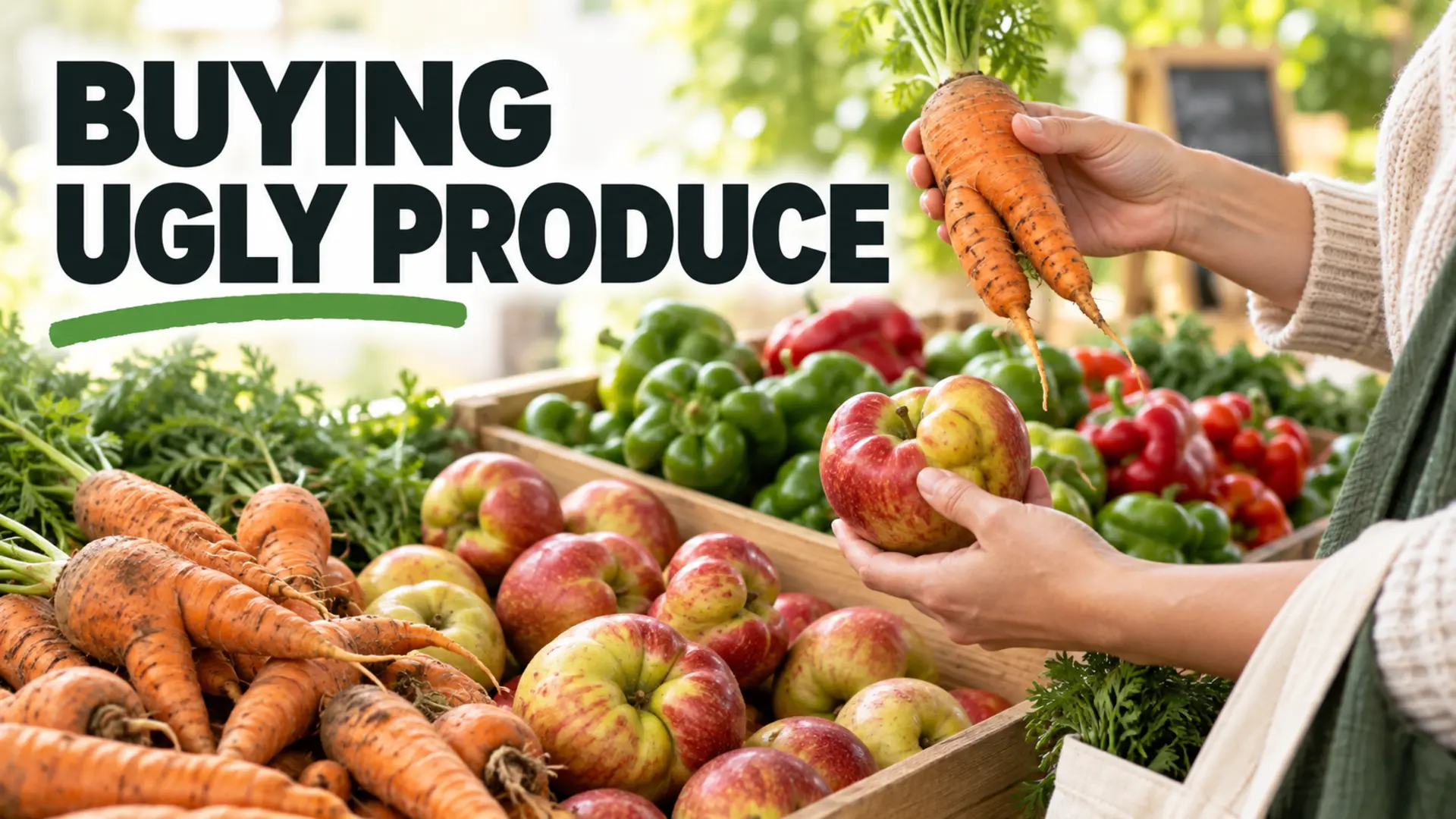
Buying ugly produce can be a practical way to use fruit and vegetables that look unusual but remain fresh and suitable to eat. Shape and minor surface marks matter less than texture, smell, mould, damage and how soon you can use the food.
Buying ugly produce: inspect before choosing
- Usually cosmetic: uneven shapes, harmless scarring, varied sizes and colour differences.
- Use soon: ripe or lightly bruised produce that can be trimmed and cooked promptly.
- Leave behind: mould, slime, leaking flesh, strong off odours or extensive decay.
Food with a cosmetic imperfection is not automatically cheaper, more sustainable or nutritionally identical in every case. Compare the condition, price and quantity just as you would with standard produce.
Where to look
Ask retailers or market vendors whether they offer seconds, mixed-size produce or ripe-food boxes. Availability and pricing vary by store and region. Frozen and canned produce can also be useful when freshness, storage time or accessibility matters more than appearance.
Choose a useful mix with the guide to shopping produce by ripeness, then check priorities during a weekly refrigerator audit.
Plan meals for imperfect produce
Odd shapes work well in soups, sauces, roasting trays, smoothies or chopped salads. Buy only what fits your plan, wash produce under running water and store it according to type.
Appearance is only one clue
Buying ugly produce can reduce avoidable waste when the food is fresh and wanted. The best purchase is still one your household will safely use.