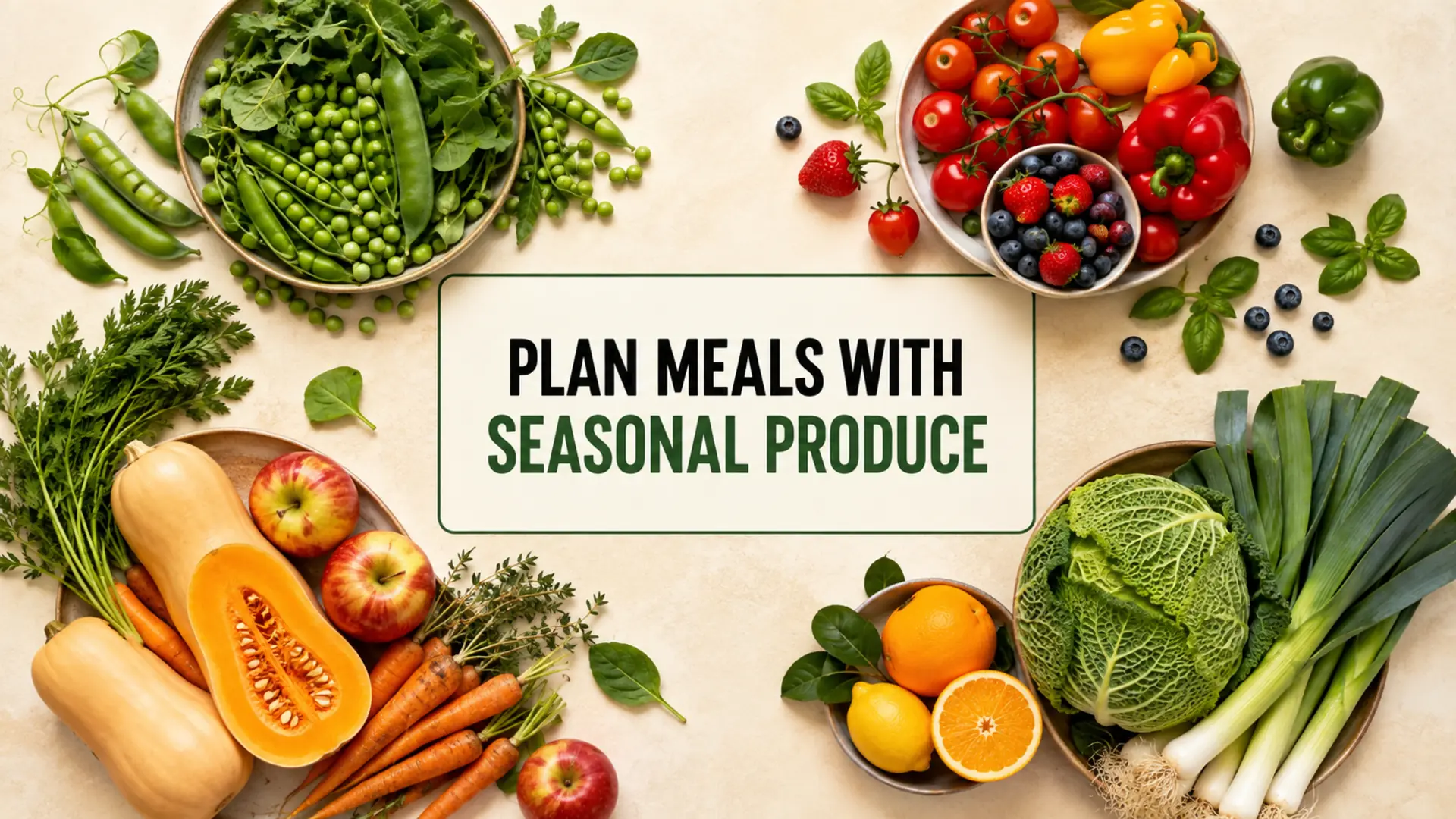
Learning how to plan meals around seasonal produce starts with what is abundant where you live—not a universal calendar. Growing seasons vary by climate, hemisphere, altitude, weather and local supply, so the most useful plan combines regional availability with flexible recipes and sensible substitutions.
Seasonal shopping may bring appealing flavour, variety or prices, but no crop is guaranteed to be cheaper or more nutritious at a particular time. Imports, protected growing, storage, demand and weather all influence what reaches the shelf. Use seasonality as a practical planning cue rather than a rigid food rule.
Check what is seasonal in your area
Before choosing recipes, look at a reliable regional source: a local agriculture department, farmers’ market, produce box, grocer flyer or farm directory. The USDA’s Seasonal Produce Guide explicitly notes that availability varies with local growing conditions and weather.
In tropical or subtropical regions, seasons may be described as wet, dry or crop-specific rather than spring, summer, autumn and winter. In the Southern Hemisphere, familiar Northern Hemisphere calendars are reversed. Start with local information and treat any generic list as inspiration only.
Choose two or three produce anchors
A weekly plan does not need every seasonal item. Choose two or three “anchor” ingredients that can appear in several meals. For example:
- Leafy greens for bowls, soups, eggs or pasta
- Tomatoes for salads, sauces, sandwiches or roasting
- Squash for trays, curries, soups or grain bowls
- Apples or pears for breakfast, snacks or savoury salads
- Cabbage for slaw, stir-fries, soups or tacos
Pick quantities based on household size, appetite, storage space and the meals you will actually prepare. A large seasonal display is not a reason to buy more than you can use.
Use flexible meal formulas
Meal formulas make seasonal substitutions easier than recipes that depend on one exact vegetable. Build the week around a few adaptable formats:
- Sheet-pan meal: seasonal vegetables, a protein and a simple seasoning
- Grain bowl: cooked grain, vegetables, beans or another protein, and sauce
- Soup or stew: aromatics, vegetables, broth, legumes or protein, and herbs
- Pasta or noodles: vegetables, sauce and an optional protein
- Salad or slaw: sturdy or tender produce, grain or bread, protein and dressing
- Egg or tofu dish: seasonal vegetables folded into a scramble, frittata or stir-fry
For cooler-weather ingredients, these one-pot meal ideas offer an adaptable structure. In hot weather, use the same method with this no-cook meal plan, adjusted to your local season.
Plan meals in order of perishability
Use delicate produce earlier and sturdier items later. Tender herbs, ripe berries and salad greens often deserve priority, while cabbage, carrots, squash or frozen vegetables may offer more flexibility. Actual storage life depends on freshness at purchase, temperature, handling and the specific crop, so avoid fixed promises.
Start by checking ingredients already at home. The EPA recommends looking through the refrigerator, freezer and pantry before shopping, then planning meals around food that needs to be used. This fridge-first meal-planning workflow turns that advice into a repeatable routine.
Build a seasonal shopping list by category
Organize the list so the seasonal ingredients work with reliable staples:
- Produce anchors: the two or three locally available items chosen for the week
- Supporting produce: onions, garlic, herbs, citrus or other flavour builders
- Protein: beans, lentils, tofu, eggs, fish, poultry or another preferred option
- Grains and starches: oats, rice, pasta, bread, potatoes or local alternatives
- Pantry: canned tomatoes, broth, oils, spices, nuts, seeds and sauces
- Backup options: frozen or canned fruits and vegetables for schedule changes
Fresh is not the only useful format. Frozen, canned and dried produce can add convenience and help fill gaps when a fresh item is unavailable, expensive or unlikely to be used in time.
Compare price and quality instead of assuming
Seasonal supply can affect price, but the pattern differs by crop and market. Compare unit prices when package sizes and edible portions are similar. Check firmness, colour and signs of damage appropriate to the item, and buy a ripeness mix if you need produce to last through the week.
Store flyers can help identify current offers, but an advertised item is useful only when it fits the plan. This guide to planning dinners around sales flyers explains how to compare promotions without building meals around unsupported savings assumptions.
Create a substitution rule before shopping
For each recipe, decide what can change. A formula might allow “any sturdy leafy green,” “any roastable vegetable” or “any ripe fruit.” This prevents a missing or poor-quality ingredient from derailing the week.
Keep flavour and cooking method in mind. Tender greens cook differently from cabbage; watery tomatoes behave differently from squash. Substitute by function—crunchy, leafy, roastable, juicy or aromatic—rather than colour alone.
A sample location-flexible week
- Meal 1: grain bowls with roasted or grilled seasonal vegetables
- Meal 2: soup using the week’s sturdier produce and beans
- Meal 3: pasta or noodles with greens and a simple sauce
- Meal 4: tacos, wraps or flatbreads with slaw and protein
- Meal 5: a flexible tray bake or stir-fry for remaining produce
Breakfast and snacks can share the same ingredients: fruit with oats or yogurt, vegetables with eggs, or leftover roasted produce in a lunch bowl.
Prepare and store produce realistically
Wash produce according to local food-safety guidance and the needs of the ingredient. Some items keep better when washed just before use. Store foods in the appropriate refrigerator, counter or pantry location, keep items that need attention visible, and freeze suitable extras before quality declines.
The EPA’s current food-waste prevention guidance recommends meal planning, buying what is needed and using proper storage to reduce avoidable waste.
Make seasonal planning repeatable
To plan meals around seasonal produce successfully, check local availability, choose a few versatile ingredients, use flexible meal formulas and shop in realistic quantities. Keep frozen or canned backups, plan delicate foods first and update your list as local supply changes.
For broader healthy-eating context, Canada’s Food Guide remains a trustworthy reference; readers worldwide can pair it with their own national guidance and regional growing information.