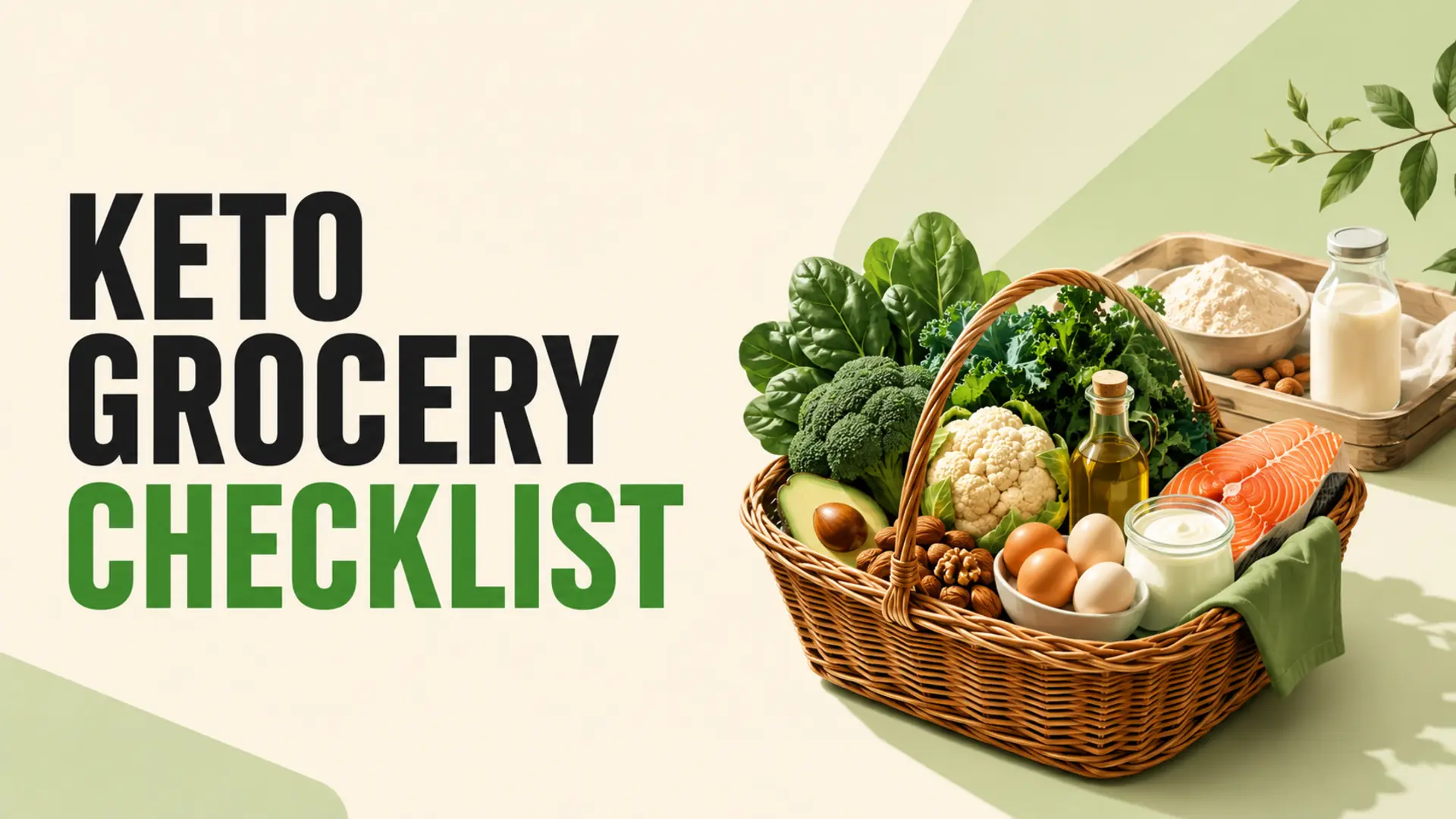
Quick answer: A useful keto grocery checklist starts with simple foods that fit the carbohydrate target set for your individual plan: non-starchy vegetables, suitable protein sources, unsaturated fats and carefully selected dairy, nuts or seeds. Specialty “keto” products are optional, not essential.
A ketogenic diet is highly restrictive and is not appropriate for everyone. Carbohydrate targets, protein needs and medical risks vary, so this article does not prescribe a universal daily limit. If you use insulin, take glucose-lowering medication, are pregnant, have kidney, liver, pancreatic or gallbladder concerns, or are using keto therapeutically, speak with a qualified healthcare professional before making major changes.
Keto Grocery Checklist: Start With Your Plan
Before shopping, clarify why you are following keto and what guidance you have received. A medically supervised ketogenic diet for epilepsy is different from a self-directed low-carbohydrate eating plan. The Epilepsy Foundation’s ketogenic diet guidance describes therapeutic keto as a structured treatment supervised by a dietitian and medical team.
Once the plan is clear, build the grocery list around meals rather than individual “approved” foods. Choose ingredients that combine naturally and that you can use before quality declines.
Must-Have Non-Starchy Vegetables
Vegetables can provide fibre, texture and variety in a restrictive plan. Exact carbohydrate content and serving size vary, so use reliable nutrition information when tracking is medically necessary.
- Leafy greens such as spinach, kale, lettuce or chard
- Broccoli and cauliflower
- Zucchini and eggplant
- Cucumbers
- Mushrooms
- Peppers
- Cabbage
- Green beans or asparagus
- Fresh or frozen options without added sauces
Buy a realistic mix of sturdy and delicate vegetables. Use tender greens earlier and keep frozen vegetables as a convenient backup.
Must-Have Protein Options
Protein choice does not need to be dominated by fatty or processed meat. Select foods that fit your preferences, budget, medical guidance and local availability.
- Eggs
- Fish and seafood
- Chicken, turkey or lean cuts of meat
- Tofu or tempeh, when compatible with the plan
- Plain Greek-style yogurt or cottage cheese, if dairy is included
- Canned fish with ingredient and sodium labels checked
Processed meats can be high in sodium and saturated fat, so they do not need to be everyday staples. Check labels because marinades, breading and sauces can add carbohydrate and sodium.
Must-Have Fats and Flavour Builders
- Olive oil
- Avocado, when available and affordable
- Unsalted nuts and seeds
- Natural nut or seed butter without added sugar
- Olives
- Herbs, spices, garlic, lemon or vinegar
Fats are energy-dense, so “keto-friendly” does not mean unlimited. Choose amounts that fit the plan provided by your healthcare professional. Liquid plant oils, nuts, seeds and fish can offer alternatives to relying heavily on butter, cream and fatty meat.
Optional Dairy and Refrigerated Items
- Plain yogurt with the nutrition label checked
- Cheese in practical quantities
- Unsweetened plant-based milk
- Cream, if it suits the plan
- Butter or ghee for selected recipes
Dairy carbohydrate, protein and fat content varies by product. “Full fat” is not automatically lower in carbohydrate, and dairy is not required for a ketogenic plan. Choose suitable alternatives for allergies, intolerance or personal preference.
Nice-to-Have Keto Baking Ingredients
- Almond flour
- Coconut flour
- Chia or ground flaxseed
- Unsweetened cocoa
- A sweetener approved for your individual plan
These products can add variety, but they are not interchangeable with wheat flour or with one another. Recipes may require different liquid and binding ratios. Buy small packages until you know you will use them.
Nice-to-Have Convenience Foods
Packaged foods can be useful when time, travel or accessibility makes them practical. Evaluate each product by its label rather than the word “keto” on the front.
- Frozen cauliflower rice or plain vegetable mixes
- Pre-washed salad greens
- Canned tuna, salmon, chicken or beans when compatible with the plan
- Plain cooked proteins without sugary sauces
- Portioned nuts or cheese
How to read a keto product label
- Confirm the serving size and servings per package.
- Review total carbohydrate and fibre using the method recommended by your clinician or dietitian.
- Check added sugars and the full ingredient list.
- Look for allergens and sugar alcohols that may cause digestive symptoms for some people.
- Compare saturated fat, sodium and price with a simpler alternative.
Marketing terms do not replace the nutrition label. Different regions also use different labelling conventions, so follow local guidance.
Products You Can Usually Skip
- Large multipacks you have never tried
- Expensive snack bars purchased only because of a keto claim
- Several alternative sweeteners at once
- Specialty oils with no planned recipe
- Supplements or ketone products without professional guidance
- “Zero-carb” products whose serving size or ingredients do not fit your plan
Skipping a product is not a moral judgment. It simply keeps the grocery list focused on complete meals and reduces the chance of buying expensive items that remain unused.
Build Five Flexible Keto Meals
- Egg and vegetable skillet: eggs, mushrooms, greens and herbs.
- Salmon plate: salmon, broccoli and a lemon-olive-oil dressing.
- Chicken salad bowl: chicken, leafy greens, cucumber, seeds and dressing.
- Tofu stir-fry: tofu, cabbage, zucchini and an appropriate savoury sauce.
- Vegetable soup: non-starchy vegetables, protein and broth selected according to the plan.
Use our guide to scaling meal prep recipes before changing quantities, and organize the result with this aisle-based shopping-list method.
Safety Notes Before Starting Keto
People with diabetes should distinguish nutritional ketosis from diabetic ketoacidosis. The American Diabetes Association explains that diabetic ketoacidosis is a serious, potentially life-threatening condition caused by excessive ketone buildup and insufficient insulin. Medication changes should never be made without the prescribing clinician.
Very restrictive diets can also make it harder to meet fibre and micronutrient needs. A clinician or registered dietitian can help assess suitability, laboratory monitoring, medication interactions and an appropriate transition plan.
For a less restrictive pantry framework, compare the 20-ingredient minimalist kitchen or the Mediterranean meal prep plan. Canada’s Food Guide offers general balanced-eating guidance, while readers elsewhere can use their national health authority.
Final Takeaway
A practical keto grocery checklist prioritizes vegetables, suitable proteins, unsaturated fats and ingredients that form complete meals. Treat specialty products as optional, read every label carefully and avoid universal carb targets or guaranteed outcomes. Most importantly, use qualified guidance when medical conditions, medications or therapeutic ketosis are involved.