Quick answer: A low-FODMAP shopping list is not a permanent list of universally “safe” foods. FODMAP content depends on the food, portion and preparation, while individual tolerance varies. Use current serving-size guidance from a reliable source and work with a FODMAP-trained dietitian when possible.
The low-FODMAP diet is generally used as a structured, short-term process for people with medically diagnosed irritable bowel syndrome (IBS). It has three parts: an initial low-FODMAP phase, systematic reintroduction and long-term personalization. It is not intended to eliminate broad food groups indefinitely.
How a Low-FODMAP Shopping List Fits the Three Steps
Monash University’s low-FODMAP guidance describes a three-step approach for managing medically diagnosed IBS: restriction or substitution, reintroduction and personalization. The first phase is typically limited, after which foods are challenged methodically to identify personal tolerance.
- Low-FODMAP phase: substitute suitable foods and serving sizes for higher-FODMAP choices.
- Reintroduction: challenge FODMAP groups in a structured way while the background diet remains controlled.
- Personalization: broaden the diet based on tolerated foods and portions.
Your grocery list should change with each phase. A static “avoid forever” list can become unnecessarily restrictive and may make adequate nutrition harder.
Start With Current Serving-Size Information
A food can be lower in FODMAPs at one serving size and higher at another. Recipes also combine ingredients, so the total meal matters. Use a current, evidence-based database or the plan supplied by your dietitian rather than relying on an old printable list.
The examples below are common shopping categories, not medical prescriptions or guaranteed symptom-free foods. Confirm portions and suitability for your phase.
Produce to Discuss and Check
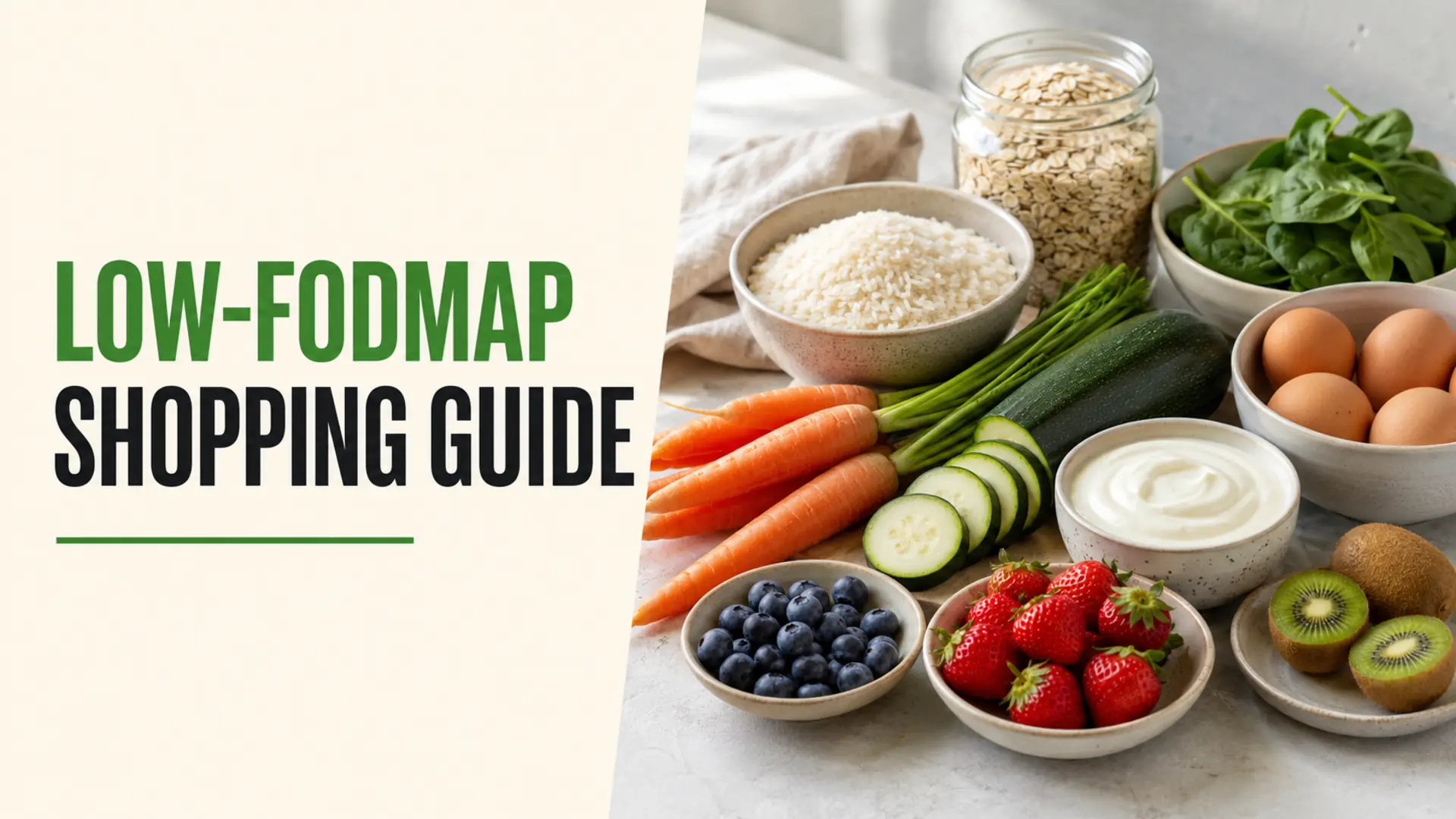
Vegetable options commonly used in low-FODMAP plans
- Carrots
- Cucumbers
- Zucchini
- Baby spinach or other suitable leafy greens
- Bell peppers, with colour and serving size checked
- Green beans
- Bok choy
- Potatoes
- Eggplant
Fruit options commonly used in suitable portions
- Strawberries
- Blueberries
- Kiwi
- Oranges or mandarins
- Grapes
- Pineapple
- Firm bananas, depending on ripeness and portion
Ripeness, variety and quantity can change FODMAP content. Add the planned serving to your list rather than writing only “fruit.” This makes it easier to avoid accidentally combining several servings in one meal.
Grains and Starches
- Rice
- Quinoa
- Oats in a suitable serving
- Polenta or cornmeal
- Rice noodles
- Potatoes
- Certified gluten-free bread or cereal when the ingredient list fits
- Specific traditionally fermented breads when confirmed suitable
Low FODMAP is not the same as gluten-free. Wheat, rye and barley can contain fructans, while gluten is a protein. People with celiac disease must follow strict gluten-free guidance for a different medical reason. Do not remove gluten before appropriate testing if celiac disease is being investigated.
Protein and Dairy Options
Plain unseasoned animal proteins contain little or no carbohydrate, but marinades, breading, sauces and processed products may include onion, garlic, wheat, sweeteners or other relevant ingredients.
- Eggs
- Plain fish, poultry or meat
- Firm tofu, with type and portion confirmed
- Suitable canned legumes in measured portions, when included in the plan
- Lactose-free milk or yogurt
- Hard cheeses or other lower-lactose options in suitable portions
- Fortified plant-based alternatives with labels checked
Check protein, calcium and vitamin D intake when dairy is limited. A dietitian can help identify appropriate alternatives.
Flavour Without Onion and Garlic
- Garlic-infused oil produced safely and without garlic pieces
- Green tops of spring onions or scallions, when suitable
- Chives
- Fresh ginger
- Lemon or lime
- Fresh herbs
- Dried spices without onion or garlic powder
- Mustard, soy sauce or condiments after checking ingredients and portions
FODMAP carbohydrates are not oil-soluble, which is why properly prepared infused oil is often used for garlic flavour. However, homemade oil containing fresh garlic can create a food-safety risk if stored incorrectly. Use a commercially prepared product or follow authoritative food-safety instructions.
Read Labels for Hidden Ingredients
- Onion, garlic and their powders
- Inulin, chicory root fibre or fructooligosaccharides
- Honey, agave or high-fructose sweeteners
- Polyol sweeteners such as sorbitol, mannitol, xylitol and maltitol
- Milk solids or lactose when lactose is being limited
- Wheat-based thickeners or ingredients relevant to your plan
Ingredient names and labelling rules differ by country. When a product is unclear, choose a simpler alternative or ask your dietitian how to assess it.
Build Three Simple Meal Formulas
- Breakfast: oats in a suitable serving with lactose-free yogurt and an approved fruit portion.
- Lunch bowl: rice or quinoa, plain protein, spinach, cucumber, carrots and an appropriate dressing.
- Dinner plate: fish, poultry, eggs or tofu with potatoes and two suitable vegetables.
Use the same base ingredients across meals to keep the list manageable. Our guide to ingredient substitutions can help, but verify every swap against current FODMAP serving guidance.
Organize the Shopping Trip
- Write the current phase of the diet at the top of the list.
- Add exact foods and intended serving sizes from your approved resource.
- Check the pantry for rice, oats, oils, herbs and spices.
- Plan how delicate produce will be used early in the week.
- Group items by aisle using this shopping-list organization method.
- Keep notes for products or ingredients to ask your dietitian about.
A pantry audit can also reduce duplicate specialty products, while this recipe-scaling guide helps prevent unplanned portion changes.
When to Seek Medical Guidance
Digestive symptoms can have causes other than IBS. Seek medical assessment for persistent symptoms, unexplained weight loss, bleeding, fever, anemia, nighttime symptoms or a meaningful change in bowel habits. The National Institute of Diabetes and Digestive and Kidney Diseases notes that different dietary changes help different people and that a doctor may recommend working with a dietitian.
General balanced-eating resources such as Canada’s Food Guide can support broader meal planning, but they do not replace individualized low-FODMAP advice. Readers elsewhere can use equivalent guidance from their national health authority.
Final Takeaway
A low-FODMAP shopping list should be phase-specific, portion-aware and temporary where appropriate. Use current evidence-based food information, read labels carefully and complete reintroduction so the long-term diet can be as varied as possible. Professional guidance helps protect nutrition while you identify personal triggers.