
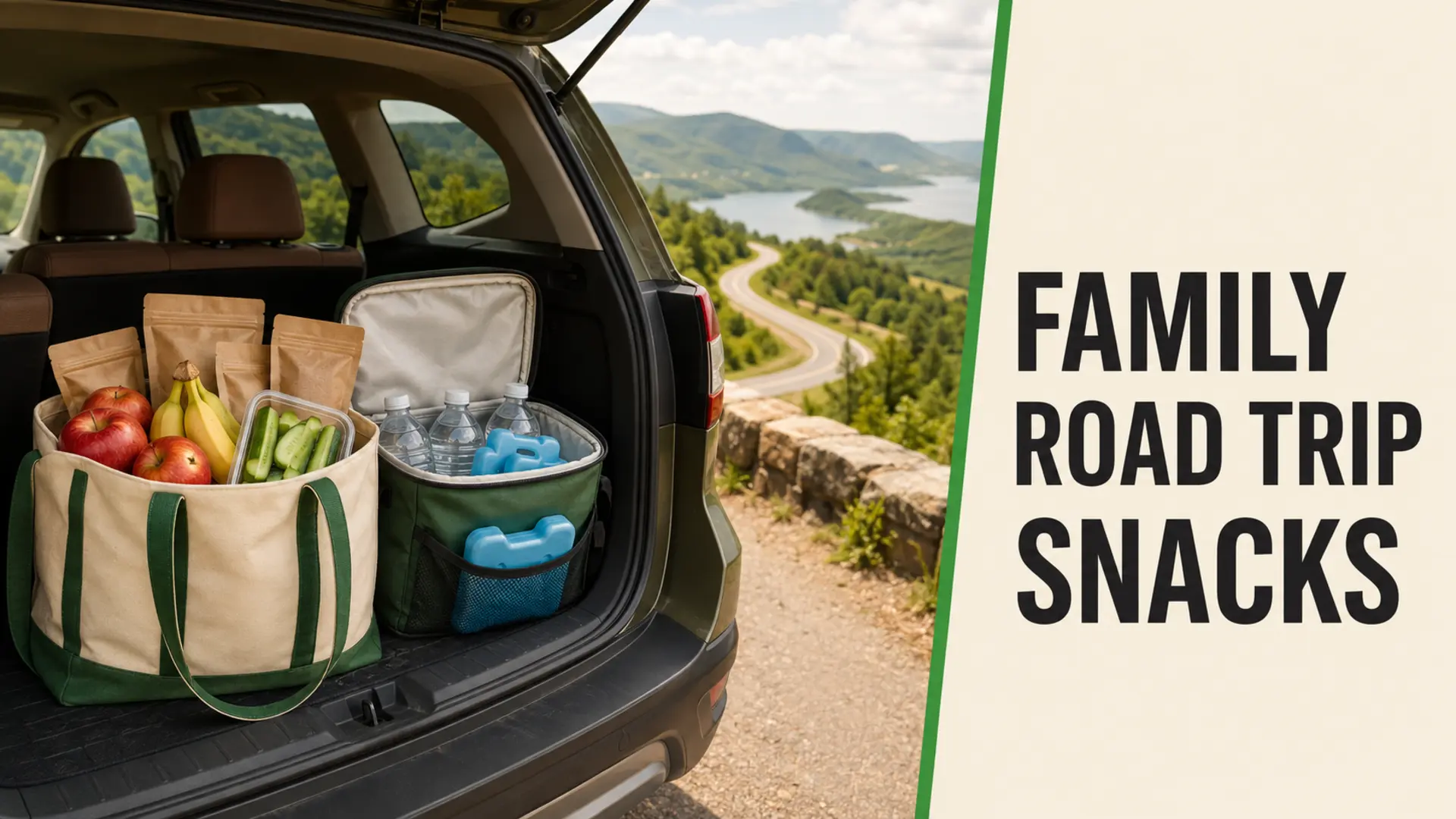
A thoughtful family road trip snack list helps you pack foods that fit your route, travel time, children’s ages, and cooler space. It can reduce unplanned stops, but it does not require expensive organizers or a promise that the car will stay crumb-free. Start with a short grocery checklist, separate chilled foods from shelf-stable choices, and pack only what your family is likely to eat.
Build a family road trip snack list by category
Choose a mix of familiar options rather than buying every snack idea at once. Consider allergies, dietary needs, age-appropriate textures, and how much preparation will be practical during the trip.
- Fresh produce: bananas, easy-peel citrus, prepared berries, cucumber pieces, or suitably cut fruit.
- Chilled foods: yogurt, cheese, hummus, cooked eggs, or sandwiches kept in a properly cold cooler.
- Shelf-stable foods: suitable crackers, dry cereal, fruit puree pouches, or plain unbranded snack packs.
- Drinks: refillable water bottles, plus any drinks required for specific dietary or medical needs.
- Useful supplies: napkins, reusable utensils, food-safe containers, waste bags, and hand wipes.
Choose lower-mess foods for the car
“Mess-free” is rarely realistic, especially with younger children. Lower-mess choices are foods that are easy to hold, do not melt quickly, and can be packed in small food-safe containers. Avoid overfilling containers, and keep dips or juicy foods sealed until the vehicle is safely parked.
Portion snacks before departure when practical. A few smaller containers are easier to distribute than one large bag, and unused portions can remain sealed. Do not use craft or tackle boxes unless the manufacturer explicitly identifies them as food-safe; containers designed for food are the clearer choice.
Keep perishable road-trip snacks cold
Pack yogurt, cheese, eggs, deli meat, cut produce, and other perishables directly from the refrigerator into an insulated cooler with enough ice or frozen gel packs. FoodSafety.gov recommends keeping perishable food at 40°F (4°C) or below and using a thermometer to confirm the cooler remains cold.
- Pre-chill the cooler before packing if possible.
- Keep the cooler full with cold food, ice, or frozen packs.
- Place frequently used drinks in a separate cooler to reduce opening.
- Keep the cooler out of direct sun and avoid leaving it in a hot parked vehicle.
- Discard perishable food when safe temperature control is uncertain.
Adapt foods for younger children
Some popular travel snacks can be choking hazards for babies and young children. The CDC cautions against items including uncut grapes, popcorn, whole nuts, chunks of cheese, raisins, hard pieces of raw fruit or vegetables, and spoonfuls of nut or seed butter for young children. Prepare foods in appropriate shapes and textures, and follow guidance for the child’s developmental stage.
Children should eat while seated and supervised, not while walking at a rest stop or playing in the vehicle. If the driver cannot supervise safely, plan a stop rather than handing food to a child who needs close assistance.
Pack snacks around the route
Estimate how many snack opportunities the route realistically includes, then pack a modest buffer for delays. Separate the food needed for the first part of the drive from later supplies so the entire bag does not need to be unpacked at every stop.
For a short trip, water, fruit, and one familiar shelf-stable snack may be enough. Longer travel may justify a cooler, sandwiches, and a wider selection. Buying based on the route helps avoid both shortages and unnecessary leftovers.
Use a simple road-trip grocery checklist
- Confirm the number of travellers and approximate travel time.
- Check pantry and refrigerator supplies before shopping.
- Choose foods suitable for each child’s age and dietary needs.
- Add cooler packs, food-safe containers, napkins, and water.
- Wash and portion produce before leaving.
- Pack chilled foods last and verify the cooler temperature.
You can reuse ideas from the kid-friendly snack shopping guide, the nut-free lunchbox checklist, and these five-ingredient family meal ideas. Choose only the items that match your trip rather than combining every list.
Make the return trip easier
Bring a separate bag for wrappers and food waste, and remove rubbish at each stop. On arrival, refrigerate safely chilled leftovers promptly and discard food that has not stayed cold enough. Note which snacks were popular and which returned untouched so the next family road trip snack list is shorter and more accurate.
A useful road-trip snack plan balances convenience, food safety, and realistic quantities. Pack familiar choices, use food-safe containers, keep perishables cold, supervise young children while eating, and let the route determine how much food you bring.
Safety resources: See FoodSafety.gov’s road-trip cooler guidance and the CDC’s choking-hazard guidance for young children.
Frequently Asked Questions
What are the best non-messy road trip snacks for kids?
Good options include soft fruit prepared for the child’s age, cheese, yogurt pouches kept cold, sandwiches, dry cereal, crackers, and sliced vegetables. Choose foods that are easy to hold and not crumbly or sticky. Always consider allergy and choking needs.
How many snacks should I pack for a family road trip?
Estimate planned snack breaks, trip length, delays, and the return journey, then add a modest backup. Pack individual portions instead of one open-ended supply. Water and a simple emergency snack are more useful than carrying many foods that can melt, spoil, or create clutter.
How do I keep road trip food cold and safe?
Use an insulated cooler with plenty of ice or frozen gel packs, keep it out of direct sun, and open it briefly. Perishable food should remain at 40°F/4°C or below. See FoodSafety.gov’s travel guidance for cooler and time limits.
Which road trip snacks are choking hazards for young children?
Whole grapes, popcorn, whole nuts, hard candy, gum, chunks of meat or cheese, and spoonfuls of nut butter can pose choking risks. Modify shape and texture according to the CDC’s guidance, and supervise children while they eat.
Is it safe for children to eat while the car is moving?
Eating in a moving car makes it harder for an adult to see and respond to choking. The safer plan is to stop at a suitable place, have children sit upright, and supervise the snack. For younger children especially, schedule food around planned breaks rather than handing it back.
What road trip snacks work without a cooler?
Shelf-stable choices include whole fruit prepared when served, dried fruit for children who can chew it safely, crackers, dry cereal, pretzels, seed or nut butter packets where appropriate, and unopened shelf-stable foods. Check labels, packaging directions, and allergy needs before packing.
How should I pack snacks for easy access in the car?
Keep one small day bag accessible and store reserve food separately. Use labeled, leak-resistant containers and pack wipes, napkins, and a trash bag. Do not place a heavy cooler where it could become a projectile; secure cargo according to the vehicle’s instructions.
How can I avoid buying expensive snacks at rest stops?
Plan the route, portion familiar foods at home, refill water where safe, and reserve one optional purchased item in the budget. Pack a separate return-trip supply so it is not eaten on the outbound drive. A written checklist prevents last-minute convenience-store shopping.
What should I pack for a child with food allergies on a road trip?
Bring enough safe food plus delay coverage, keep labels or packaging, prevent sharing, and clean hands and surfaces. Carry prescribed emergency medication exactly as directed and keep it accessible rather than buried in luggage. Know where medical help is available along the route.
How do I handle leftover road trip food?
Discard perishable food that has been above 40°F/4°C for more than two hours, or more than one hour when temperatures exceed 90°F/32°C. Do not rely on smell or appearance. Keep unopened shelf-stable items for the return trip if their packaging remains intact.