
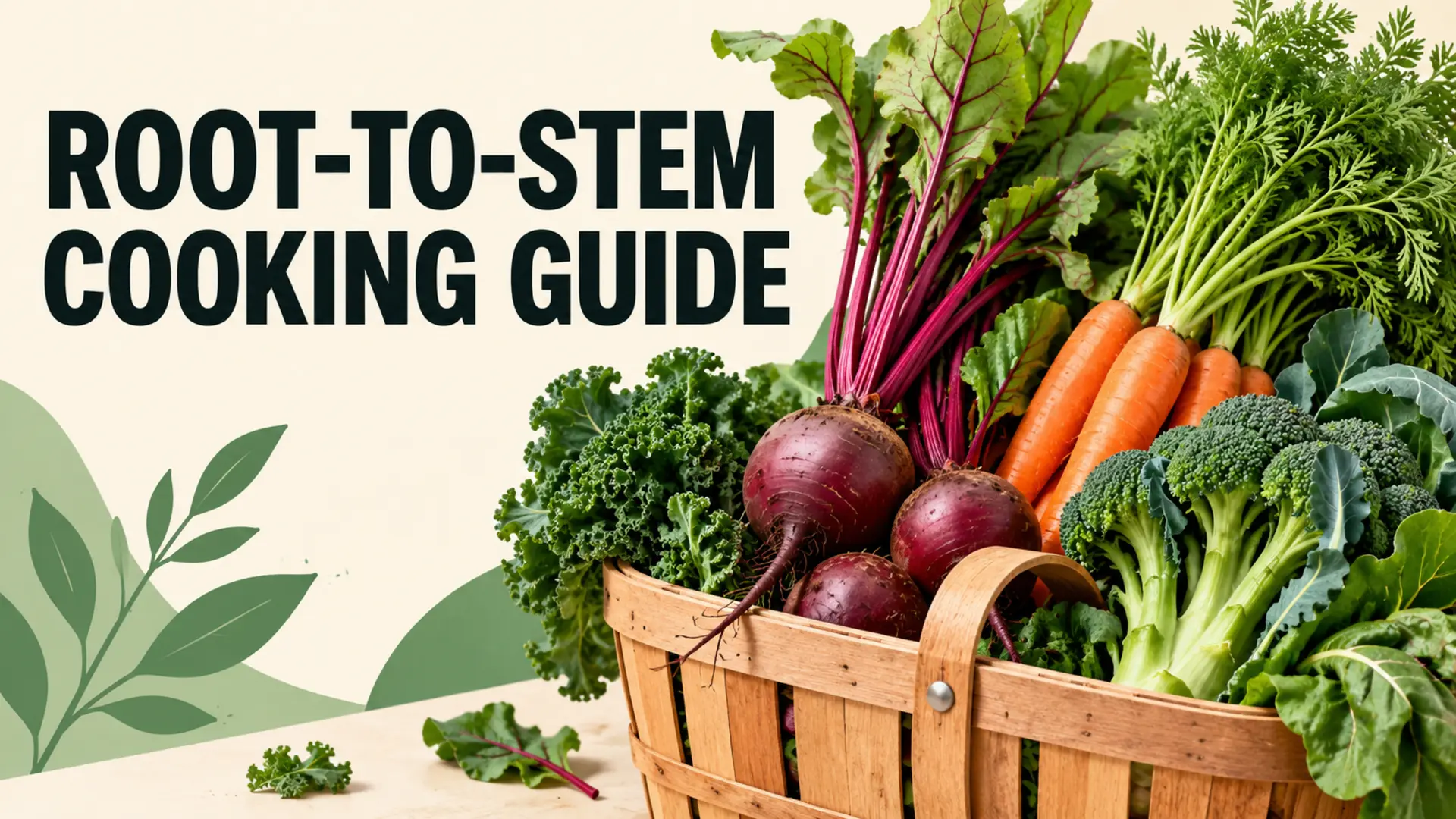
A root-to-stem cooking guide helps you use more of suitable vegetables without treating every peel, leaf or stalk as edible. Start with fresh produce, identify the parts that are normally eaten, and discard anything spoiled, tough, bitter or unsafe.
Root-to-stem cooking guide: useful produce choices
- Beets: roast the roots and sauté clean, fresh greens as you would chard.
- Broccoli: cook the florets and peel tough stems before slicing them into stir-fries or slaw.
- Cauliflower: roast suitable leaves and tender ribs alongside the florets.
- Carrots: use crisp roots for meals; thoroughly washed tops can flavour pesto or sauces if suitable for you.
- Celery: chop fresh leaves into soups, salads or stocks.
Shop and prep with a plan
Choose intact produce with fresh-looking tops only when you expect to use them. Wash vegetables under running water, keep raw produce separate from raw meat, and trim damaged areas. Some plant parts are not edible, so confirm unfamiliar items before cooking.
Pair this approach with a weekly refrigerator audit and the zero-waste grocery blueprint. Those habits make it easier to buy realistic amounts and use the most perishable foods first.
Simple meal ideas
Combine roasted roots with grains and beans, fold sautéed greens into eggs, or add peeled stems to soups. Freeze suitable cooked components promptly if you will not eat them soon.
Use more, safely
Root-to-stem cooking can add variety and reduce avoidable waste, but it is not a reason to eat questionable scraps. Let freshness, safe preparation and personal preference guide what reaches the plate.