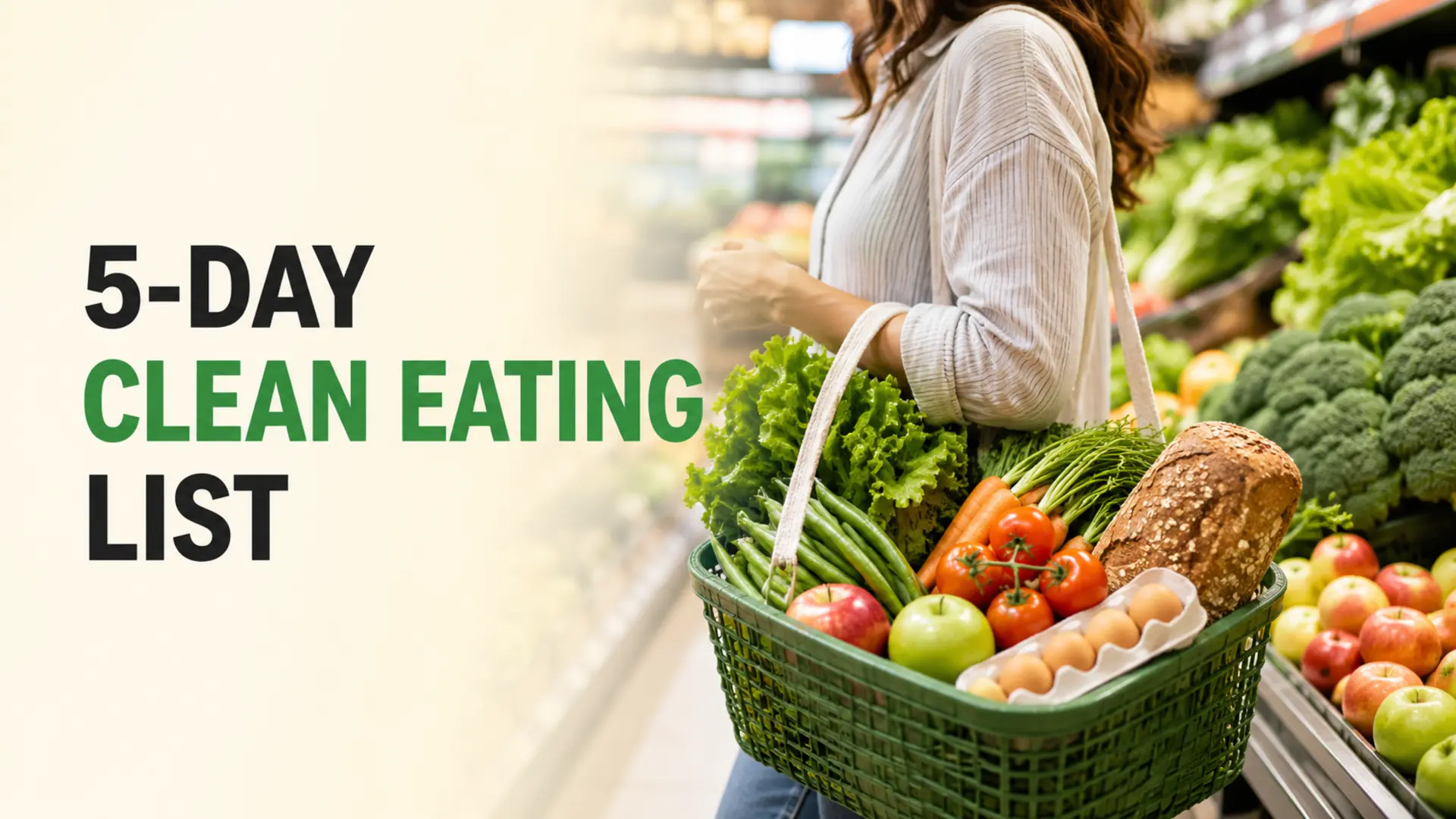
This 5-day clean eating grocery list is a practical framework for meals built around vegetables, fruit, whole grains, legumes, protein foods and useful pantry staples. It does not require “perfect” ingredients, expensive labels or eliminating every packaged food.
“Clean eating” has no single regulated definition and can make ordinary foods sound morally good or bad. Here, the phrase simply means planning five balanced days with a variety of minimally processed staples while choosing convenience foods that fit your needs.
How to use this 5-day clean eating grocery list
Choose meals before quantities. The right amount depends on household size, appetite, dietary needs and whether you want leftovers. Check the refrigerator, freezer and pantry first, then remove items already available.
- Select one or two breakfasts you can repeat.
- Choose lunches that use dinner leftovers or shared ingredients.
- Plan five flexible dinners, including one backup meal.
- Assign delicate produce to early days and sturdy or frozen produce to later meals.
- Adjust quantities to your recipes and household.
A reusable weekly shopping template can make this review easier without turning the list into a rigid rulebook.
Produce checklist
Choose produce you enjoy and can realistically use. Fresh, frozen and canned options can all be useful; compare labels on packaged products when sodium or added sugars matter to you.
- Leafy vegetables: spinach, kale, lettuce, cabbage or local alternatives
- Versatile vegetables: carrots, peppers, onions, tomatoes, broccoli or cauliflower
- Starchy vegetables: potatoes, sweet potatoes, corn or squash
- Fruit: apples, oranges, bananas, berries or seasonal choices
- Flavour ingredients: garlic, ginger, lemons, limes and fresh herbs
- Frozen backup: peas, mixed vegetables, berries or spinach
Plan tender greens and ripe fruit early in the week. Later meals can use cabbage, carrots, frozen vegetables or other sturdy options. This mirrors the fridge-first workflow for planning meals from ingredients already available.
Whole grains and starchy foods
- Rolled oats or another breakfast grain
- Brown rice, quinoa, barley, bulgur or a familiar local grain
- Whole-grain bread, wraps or pasta if preferred
- Potatoes or other starchy vegetables
“Whole grain” does not mean a product must be unprocessed or have only one ingredient. Bread, pasta and oats are processed foods that can still be practical choices. Use the ingredient list and nutrition information to compare products rather than rejecting food solely because it comes in a package.
Protein foods checklist
Pick several protein foods that fit your dietary pattern, culture, budget and cooking plans.
- Beans, lentils and chickpeas
- Tofu, tempeh or other soy foods
- Eggs
- Fish, poultry or meat if included in your diet
- Plain yogurt or dairy-free yogurt if suitable
- Nuts, seeds and nut or seed butter where allergy-safe
You do not need organic, pasture-raised, wild-caught or specialty-labelled products to use this plan. Choose safe, affordable options that meet your preferences. For more ways to combine legumes, grains and vegetables, see this high-fiber meal-prep guide.
Pantry and flavour essentials
- Olive oil or another cooking oil suited to the recipe
- Canned tomatoes and low-sodium broth where available
- Herbs, spices, vinegar, mustard and sauces
- Tahini, hummus or another spread
- Unsalted or lightly salted nuts and seeds if appropriate
- Convenient backup foods such as canned soup, frozen meals or jarred sauce that fit your needs
Convenience products can help a plan survive a busy evening. Compare sodium, added sugars, saturated fat and serving sizes when relevant, but avoid treating one number as the complete measure of a food.
A flexible five-day meal plan
Breakfast options
- Overnight oats with fruit and seeds
- Eggs or tofu with vegetables and toast
- Plain yogurt or a suitable alternative with fruit and oats
Lunch options
- Grain and bean bowls with vegetables and dressing
- Soup with bread and fruit
- Wraps made from dinner leftovers
Five adaptable dinners
- Roasted vegetables, a chosen protein and a grain
- Bean and vegetable skillet with rice or potatoes
- Sheet-pan chicken, fish or tofu with mixed vegetables
- Chickpea and spinach pasta or grain bowls
- Vegetable frittata, tofu scramble or flexible one-pot soup
Swap meals between days as schedules change. A one-pot meal planning workflow can offer additional adaptable ideas that use overlapping groceries.
Prep components instead of five complete meals
- Cook one grain or starchy base.
- Prepare one or two protein foods.
- Roast or steam vegetables for several dishes.
- Wash produce you will use soon and dry it thoroughly.
- Mix one sauce or dressing.
- Leave some ingredients unassembled so meals can change.
Cool cooked food promptly, store it in clean containers and follow local food-safety guidance for refrigeration and reheating. Freeze portions that will not be used within a safe refrigerated period.
Shop affordably without rigid food rules
- Compare unit prices only when you can use or store the larger package.
- Choose seasonal or locally affordable produce.
- Use frozen vegetables and fruit to reduce pressure on fresh items.
- Buy store brands when the ingredients and nutrition fit your needs.
- Replace expensive ingredients with familiar equivalents.
- Plan around promotions only when the food already has a purpose.
For a repeatable promotion-based strategy, use this guide to plan dinners around sales flyers.
What healthy-eating guidance actually emphasizes
The World Health Organization describes adequacy, balance, moderation and diversity as core principles of a healthy diet, while noting that dietary patterns vary with individual needs, culture and locally available foods. Its current guidance supports a variety of minimally processed and unprocessed foods rather than a purity-based definition of eating.
See the WHO’s current healthy-diet guidance. Canada’s Food Guide is another useful reference, and readers elsewhere can consult their national health authority.
Conclusion
A useful 5-day clean eating grocery list is flexible, affordable and culturally adaptable. Start with meals, choose a variety of staple foods, keep practical packaged options and buy quantities you can use. The goal is a workable five-day plan—not a test of food purity.