
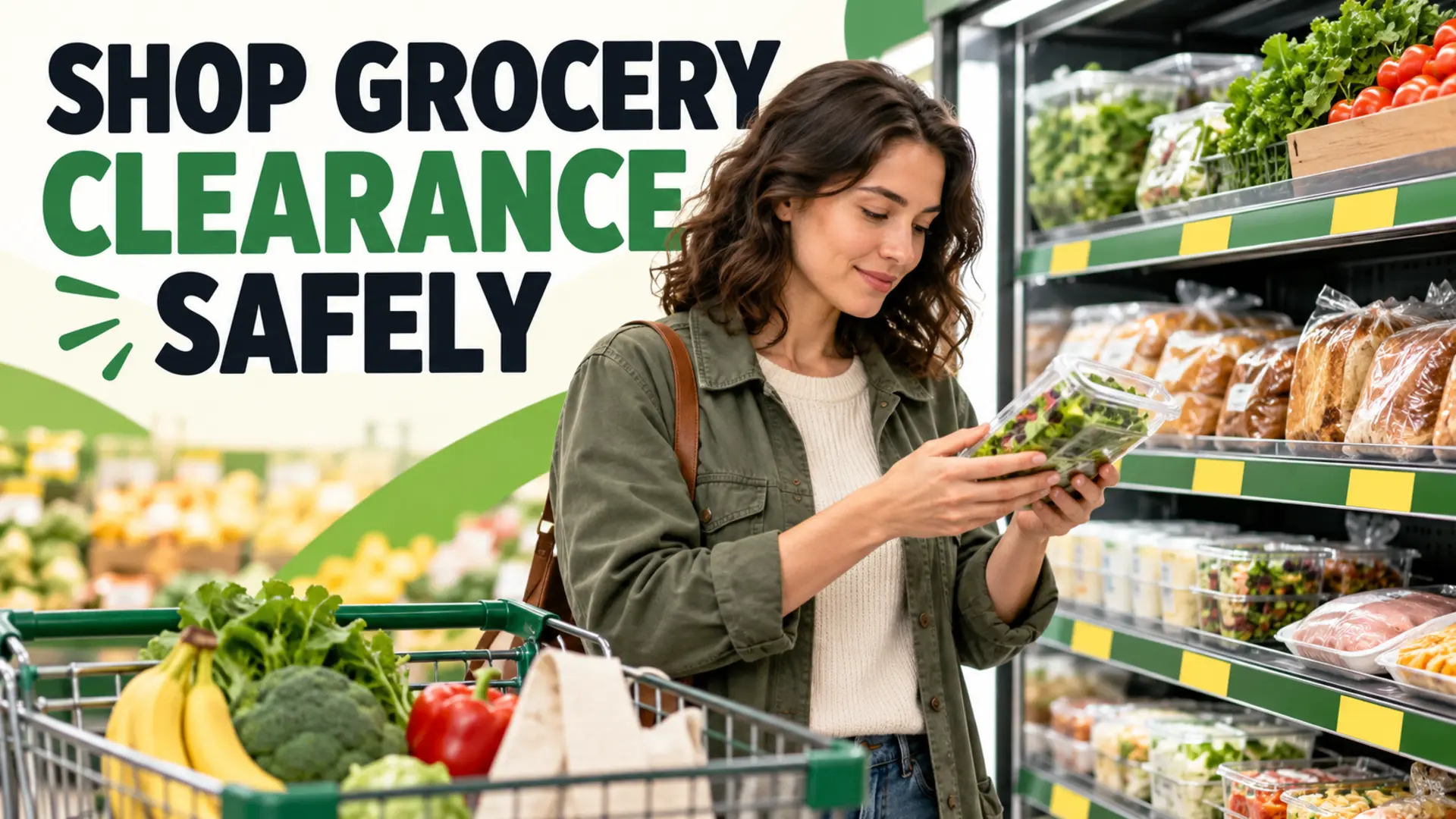
You can shop grocery clearance safely by checking product condition, storage, dates and whether you can use or freeze the item promptly. Markdown timing and discount size vary by store, so avoid assuming a universal schedule or guaranteed saving.
How to shop grocery clearance safely
- Check that packaging is sealed and undamaged.
- Keep chilled and frozen products at safe temperatures.
- Read the complete date label and local guidance.
- Buy only quantities you can use within the appropriate window.
- Plan safe transport, refrigeration or freezing before checkout.
Reduced produce may work for cooking or freezing, while day-old bread can often be frozen. Chilled foods require more caution. Do not buy leaking, swollen, badly damaged or improperly stored packages.
Understand date labels in context
“Best before,” “sell by” and “use by” can mean different things across countries and products. Some relate mainly to quality, while others carry important safety or regulatory meaning. Follow the label, manufacturer instructions and local public-health advice.
Check value, not just the sticker
Compare the reduced unit price with alternatives and include the cost of waste if the food will not be used. Our store-comparison guide covers broader shopping trade-offs, and the weekly refrigerator audit helps avoid buying duplicates.
Use your senses appropriately
Appearance and smell may reveal some quality problems, but they cannot identify every food-safety hazard. Shop grocery clearance safely by combining inspection with temperature control, label guidance and realistic meal planning.