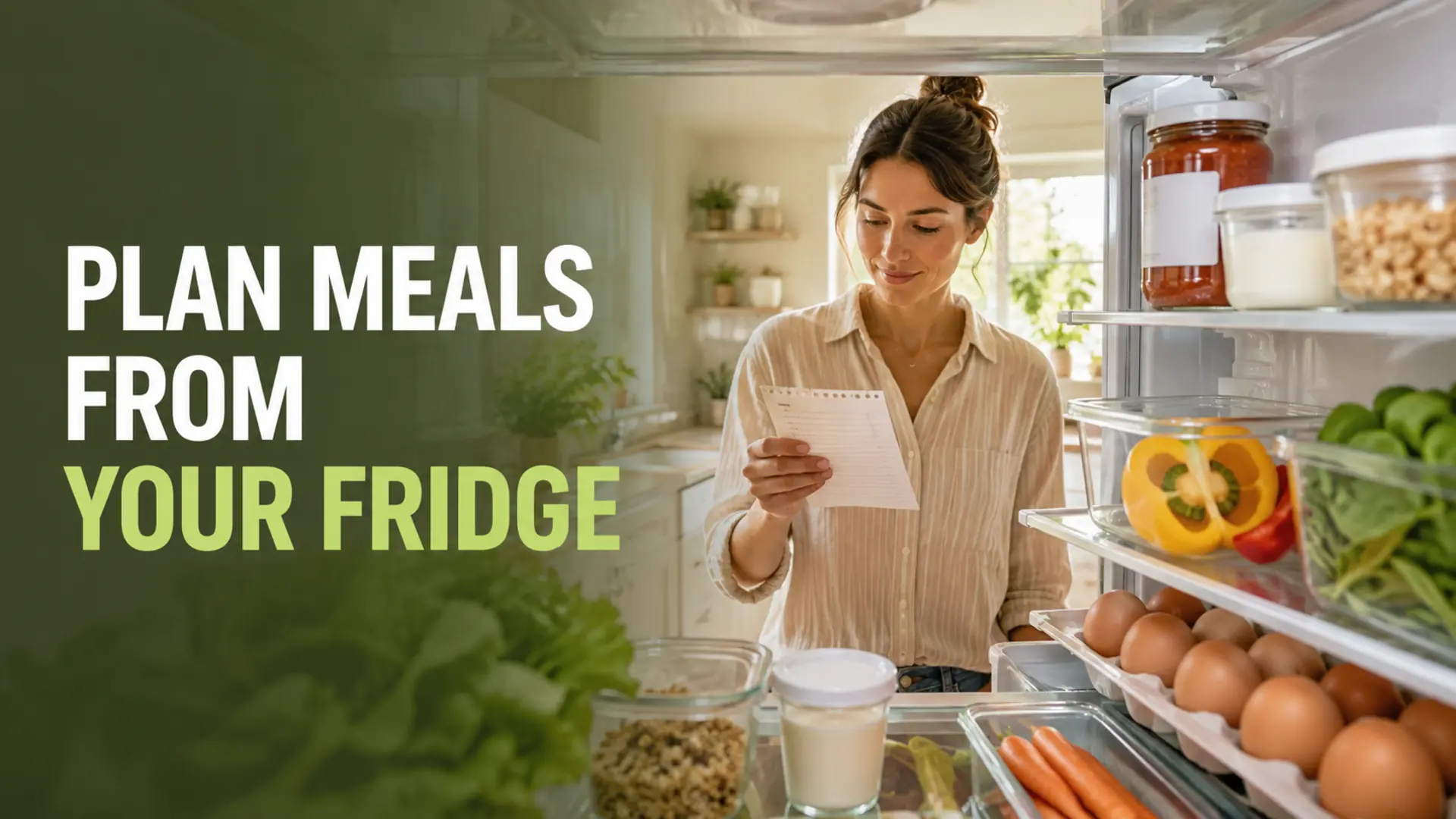
Quick answer: To plan weekly meals from your fridge, inventory what is open or needs attention, separate safe leftovers from uncooked ingredients, and choose flexible meal formulas that use the most perishable foods first. Only then write a grocery list for the genuine gaps.
This “fridge-first” approach makes meal planning more practical because it starts with food you already own. It can reduce duplicate purchases and help you use ingredients intentionally, but food safety comes before avoiding waste. When storage history is uncertain or food may be unsafe, discard it.
Plan Weekly Meals From Your Fridge in Six Steps
The EPA’s household food-waste guidance recommends checking the refrigerator, freezer and pantry before shopping, listing foods that need to be used and planning meals around them. The process below turns that advice into a repeatable weekly routine.
Step 1: Check Food Safety First
Start by confirming that the refrigerator is operating at a safe temperature and that foods have been stored correctly. Look for leaking packages, damaged containers, mold or other clear spoilage. Do not taste food to decide whether it is safe.
Storage limits vary by food. Use the FoodSafety.gov cold-storage chart or the equivalent authority in your country rather than applying one rule to every leftover, dairy product or ingredient.
Step 2: Make a Fast Fridge Inventory
Work shelf by shelf so nothing stays hidden. Write quantities in practical terms: half a pepper, two cooked chicken portions, one cup of rice or an opened jar of sauce.
Produce drawer
- Leafy greens and herbs
- Cut or softening vegetables
- Sturdy vegetables such as carrots and cabbage
- Fruit that is ripe or already cut
Prepared food and leftovers
- Cooked grains and pasta
- Cooked protein
- Soups, stews and sauces
- Restaurant or takeaway leftovers
Dairy, eggs and condiments
- Opened yogurt, milk or dairy alternatives
- Cheese
- Eggs
- Opened dressings, dips and sauces
If storage dates are hard to remember, label future leftovers with the name and date. A simple “use first” bin can keep suitable items visible without implying that everything in it is still safe.
Step 3: Sort Food by Priority
| Priority | What belongs here | Planning action |
|---|---|---|
| Use first | Safe leftovers, ripe produce and opened foods approaching their storage limit | Build the first meals around these |
| Use this week | Fresh ingredients in good condition | Assign to later meals |
| Durable backup | Longer-lasting produce, eggs, condiments and suitable frozen foods | Keep for flexible meals |
| Discard | Unsafe, spoiled or uncertain food | Do not repurpose |
The order should reflect safety and actual condition, not appearance alone. A slightly wilted vegetable may be suitable for cooking, but deterioration does not make an unsafe food safe.
Step 4: Choose Flexible Meal Formulas
Vegetable egg skillet
Combine suitable cooked or raw vegetables with eggs and cheese if desired. Cook ingredients thoroughly and avoid mixing in leftovers that have exceeded official storage guidance.
Grain or noodle bowl
Use a cooked grain or noodles with a safe leftover protein, vegetables and an opened dressing or sauce. Keep the flavour profile coherent rather than adding every available condiment.
Soup, curry or stew
Use sturdy vegetables, beans, grains and broth as a base. Add ingredients according to their cooking time and use a tested method when handling meat, poultry or seafood.
Sheet-pan meal
Roast vegetables with a suitable protein, grouping ingredients with compatible cooking needs. Use a food thermometer and do not rely on one cooking time for every combination.
Wrap, sandwich or salad
Use crisp vegetables, cooked protein, cheese and opened spreads while they remain safe. Keep wet ingredients separate until serving when texture matters.
Step 5: Map the Meals to Your Calendar
Place the meals using the most perishable safe foods earlier in the week. Match effort to your schedule: choose quick bowls or egg dishes for busy evenings and reserve longer cooking projects for days with more time.
- First dinner: safe leftovers plus delicate produce.
- Second dinner: opened ingredients and fresh protein.
- Middle of the week: sturdy vegetables and planned leftovers.
- Flexible night: frozen meal, soup or pantry-based dinner.
- Final dinner: a safe clean-out meal using what remains.
For a broader framework, use this guide to planning 21 meals a week without treating the time estimate as a guarantee.
Step 6: Write the Shortest Useful Grocery List
Once meals are assigned, identify what each one lacks. A fridge-first plan may need only a few supporting items: a protein, one grain, broth, fresh fruit or a vegetable that completes several dinners.
- Cross-check the pantry and freezer.
- Add quantities and intended uses.
- Choose ingredients that work in more than one meal.
- Avoid replacing items already represented by a suitable substitute.
- Organize the result with this aisle-based shopping-list method.
Five Example Fridge-First Combinations
| What you have | Possible meal | Likely gap |
|---|---|---|
| Cooked rice, eggs, carrots, peas | Vegetable fried rice | Appropriate seasoning |
| Spinach, yogurt, cooked chicken | Chicken salad bowl | Grain or bread |
| Roasted vegetables, chickpeas, dressing | Warm grain bowl | Grain |
| Tomato sauce, cheese, vegetables | Vegetable pasta | Pasta |
| Potatoes, eggs, herbs | Potato and herb frittata | Optional side salad |
Keep the System Easy to Repeat
- Schedule one short inventory before the main grocery trip.
- Keep a visible “use first” area.
- Label leftovers clearly.
- Freeze suitable food before it is forgotten.
- Note which ingredients repeatedly go unused and buy less next time.
A monthly pantry audit can extend the same habit beyond the refrigerator. For planned freezer storage, use this freezer meal prep checklist.
Final Takeaway
To plan weekly meals from your fridge, check safety, inventory exact quantities, prioritize suitable food and choose flexible meal formulas. Fill only the genuine gaps with new groceries. The result is a practical weekly plan shaped by what you already have—not by unsupported savings promises or rigid recipes.
Frequently Asked Questions
How do I plan meals using what is already in my fridge?
List safe leftovers, opened ingredients and produce by quantity, then place the most perishable foods into the earliest meals. Choose flexible formats such as bowls, soups, skillets or wraps. Add only the missing ingredients to your grocery list.
What should I use first when planning meals from the refrigerator?
Prioritize safe leftovers, cut produce, ripe fruit and opened products approaching their recommended storage limit. Condition and storage history matter more than appearance alone. Check product-specific guidance and discard food when its safety is uncertain.
How can I tell whether leftovers are still safe to use?
Check when the food was prepared, whether it was refrigerated promptly and whether the refrigerator stayed cold enough. Use an official cold-storage chart for the specific food. Do not taste questionable leftovers to test safety, because harmful bacteria may not change smell or appearance.
What meals work best for a fridge clean-out?
Flexible meals such as frittatas, grain bowls, soups, pasta, stir-fries and sheet-pan dinners can use small quantities. Combine only ingredients that are still safe and make culinary sense. A clean-out meal should not become a reason to keep questionable food.
How often should I inventory my fridge for meal planning?
A quick check before the main weekly grocery trip is usually enough, with shorter checks before cooking. Review leftovers and delicate produce more often. The aim is to notice food early enough to use or freeze it, not to maintain a perfect real-time database.
Can I freeze ingredients that I will not use this week?
Many cooked foods and ingredients freeze well, but quality varies. Freeze suitable food while it is still safe and in good condition, label it with the item and date, and use freezer-safe packaging. Follow authoritative guidance for the specific food.
How do I turn random fridge ingredients into balanced meals?
Start with a suitable protein or satisfying plant food, add vegetables or fruit, then include a grain or starchy food when appropriate. Use sauce or seasoning for coherence. Adjust the combination for allergies, medical needs, culture and appetite rather than forcing every ingredient together.
What if I have ingredients but no complete recipe?
Choose a meal formula instead of searching for an exact recipe. A bowl needs a base, protein, produce and dressing; soup needs liquid, vegetables and suitable additions. Search recipes using the two ingredients most urgently needing use, then buy only genuine gaps.
How can fridge-first meal planning reduce grocery waste?
It connects each new purchase to food already at home and prevents duplicate buying. Planning around open packages also gives perishables a specific use. It cannot eliminate waste, but it replaces vague intentions with scheduled meals and realistic quantities.
Should I plan all seven dinners from fridge ingredients?
Not necessarily. Plan as many meals as current food can support, then leave one flexible night for leftovers, a freezer meal or schedule changes. A smaller realistic plan is better than assigning every ingredient to a dinner that the household may not cook.