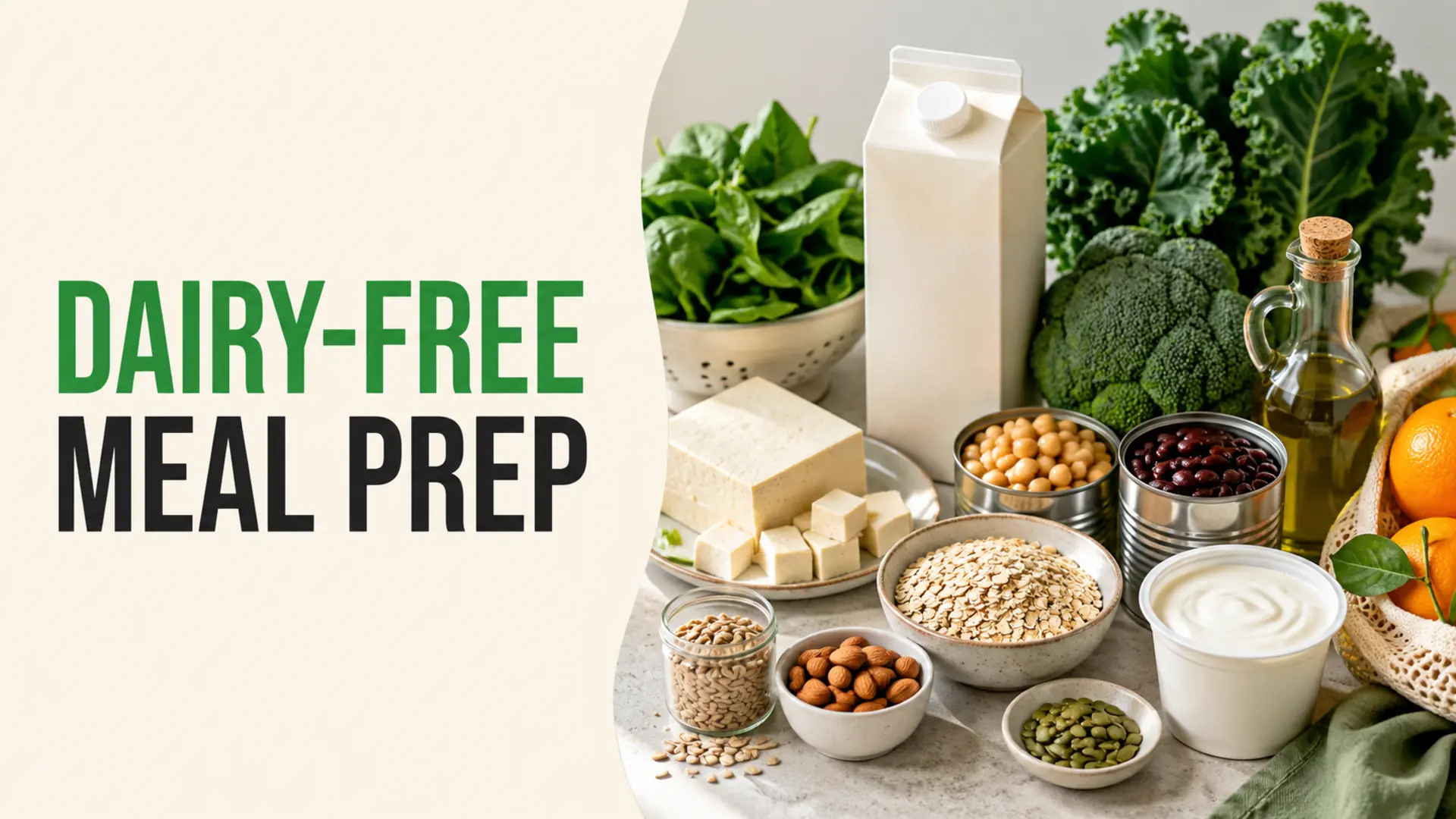
A practical dairy-free meal prep plan starts with ordinary meals and carefully chosen replacements, not a cart full of specialty products. Build the list around foods you already enjoy, then compare plant-based alternatives for flavour, cooking performance, nutrition, allergens and price.
Dairy-free needs also differ. Lactose intolerance and milk allergy are not the same, and a lactose-free dairy product may still contain milk proteins. Anyone managing a diagnosed allergy should follow guidance from their healthcare team and read every relevant label.
Build a dairy-free meal prep plan first
Choose several breakfasts, lunches and dinners before shopping. Note where dairy normally appears—as a drink, topping, sauce, baking ingredient or source of protein—then decide whether that role needs a replacement.
- Breakfast: oats with a suitable plant beverage, fruit and seeds; toast with nut or seed butter; or eggs with vegetables if included in your diet.
- Lunch: grain bowls, bean salads, soups, wraps or planned dinner leftovers.
- Dinner: stir-fries, curries, tomato-based pasta, tacos, roasted tray meals or one-pot dishes.
- Snacks: fruit, vegetables with hummus, dairy-free yogurt, nuts or seeds as appropriate.
This meal-first approach prevents buying several substitutes that serve the same purpose. For a reusable planning structure, adapt this weekly shopping template.
Dairy-free meal prep grocery list
Quantities depend on your household and recipes, but the categories below provide a flexible starting point.
Plant beverages and dairy-free yogurt
- An unsweetened plant beverage suited to cereal, oats, cooking or baking
- A plain dairy-free yogurt for breakfast, dressings or sauces
- A shelf-stable carton only if it fits your storage and usage pattern
Products made from soy, oats, almonds, coconut, peas and other ingredients vary considerably. Compare the Nutrition Facts panel and ingredients rather than assuming all alternatives are equivalent.
Protein foods
- Beans, lentils and chickpeas
- Tofu, tempeh or another soy food if suitable
- Eggs, fish, poultry or meat if included in your diet
- Nuts, seeds and seed or nut butters where allergy-safe
Produce, grains and pantry staples
- A mix of fresh and frozen vegetables
- Fruit for meals and snacks
- Oats, rice, quinoa, pasta, bread or other preferred grains
- Olive oil, tahini, tomato products, herbs, spices and broth
- Canned coconut milk for recipes where its flavour and richness fit
Beans, vegetables and whole grains also fit naturally into high-fiber meal prep, though fibre needs and tolerance vary.
Compare plant-based alternatives carefully
A replacement should match the job. A beverage used in coffee may need different flavour and texture from one used in soup. A yogurt for breakfast may not work as a savoury sauce. Test one product at a time before buying multiples.
- For cereal and oats: choose a flavour you enjoy and review fortification and added sugars.
- For savoury sauces: use an unsweetened product without flavours that conflict with the dish.
- For baking: follow the recipe’s tested substitution where possible.
- For richness: coconut milk, blended beans, tahini or cashews may work, but each changes flavour and allergen considerations.
- For toppings: herbs, toasted seeds, breadcrumbs or nutritional yeast can add flavour without trying to imitate cheese exactly.
Check calcium, vitamin D and protein on labels
Removing dairy changes the foods that may have supplied calcium, vitamin D, protein and other nutrients. Needs vary, so avoid treating one substitute as automatically complete. The U.S. National Institutes of Health notes that many milk substitutes are fortified with calcium and that plant beverages are often fortified with vitamin D, but amounts differ by product.
Compare serving size, calcium, vitamin D, protein, added sugars and sodium on the label. Shake fortified beverages as directed because added minerals may settle. If dietary restrictions make it difficult to meet your needs, seek individualized advice from a qualified healthcare professional.
Read labels when milk allergy is involved
The U.S. Food and Drug Administration identifies milk as a major food allergen. On foods regulated by the FDA, milk must be identified in the ingredient list or a “Contains” statement when it is an ingredient. Other countries have their own labelling requirements, so use the rules that apply where you shop.
Ingredients such as whey and casein are milk proteins. A product labelled lactose-free is not necessarily safe for someone with milk allergy. Also review advisory statements and cross-contact information according to your allergy plan. The FDA has reported that some products marketed as dairy-free, including certain dark chocolates, have contained unintended milk.
For detailed guidance, consult the FDA’s current food-allergy label guidance or the relevant food-safety authority in your country.
Make five flexible dairy-free meal components
- Cook a grain: rice, quinoa, pasta or another preferred base.
- Prepare a protein: beans, lentils, tofu, eggs or an animal protein, depending on your diet.
- Roast or steam vegetables: choose options that suit several meals.
- Mix one sauce: try tahini-lemon, tomato-herb, pesto without cheese, or a suitable yogurt dressing.
- Keep fresh finishing ingredients: herbs, citrus, chopped vegetables or seeds can change the character of repeat components.
These components can become bowls, wraps, salads and warm dinners. For another adaptable framework, use this one-pot meal planning guide.
Five dairy-free meal ideas
- Lentil and vegetable soup with bread
- Tofu or chicken stir-fry with rice and greens
- Chickpea grain bowls with tahini dressing
- Tomato pasta with white beans and herbs
- Overnight oats with a fortified plant beverage, fruit and seeds
Check every packaged ingredient when an allergy is involved, including broth, bread, sauces, chocolate and seasoning blends. If you are also managing gluten avoidance, the label and cross-contact steps in this gluten-free meal prep guide provide a useful parallel workflow.
Store dairy-free meal prep safely
Plant-based does not mean shelf-stable after opening. Refrigerate prepared foods and opened products according to their labels, cool cooked food promptly, and use clean containers. Keep raw animal products separate from ready-to-eat ingredients when they are part of the plan.
Freeze portions you will not use within a safe refrigerated period. Texture can change after freezing, especially in plant yogurts, sauces and some tofu preparations, so test a small amount before freezing a full batch.
Conclusion
Dairy-free meal prep works best when you plan meals first, select substitutes for specific jobs and compare labels carefully. Build around vegetables, grains, protein foods and versatile sauces, then add only the alternatives your recipes need. For allergies or nutritional concerns, use authoritative label guidance and individualized professional advice.
For broad healthy-eating guidance, Canada’s Food Guide provides one adaptable reference; readers elsewhere can consult their national health authority.