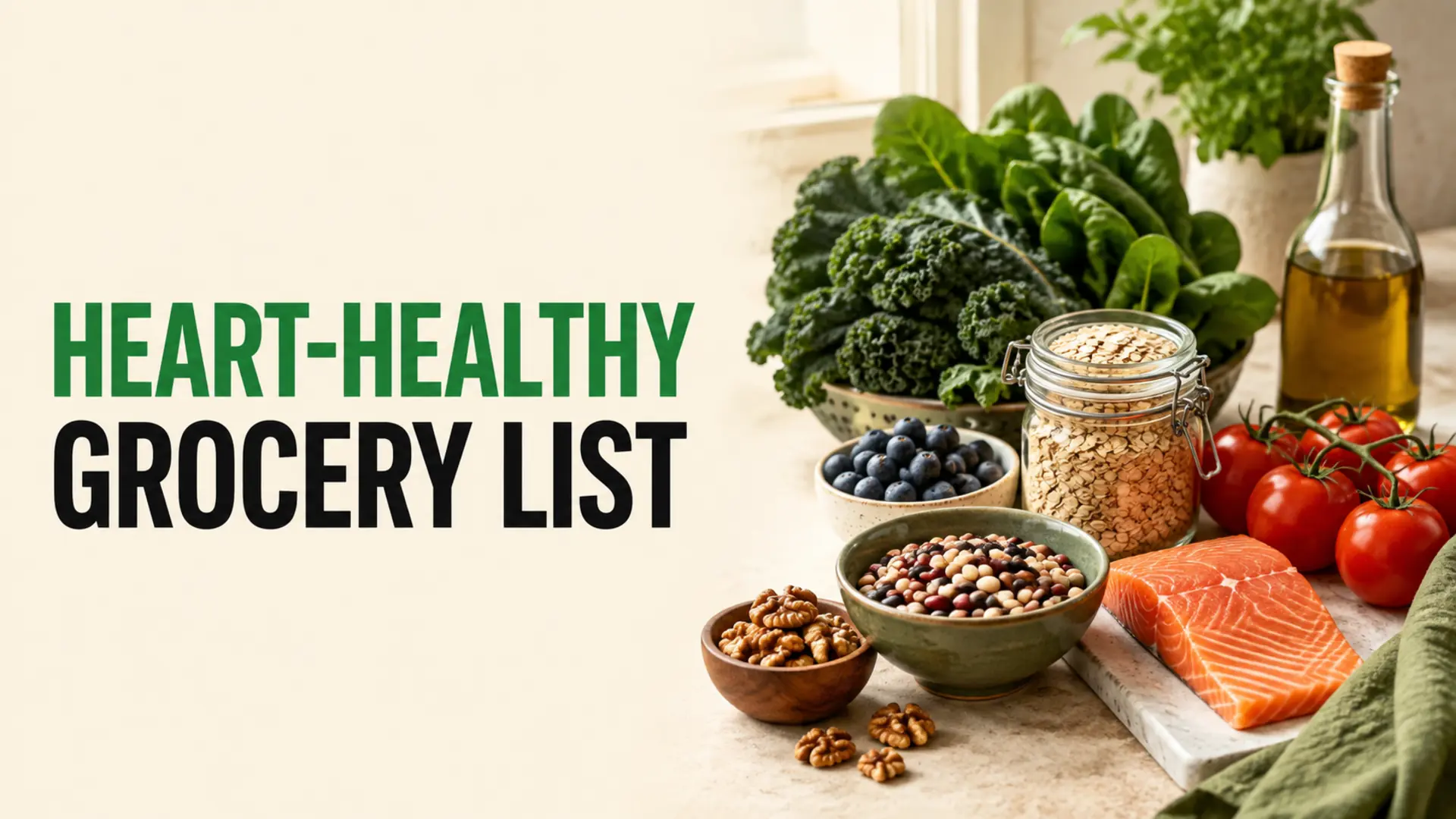
A useful heart-healthy grocery list is built around an overall eating pattern, not a handful of “superfoods” or a rigid set of rules. Start with vegetables, fruit, whole grains, beans, nuts, seeds, fish and other minimally processed choices that fit your preferences, culture and budget.
This guide offers a flexible shopping strategy for everyday meals. It does not replace advice from a doctor or registered dietitian, especially if you have heart disease, high blood pressure, kidney disease, food allergies or take medicines that affect nutrients such as potassium.
Build a heart-healthy grocery list around patterns
The American Heart Association emphasizes the pattern of choices over time. Its current diet and lifestyle recommendations prioritize fruits and vegetables, whole grains, healthy protein sources, liquid non-tropical vegetable oils and minimally processed foods while limiting added sugars, sodium and saturated fat.
You do not need every item on every trip. Choose several foods from each section that can work together across breakfasts, lunches and dinners.
Produce: choose variety and practicality
Fresh, frozen and canned produce can all contribute to a balanced cart. Select what you are likely to prepare before it spoils.
- Leafy greens, broccoli, cabbage, carrots and tomatoes
- Peppers, squash, mushrooms and onions
- Berries, apples, pears, oranges or seasonal fruit
- Frozen vegetables and fruit without heavy sauces or added sugars
- Canned vegetables with lower-sodium options when available
Potassium-rich foods are often part of heart-healthy patterns, but more potassium is not appropriate for everyone. People with kidney disease or certain medication plans should follow individualized clinical advice.
Whole grains and high-fiber staples
Whole grains add variety and fiber to meals. Compare labels because package wording can be confusing, and choose options that fit your cooking time.
- Oats or barley
- Brown rice, quinoa, bulgur or other familiar whole grains
- Whole-grain bread, wraps or pasta
- Plain popcorn or whole-grain crackers
Beans, peas and lentils can also contribute fiber and protein. For more ways to prepare these ingredients, use this high-fiber meal prep guide.
Choose flexible protein options
A practical list can combine plant and animal protein sources rather than depending on one “perfect” food:
- Beans, lentils, chickpeas and tofu
- Unsalted or lightly salted nuts and seeds
- Fish and seafood, including fresh, frozen or canned choices
- Eggs
- Lean, unprocessed meat or poultry if included in your eating pattern
- Plain yogurt, milk or fortified alternatives that suit your needs
Wild-caught fish is not a universal requirement, and no single variety needs to appear every week. Cost, availability, sustainability preferences and dietary restrictions all matter.
Fats, sauces and flavour builders
Keep a small group of ingredients that make simple food enjoyable. Olive, canola and other liquid non-tropical vegetable oils can be used according to the recipe and local availability. Nuts, seeds, avocado, herbs, spices, citrus and vinegar can add texture and flavour.
There is no evidence-based reason for a general heart-healthy list to eliminate all refined seed oils. Instead, consider the overall dietary pattern and the amount of saturated fat, sodium and added sugar in the foods you choose.
Read labels without inventing a sodium rule
Packaged foods vary widely, even within the same category. Compare similar products using the serving size, sodium, saturated fat, added sugars and dietary fiber on the label. The U.S. Food and Drug Administration explains that 5% Daily Value or less is considered low and 20% or more is considered high for a nutrient per serving. Other countries may present labels differently.
A fixed sodium-to-calorie ratio is not an official universal shopping rule. A better comparison is between realistic serving sizes of similar products. Check how many servings you actually expect to eat, and consider the rest of the meal.
A categorized shopping list
Use this framework as a starting point:
- Produce: spinach, tomatoes, carrots, apples and frozen berries
- Grains: oats, brown rice and whole-grain bread
- Protein: lentils, tofu, eggs and fish
- Chilled: plain yogurt or a suitable fortified alternative
- Pantry: lower-sodium canned beans, nuts, seeds, oil, herbs and spices
- Optional convenience foods: frozen vegetables, no-added-sugar fruit and simple canned staples
Adjust quantities to household size, planned meals and storage capacity. A reusable weekly shopping template can make this process faster without imposing fixed portions.
Turn the groceries into simple meals
Plan meals by combining a vegetable or fruit, a whole grain or other starch, a protein source and a flavour element. Examples include:
- Oats with berries, walnuts and plain yogurt
- Lentil and vegetable soup with whole-grain bread
- Brown rice bowls with greens, beans and a lemon-herb dressing
- Baked fish or tofu with roasted vegetables and barley
- Whole-grain wraps with chickpeas, crunchy vegetables and yogurt-based sauce
Ingredient overlap makes the list easier to use. Greens can go into a bowl, soup and stir-fry; beans can support lunch and dinner; fruit can work at breakfast or as a snack. This Mediterranean-style meal prep plan provides another flexible framework.
Consider DASH without treating it as a prescription
The National Heart, Lung, and Blood Institute describes DASH as a flexible, balanced eating plan that uses ordinary foods rather than specialty products. It can be a helpful reference for people interested in a blood-pressure-conscious pattern, but personal calorie, sodium and medical needs differ.
If a clinician has provided a sodium, fluid, potassium or medication-related plan, use that guidance instead of a generic internet target.
Make the strategy affordable and repeatable
Check the pantry before shopping, compare unit prices only when package sizes are genuinely useful, and mix fresh foods with frozen or canned staples. Store perishables where they are visible and plan the most delicate produce earlier in the week. You can also plan meals from what is already in your fridge before adding more.
A realistic heart-healthy shopping conclusion
A heart-healthy grocery list should make supportive choices easier, not turn one shopping trip into a medical promise. Prioritize a varied pattern of plants, whole grains and suitable protein sources; compare labels; choose flavourful unsaturated fats; and plan foods you will realistically cook. Small, repeatable choices are more useful than unsupported claims about individual ingredients lowering cholesterol, blood pressure or arterial risk on their own.
For general healthy-eating context, Canada’s Food Guide is one trustworthy resource; readers elsewhere can pair it with guidance from their own national health authority.