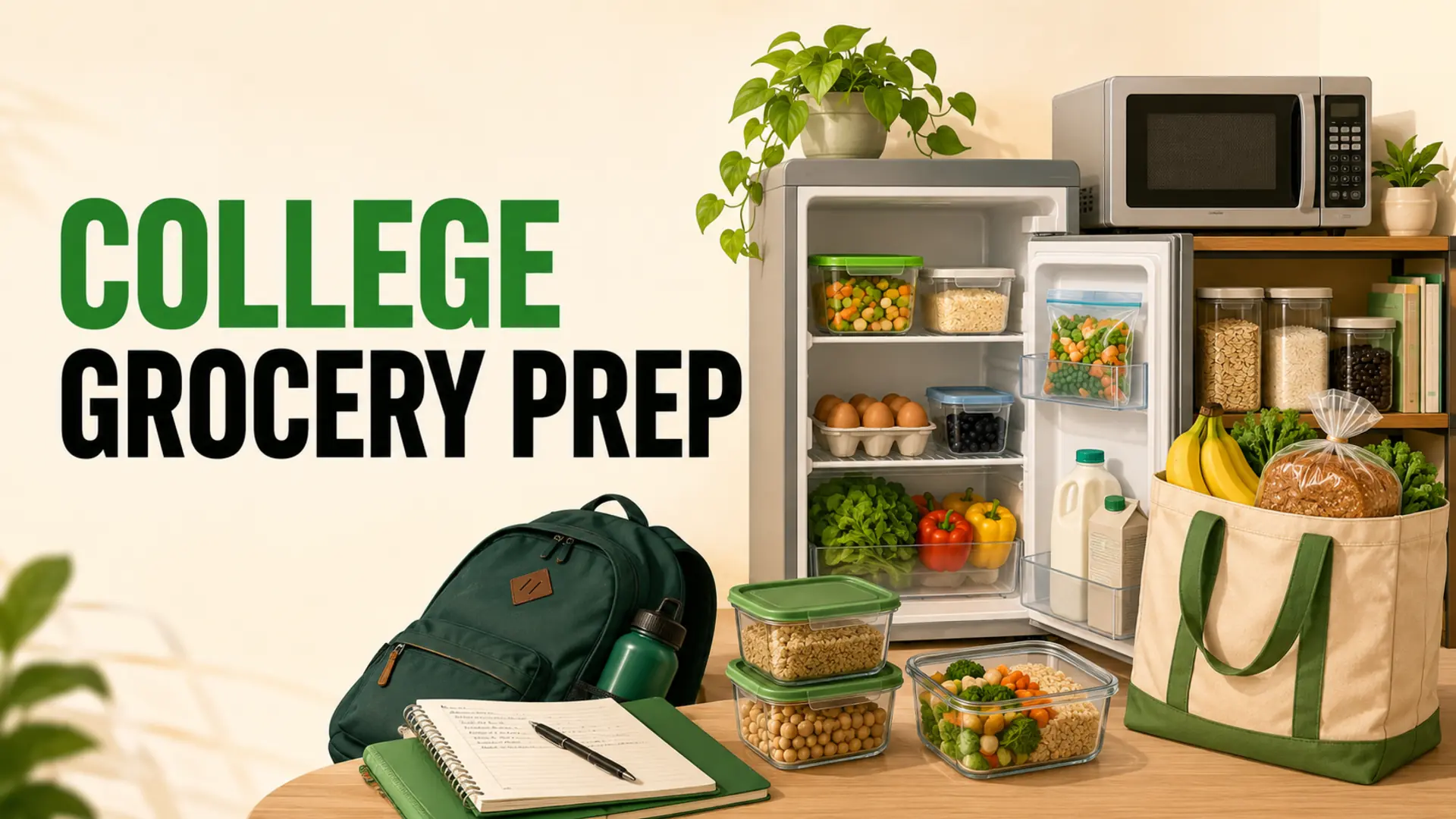
A practical college student grocery prep routine should fit your real schedule, budget, storage and permitted cooking equipment. It does not require a fixed weekly price, a perfect diet or a full kitchen. The goal is to buy useful ingredients, prepare a few flexible components and make the next meal easier.
Prices vary widely by country, city, campus and season, so this guide avoids a universal dollar target. Start with the facilities you have and the foods you already enjoy, then adjust quantities after seeing what you actually use.
Check your space and campus rules first
Before building a grocery list, confirm which appliances are allowed in your residence. Rules for microwaves, kettles, rice cookers, hotplates and air fryers differ between buildings. Never use an appliance that your housing provider prohibits.
Note the usable capacity of your refrigerator, freezer and pantry area. A compact fridge may not hold seven days of prepared meals, and a shared kitchen may require labelled containers. Plan for the space available rather than buying a standard “student grocery haul.”
Choose three to five meal formats
Meal formats are easier to repeat than seven unrelated recipes. Choose a few that match your equipment:
- Oatmeal or yogurt with fruit and nuts
- Rice, grain or potato bowls with vegetables and protein
- Wraps or sandwiches with a filling and crunchy produce
- Pasta with vegetables, beans, fish, tofu or another protein
- Soup with bread, rice or a simple salad
- Egg-based meals if permitted equipment is available
The ingredients can change while the structure stays familiar. For more portable formats, see these lunchbox meal prep ideas; the same principles work for lectures, labs and campus jobs.
Build a flexible college student grocery prep list
Choose a small number of foods from each section rather than buying every suggestion:
- Grains and starches: oats, rice, pasta, bread, wraps or potatoes
- Protein: beans, lentils, eggs, tofu, canned fish, yogurt, poultry or other preferred options
- Vegetables: frozen mixed vegetables, carrots, peppers, tomatoes or sturdy greens
- Fruit: bananas, apples, oranges, frozen fruit or locally affordable choices
- Flavour: salsa, herbs, spices, sauces, nut or seed butter
- Convenience backups: soup, canned beans, frozen meals or other options that fit dietary needs
Check labels, allergies, cultural preferences and dietary requirements. Rotisserie chicken, dairy, peanut butter and eggs are not suitable for everyone, so treat them as options rather than required staples.
Shop for realistic quantities
A low unit price is useful only if the package fits your storage and consumption. Buy delicate produce in smaller amounts until you know your pace. Frozen vegetables and fruit can provide flexibility when fresh food is hard to use between classes.
Before shopping, check your room, shared pantry and freezer. A reusable weekly shopping template can help you track what is needed without rebuilding the list each time.
Use ingredient overlap without making every meal identical
Plan ingredients that can serve two or three purposes. Cooked rice might become a bean bowl, a side dish and a quick lunch. Frozen vegetables can support pasta, soup and a grain bowl. Yogurt might work at breakfast or in a savoury sauce.
Add variety through sauces, herbs, crunchy toppings and different meal formats. This keeps the list compact while avoiding five identical containers.
A simple weekly preparation workflow
- Check your calendar for classes, work, events and meals away from home.
- Choose three to five meal formats.
- Review existing food and storage space.
- Write the list by store section.
- Prepare only the components that will make later meals easier.
- Label refrigerated and frozen food when sharing storage.
- Review what remained before planning the next week.
Preparation might mean cooking one grain, washing produce, portioning snacks or simply grouping ingredients. It does not have to be a full week of completed meals, and it may take more or less than 30 minutes.
Microwave meals need safe technique
Use microwave-safe cookware and follow appliance and package directions. Cover, stir or rotate food when appropriate so it heats more evenly, and respect standing times. FoodSafety.gov advises cooking microwave foods thoroughly and following label directions; its four food-safety steps cover cleaning, separation, cooking and chilling.
A microwave burrito bowl does not have one universal cooking time. Wattage, starting temperature, container shape and portion size all affect heating. When cooking foods that require a safe internal temperature, use a food thermometer rather than relying on appearance.
Store prepared food safely
Keep the refrigerator at the temperature recommended by your local food-safety authority, return perishables promptly and avoid overpacking a mini-fridge. Use clean, covered containers and keep raw animal products separated from ready-to-eat food.
If you cannot store several portions safely, prepare fewer at a time. For food-specific refrigerator and freezer limits, consult the official FoodSafety.gov cold-storage chart.
Make balanced meals from inexpensive components
A useful meal can combine a grain or starch, a protein source, vegetables or fruit and a flavour element. Examples include:
- Oats with banana and nut or seed butter
- Rice with beans, frozen vegetables and salsa
- Pasta with tomato sauce, vegetables and lentils
- A wrap with hummus, vegetables and cheese or tofu
- Soup with whole-grain bread and fruit
For more adaptable grain, legume and produce ideas, use this high-fiber meal prep framework.
Prepare for busy or disrupted weeks
Keep one or two backup meals that require little preparation and suit your facilities. This might be shelf-stable soup, a frozen meal, oats, canned beans with rice or a sandwich. Backup food reduces the pressure to cook when a deadline or late class changes the plan.
If you have access to a shared kitchen, these one-pot meal ideas can reduce the amount of equipment and washing needed.
Review the system, not your willpower
At the end of the week, note what was eaten, forgotten or inconvenient. Buy less of foods that repeatedly remain, and add more of the useful basics. The EPA’s food-waste prevention guidance similarly recommends checking existing food and planning meals before shopping.
Keep college grocery prep realistic
College student grocery prep works best when it fits permitted equipment, limited space and an unpredictable calendar. Start with a short list, a few flexible meal formats and safe storage. Adjust the system from week to week instead of chasing a fixed price, preparation time or “perfect” student diet.
For broader healthy-eating context, Canada’s Food Guide is one trustworthy reference; students elsewhere can pair it with their national guidance and campus food-safety rules.