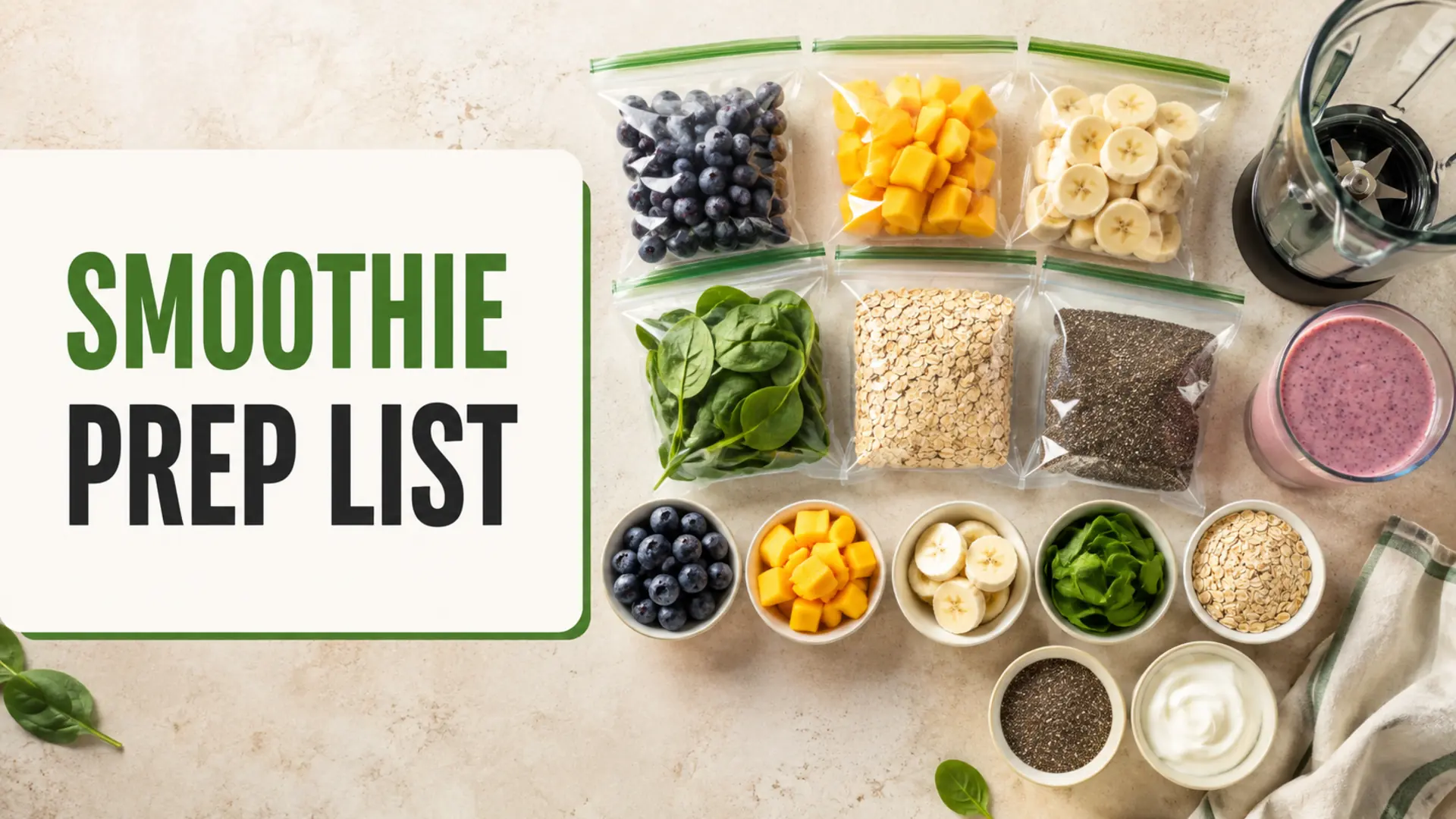
A practical smoothie prep list makes frozen smoothie packs easier to assemble, store and blend. Instead of prescribing one “perfect” serving, it helps you choose fruit, vegetables, protein, texture and liquid according to your appetite, blender capacity and dietary needs.
Freezer packs are convenient, but they are not zero-cleanup meals and they do not need seven ingredients. Start with combinations you already enjoy, prepare only what your freezer can hold and adjust the amounts after testing one pack.
Build a flexible smoothie prep list
Use the categories below as a menu rather than a requirement. Most smoothies need only a few components:
- Fruit: berries, mango, pineapple, peaches, cherries, banana or another fruit that blends well.
- Vegetables: spinach, kale, cooked pumpkin, grated carrot or cauliflower, if you like them.
- Protein or creaminess: plain yogurt, silken tofu, milk, a fortified alternative, nut or seed butter, or protein powder.
- Texture and flavour: oats, chia, ground flax, cocoa, cinnamon, ginger or unsweetened coconut.
- Liquid: water, milk or a suitable alternative, added when blending unless you deliberately freeze it in a blender-safe portion.
Check ingredient labels for allergies and for preparation directions. Protein powders and supplements are optional, and people with medical conditions, during pregnancy or taking medicines should discuss supplements with an appropriate health professional.
Choose portions that fit your blender and appetite
A universal 16-ounce formula is not useful for every person. Blender jars, cups and appetites vary. Begin by loosely filling the drinking glass or blender cup you expect to use, leaving enough room for liquid and movement around the blades.
Test one fresh smoothie before preparing a large batch. Note how much liquid your blender needs, whether the texture is too thick and whether the finished amount suits you. Use that tested combination as the template for future freezer packs.
For a more structured week, add smoothie ingredients to a reusable weekly shopping template alongside the other meals you plan to eat.
Prepare produce safely before freezing
- Wash your hands and clean the work surface, utensils and containers.
- Rinse fresh produce under running water before cutting it. Do not use soap, detergent or bleach on fruits and vegetables.
- Cut away damaged or bruised areas and discard anything rotten.
- Dry washed produce with a clean towel. Less surface moisture helps pieces freeze separately and limits excess ice.
- Peel, pit, core or trim ingredients as needed, then cut them into pieces your blender can handle.
The FDA’s produce-safety guidance also recommends keeping produce separate from raw meat, poultry and seafood during preparation.
Use tray freezing when ingredients clump
Soft fruit, banana slices and some chopped produce can freeze into a solid block when placed directly in a pouch. Spread pieces in a single layer on a lined tray, freeze until firm, then transfer them to a freezer-safe container.
Tray freezing is optional for ingredients you can separate easily. The National Center for Home Food Preservation recommends cutting fruit into manageable chunks, freezing pieces separately when useful, and packing them in moisture-resistant containers.
What belongs inside a freezer smoothie pack?
Fruit, prepared vegetables, oats and some seeds can usually go into the pack. Nut or seed butter can be frozen in small portions if that suits your workflow. Ground flax may be easier to add at blending time so it stays dry and is simple to measure.
Protein powder can be added before or after freezing, but follow its storage directions and avoid exposing the scoop or container to wet hands. Yogurt can be frozen in small portions, although its texture may change; that is usually less noticeable after blending.
Liquids do not have to be excluded from freezing, but a loose pouch of liquid is awkward and may leak. Most people will find it simpler to add liquid to the blender at the time of use.
Package and label smoothie packs properly
- Use clean freezer-safe pouches or rigid containers with tight closures.
- Remove excess air where practical without crushing delicate ingredients.
- Label each pack with the combination and freezing date.
- Freeze packs flat only if the container is designed to do so and the ingredients will not leak.
- Keep the freezer at 0°F (-18°C) or below.
Freezer storage times are mainly about quality when food remains continuously frozen. Flavour, colour and texture can decline over time, so rotate older packs forward instead of relying on a rigid universal deadline. See the USDA’s freezing and food-safety guidance for more detail.
Blend a frozen smoothie pack successfully
- Check your blender manual for limits on frozen ingredients and the recommended loading order.
- Add some liquid to the blender jar.
- Add the freezer-pack ingredients without exceeding the jar’s maximum line.
- Start at a lower speed when the manufacturer recommends it, then increase gradually.
- Pause safely and add more liquid if ingredients stop circulating. Never put a utensil into a running blender.
- Serve promptly and refrigerate any portion you plan to drink later.
There is no guaranteed 60-second blend. Frozen fruit size, blade design, motor power and liquid amount all affect the result.
Five adaptable smoothie pack combinations
- Berry oat: mixed berries, oats, spinach and cinnamon; blend with yogurt and water or milk.
- Mango ginger: mango, pineapple, carrot and ginger; blend with a preferred liquid.
- Peach greens: peaches, spinach and ground cinnamon; blend with plain yogurt or silken tofu.
- Banana cocoa: banana, oats and cocoa; blend with milk or a fortified alternative and optional nut butter.
- Cherry berry: pitted cherries, berries and chia; blend with plain yogurt and water.
Adapt these for allergies, medical needs and what is affordable locally. Frozen produce can be a useful alternative when fresh options are expensive or out of season.
A focused shopping list for one prep session
Choose two fruits, one optional vegetable, one protein or creamy ingredient, one texture ingredient and one liquid. Add freezer-safe containers and labels only if you do not already have them. This smaller framework limits half-used specialty ingredients.
If you are using leafy greens in several meals, the fresh-herb storage guide offers related washing and storage principles. For broader produce planning, see how to plan meals around seasonal produce.
Avoid common smoothie-prep mistakes
- Preparing ten untested packs of a combination you may not enjoy
- Overfilling the blender or ignoring its manual
- Freezing wet produce in one dense block
- Using containers that are not intended for freezer storage
- Forgetting labels and allowing older packs to disappear behind newer food
- Assuming a smoothie automatically meets every nutrition need
Keep your smoothie routine realistic
The best smoothie prep list is short, tested and easy to repeat. Prepare produce safely, freeze manageable pieces, label every pack and add liquid according to your blender. Begin with two or three packs, learn what works and scale up only when the routine genuinely saves effort.