
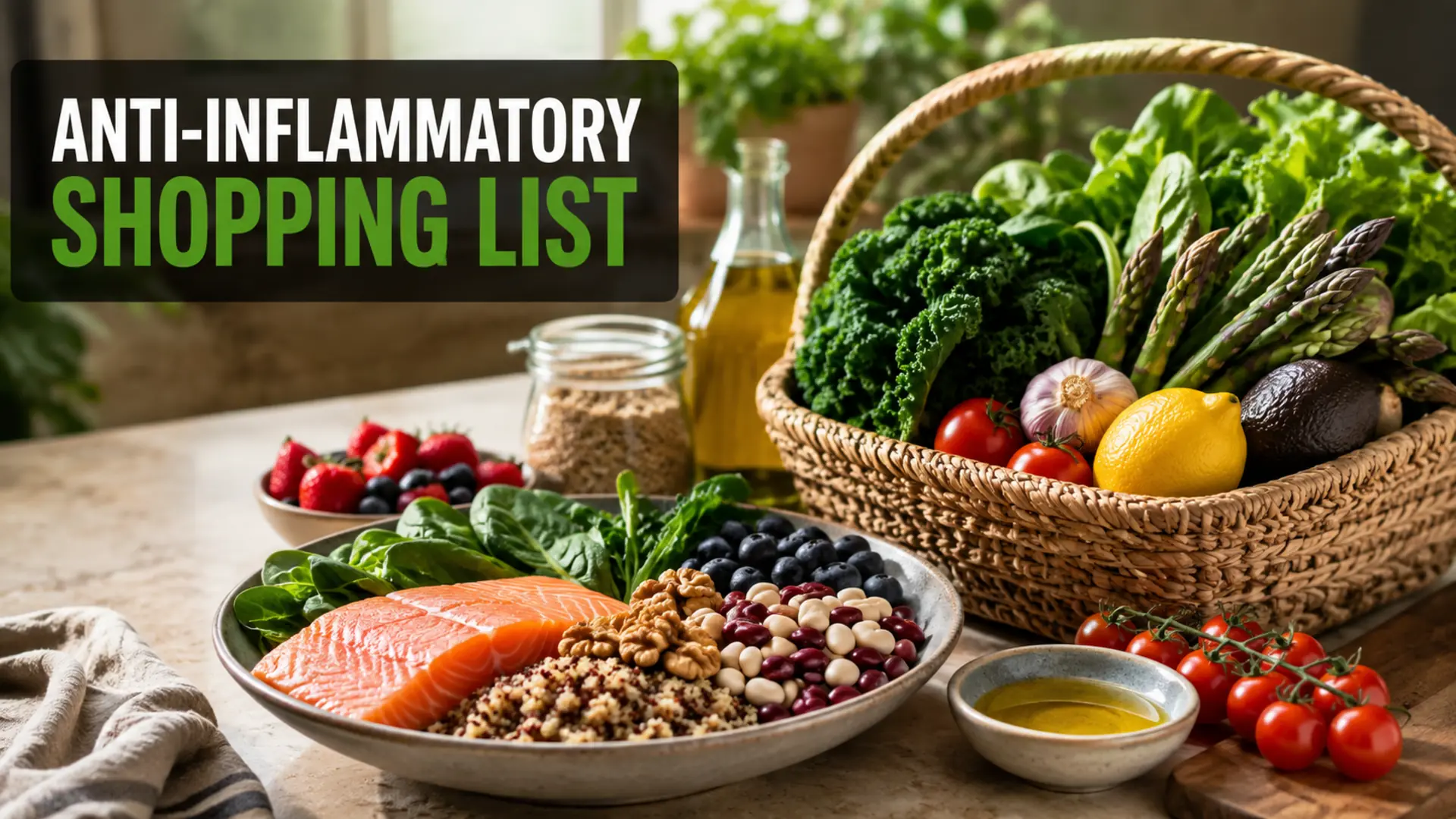
An anti-inflammatory diet shopping list is most useful when it supports an overall eating pattern—not when it promises that one “superfood” will treat a medical condition. A practical list emphasizes vegetables, fruit, whole grains, beans, nuts, seeds, and unsaturated fats, with fish or other proteins that suit your budget and preferences.
This guide turns that broad pattern into flexible grocery categories and simple meals. It does not require wild-caught fish, organic produce, specialty powders, or a rigid banned-food list. If you have a diagnosed inflammatory condition, food allergy, kidney disease, digestive disorder, or take medication, adapt the list with a qualified health professional.
Build an anti-inflammatory diet shopping list by pattern
The strongest starting point is a varied, minimally processed dietary pattern. The American Heart Association’s Mediterranean-style guidance emphasizes vegetables, fruit, whole grains, beans, nuts, seeds, olive oil, and moderate amounts of fish, poultry, eggs, and dairy. You can apply the same structure with foods from any cuisine.
Choose items you already enjoy and can use in more than one meal. Variety over time matters more than buying every ingredient in a single trip.
Vegetables and fruit
Start with several colours and formats. Fresh, frozen, canned, and dried options can all be useful, depending on the product and how you plan to cook.
- Leafy and cruciferous vegetables: spinach, kale, cabbage, broccoli, cauliflower, bok choy, or local equivalents
- Colourful vegetables: tomatoes, peppers, carrots, squash, aubergine, beetroot, and green beans
- Fruit: berries, citrus, apples, pears, grapes, stone fruit, mango, or whatever is seasonal locally
- Convenient choices: frozen vegetables without heavy sauces, frozen fruit without added sugar, and lower-sodium canned tomatoes
Plan at least two uses for fragile produce. Spinach might go into eggs and a bean stew; berries can top oats and yogurt. For more ways to match meals to what is available locally, see our guide to planning meals around seasonal produce.
Whole grains and other high-fibre staples
Whole grains and fibre-rich starches add structure to meals and help the shopping list stay affordable. Pick two or three that fit your cooking routine:
- oats or an unsweetened whole-grain cereal
- brown rice, barley, quinoa, bulgur, millet, or whole-grain couscous
- whole-grain bread, tortillas, or pasta
- potatoes, sweet potatoes, corn, or other regional staples
Check the ingredient list when “whole grain” is important to you, because package colour and front-label wording are not reliable guides. Our high-fibre meal-prep guide offers more combinations using produce and grains.
Beans, lentils, nuts, and seeds
Plant proteins make the list flexible and can stretch meals that also contain fish, poultry, eggs, or dairy. Useful choices include lentils, chickpeas, black beans, white beans, tofu, tempeh, edamame, walnuts, almonds, pumpkin seeds, chia seeds, and ground flaxseed.
Dried pulses are economical when you have time to soak or simmer them. Canned beans save time; draining and rinsing can reduce some of the sodium. Buy nuts and seeds in amounts you can store well, because their oils can become stale.
Fish and flexible protein choices
If you eat seafood, oily fish such as salmon, sardines, trout, herring, or mackerel can fit the pattern. Fresh, frozen, and canned versions all work. You do not need a premium or wild-caught product for the meal to be worthwhile.
Other practical options include eggs, skinless poultry, plain yogurt, tofu, tempeh, and beans. Choose enough variety to build meals you will actually eat. People who avoid animal foods can rely on plant proteins while paying attention to overall nutritional adequacy.
Fats, herbs, and flavour builders
Olive oil is a familiar Mediterranean-style choice, but it is not the only acceptable cooking fat. The American Heart Association includes several liquid non-tropical plant oils, such as canola, corn, olive, soybean, safflower, and sunflower oils, as sources of unsaturated fats. That evidence does not support treating ordinary seed oils as inherently inflammatory or insisting on olive and avocado oil exclusively.
Add flavour with garlic, ginger, turmeric, cinnamon, cumin, herbs, citrus, vinegar, chilli, or pepper. Use these as foods and seasonings, not as substitutes for medical care. The National Center for Complementary and Integrative Health notes that evidence for turmeric or curcumin across health conditions remains limited and that concentrated products can cause side effects. Speak with a clinician or pharmacist before using supplements, especially if you take medication.
A practical anti-inflammatory shopping list
Use this as a template rather than a prescription. Cross out anything that does not fit your culture, access, allergies, or preferences.
- Vegetables: two leafy or cruciferous choices, three other colours, garlic or onion
- Fruit: two everyday fruits plus one frozen or seasonal choice
- Whole grains or starches: oats, one quick-cooking grain, one bread or tortilla, potatoes or another staple
- Plant proteins: two kinds of beans or lentils, plus tofu or tempeh if desired
- Other proteins: fish, eggs, poultry, or plain dairy according to preference
- Fats: one liquid plant oil, one nut, and one seed
- Flavour: herbs, spices, citrus, vinegar, and a lower-sodium stock or seasoning
If you want a broader template for this style of eating, use our Mediterranean diet meal-prep grocery plan.
Turn the groceries into simple meals
Build each meal from a produce item, a fibre-rich base, a protein, and a flavourful fat or sauce. For example:
- oats with berries, plain yogurt or soy yogurt, walnuts, and cinnamon
- lentil and vegetable soup with whole-grain bread
- brown rice with broccoli, tofu, and a ginger-sesame dressing
- salmon or white beans with roasted vegetables and potatoes
- whole-grain pasta with tomatoes, spinach, chickpeas, and olive oil
These are formulas, not rules. Swap ingredients based on price, season, and what is already in the kitchen. A heart-healthy grocery-list strategy can provide additional label-reading and meal-building ideas.
Shop with labels and budget in mind
Compare similar products for sodium, added sugars, and saturated fat, especially for sauces, soups, breads, flavoured yogurt, and ready-made meals. A product does not become essential because it says “anti-inflammatory” on the package.
Frozen vegetables, canned beans, oats, lentils, cabbage, carrots, and seasonal fruit can keep the list economical. Before shopping, check the pantry and freezer, choose meals with overlapping ingredients, and buy realistic amounts. This reduces waste without turning the plan into an expensive specialty-food haul.
What this eating pattern can and cannot do
A varied dietary pattern can support overall health, but food cannot diagnose, cure, or replace treatment for inflammatory diseases. Avoid universal claims that one ingredient will “neutralize” inflammation, work like a medicine, or prevent pain and fatigue. Individual needs and responses differ.
Use the anti-inflammatory diet shopping list as a calm weekly framework: buy a range of plants, include satisfying proteins and unsaturated fats, prepare foods in ways you enjoy, and repeat what works. Sustainable habits are more useful than chasing a perfect basket of so-called superfoods.