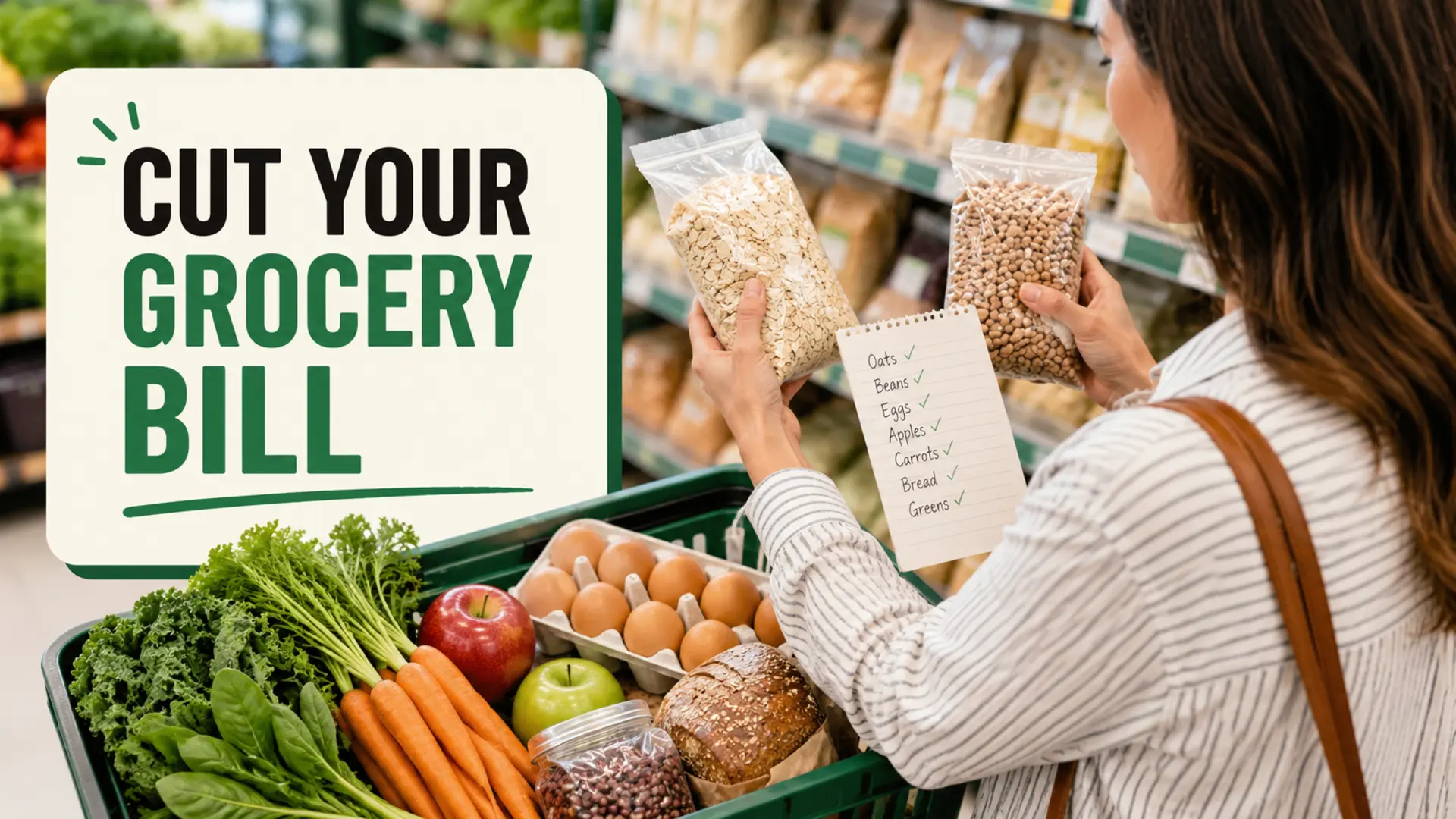
If you want to cut your monthly grocery bill without lowering food quality, start by changing how you plan, compare and use what you buy. A 30% reduction can be a useful goal, but the result depends on your current habits, local prices, household size and dietary needs. The practical aim is to remove waste and convenience premiums while keeping meals balanced and enjoyable.
How to Cut Your Monthly Grocery Bill Step by Step
Do not overhaul everything at once. Review one month of grocery receipts, identify the categories that cost the most, and choose two or three changes to test. Measure your actual total rather than relying on a single unusually cheap shopping trip.
1. Start with a pantry and freezer check
Before planning meals, check food you already own. Put ingredients that should be used soon at the front and build several meals around them. A simple monthly pantry audit helps prevent duplicate purchases and makes overlooked ingredients easier to use.
2. Plan flexible meals around useful sales
Look at your store’s current offers, then choose discounts that fit meals your household will actually eat. A sale is not a saving if the food goes unused. Use one discounted protein, grain or seasonal vegetable across more than one meal, and keep an alternative in mind if the shelf is empty. Our guide to planning dinners around supermarket sales flyers explains this method in more detail.
3. Compare unit prices, not package prices
A larger package may look economical but still cost more per unit. Compare the price per kilogram, pound, litre or ounce shown on the shelf label where available. Choose the size you can finish safely. Bulk buying works best for frequently used shelf-stable or freezable foods, not unfamiliar products bought only because they are discounted.
4. Test store brands selectively
Try store-brand versions of basic items such as oats, rice, pasta, canned tomatoes, beans and frozen vegetables. Compare ingredient lists, nutrition labels and package sizes rather than assuming every generic product is identical. Keep the products your household likes and switch back when the difference matters to you.
5. Pay for convenience where it genuinely helps
Whole produce, larger tubs and basic ingredients are often less expensive than prepared portions, but convenience can still be valuable. Pre-cut vegetables may be worthwhile for someone with limited time, mobility or cooking equipment—especially if they prevent takeaway meals or food waste. Compare the real cost to your household instead of applying a blanket rule.
Keep Food Quality While Spending Less
Protect the foods that matter most to your meals. Build your list around vegetables and fruit, protein sources, grains or other staples that suit your preferences and dietary requirements. Save money by varying the form: fresh produce when it is well priced, frozen produce for longer storage, and canned options when their ingredients fit your needs.
- Use beans, lentils, eggs, tofu or other suitable proteins in some meals.
- Choose versatile ingredients that work in several dishes.
- Buy seasonal produce when it is appealing and reasonably priced.
- Freeze appropriate portions before they become difficult to use.
- Keep one or two easy backup meals to reduce unplanned takeout.
Use a Simple Weekly Grocery Budget
Turn your monthly target into a flexible weekly amount while leaving room for occasional stock-up purchases. Track grocery spending separately from household supplies if that makes comparisons clearer. Review the total at the end of each week and adjust the next list rather than abandoning the plan after one expensive trip.
A useful list separates essentials, flexible choices and optional items. Essentials cover planned meals and regular staples. Flexible choices allow you to select the best-value fruit, vegetable or protein at the store. Optional items are the first to remove if the estimated total is too high.
Reduce Food Waste Before Chasing More Discounts
Food you discard delivers no value, regardless of its sale price. Plan a “use first” meal, store food correctly, and schedule leftovers rather than hoping they will be eaten. A waste-aware meal plan can help you buy less while still keeping enough variety for the week.
A Practical Grocery List Framework
- Produce: items assigned to specific meals, plus durable staples.
- Proteins: one or two versatile choices and suitable alternatives.
- Grains and starches: amounts based on planned servings and existing stock.
- Pantry and freezer: replacements only after checking inventory.
- Flexible sale item: one category you can choose in the store.
- Optional extras: clearly marked so they are easy to skip.
Review Your Results After Four Weeks
Compare four typical weeks with your earlier baseline. Note which changes saved money without making meals harder to prepare. Keep those habits, revise the ones that caused waste or frustration, and set the next realistic target. Cutting your monthly grocery bill is most sustainable when the system fits your household instead of depending on extreme restrictions.