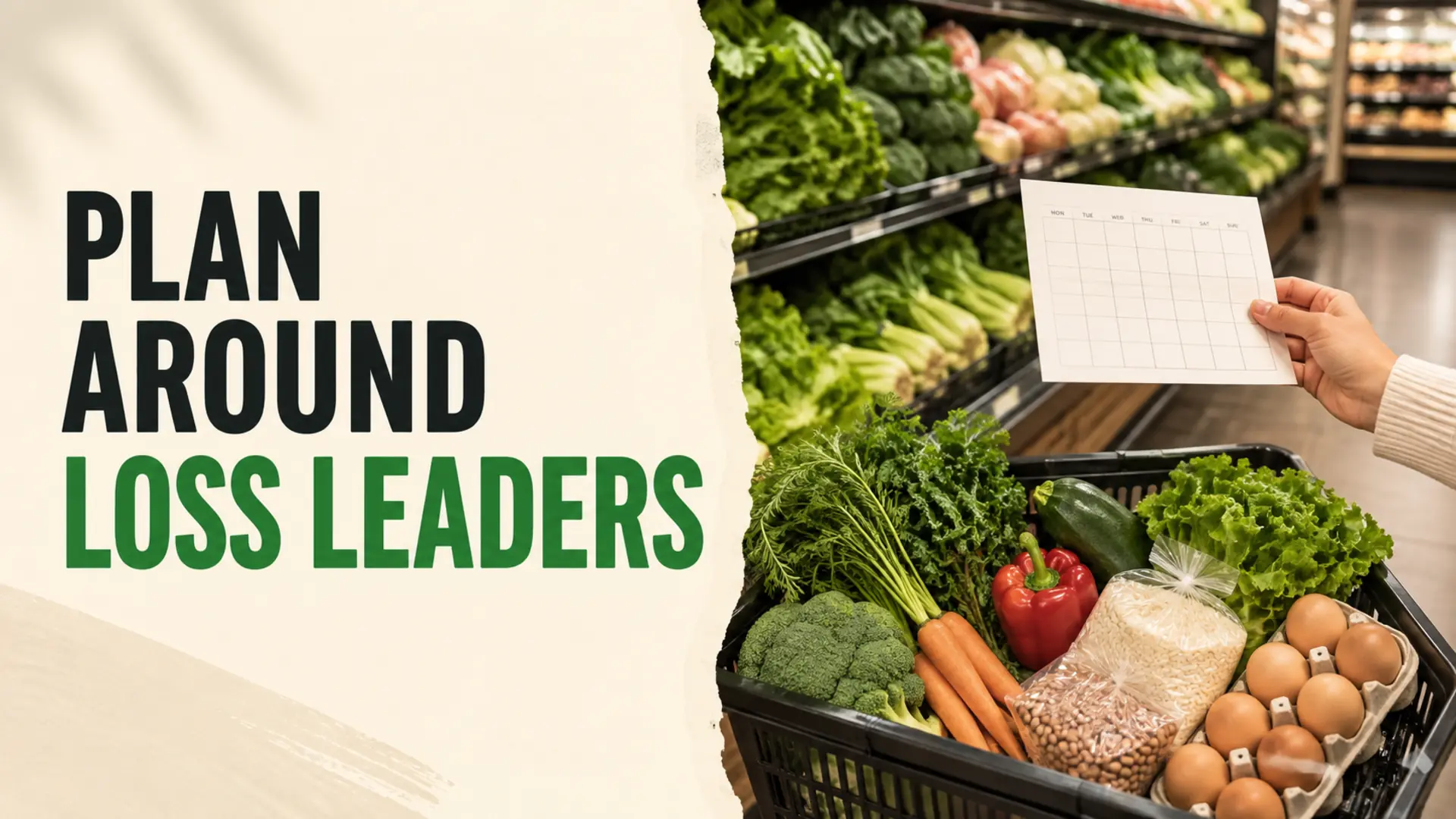
Learning how to meal plan around supermarket loss leaders can help you use unusually prominent weekly specials without letting one discount dictate an impractical shopping trip. Start with the advertised item, compare it with normal local prices, and build meals around ingredients your household will actually use.
A loss leader is a heavily promoted product intended to attract shoppers. However, an advertised item is not automatically sold below cost, and store pricing strategies vary. Treat every promotion as a comparison opportunity—not a guarantee—and check unit price, quality, quantity limits and likely food waste.
How to Identify a Useful Loss Leader
- Check prominent flyer offers: Front-page and app-featured specials are good places to begin, but placement alone does not prove value.
- Compare a consistent unit: Use price per kilogram, pound, litre, ounce or item so package sizes do not distort the comparison.
- Check other stores when practical: A regular price elsewhere may beat a highly advertised offer.
- Read the conditions: Note loyalty requirements, purchase limits, package sizes and dates.
- Consider usable quantity: A larger package is worthwhile only if you can store and use it safely.
For a repeatable comparison method, see our guide to using unit pricing for grocery shopping.
Meal Plan Around Supermarket Loss Leaders in Six Steps
1. Review Your Pantry and Freezer
List ingredients that need to be used soon. The best promotional item is often one that completes meals from food you already own. A quick pantry audit also prevents duplicate purchases.
2. Select One or Two Flexible Offers
Choose specials that can work across several meals rather than collecting every advertised deal. Versatile options might include seasonal vegetables, grains, legumes, eggs, tofu, fish or meat, depending on local availability and dietary needs.
3. Choose a Realistic Meal Anchor
Decide what role the item will play. It may be the main component, a side, a flavour builder or a freezer ingredient. Avoid buying a large quantity merely because the discount appears substantial.
4. Build Two or Three Flexible Meals
Plan enough repetition to use the ingredient efficiently without making every dinner identical. For example, roasted vegetables can become a grain bowl, soup and pasta addition. Cooked beans can support tacos, a salad and a stew.
5. Add Only the Supporting Ingredients You Need
Write the remaining ingredients on your list and check them against your kitchen inventory. Prefer supporting foods that work in more than one planned meal. Our guide to planning dinners around sales flyers provides another practical workflow.
6. Set a Purchase Limit Before Shopping
Choose the maximum quantity and spending amount in advance. This keeps the promotion from expanding your cart beyond the week’s needs.
A Flexible Example
Suppose a versatile protein or plant-based alternative is genuinely less expensive than its recent local price. You could use it in:
- A tray bake with seasonal vegetables.
- A grain bowl with leftover roasted vegetables and a sauce.
- A soup, wrap or stir-fry using the remaining cooked portion.
The exact ingredient and number of meals should match household size, appetite, storage and food-safety requirements. Freeze only foods suited to freezing, label them clearly and follow reliable local guidance for cooking and storage.
Avoid Common Loss-Leader Mistakes
- Buying an unfamiliar ingredient without a specific plan.
- Ignoring unit price because the promotional sign looks impressive.
- Purchasing more than your fridge or freezer can hold.
- Adding unrelated convenience products that erase the saving.
- Driving far enough that time and transport costs outweigh the difference.
- Assuming every advertised special is the lowest available price.
Keep the Plan Globally Relevant
Flyer formats, currencies, seasons and store policies differ between countries and regions. Use local measurement units and substitute equivalent staples. If a promotion is unsuitable, skip it and use a dependable low-cost ingredient instead. These budget-friendly meal staples can help you create a fallback plan.
Make Promotions Serve Your Meal Plan
To meal plan around supermarket loss leaders effectively, verify the value first, choose a realistic quantity and connect the item to several practical meals. A short list and a clear purchase limit let you benefit from a useful promotion without filling the cart with unplanned extras.