
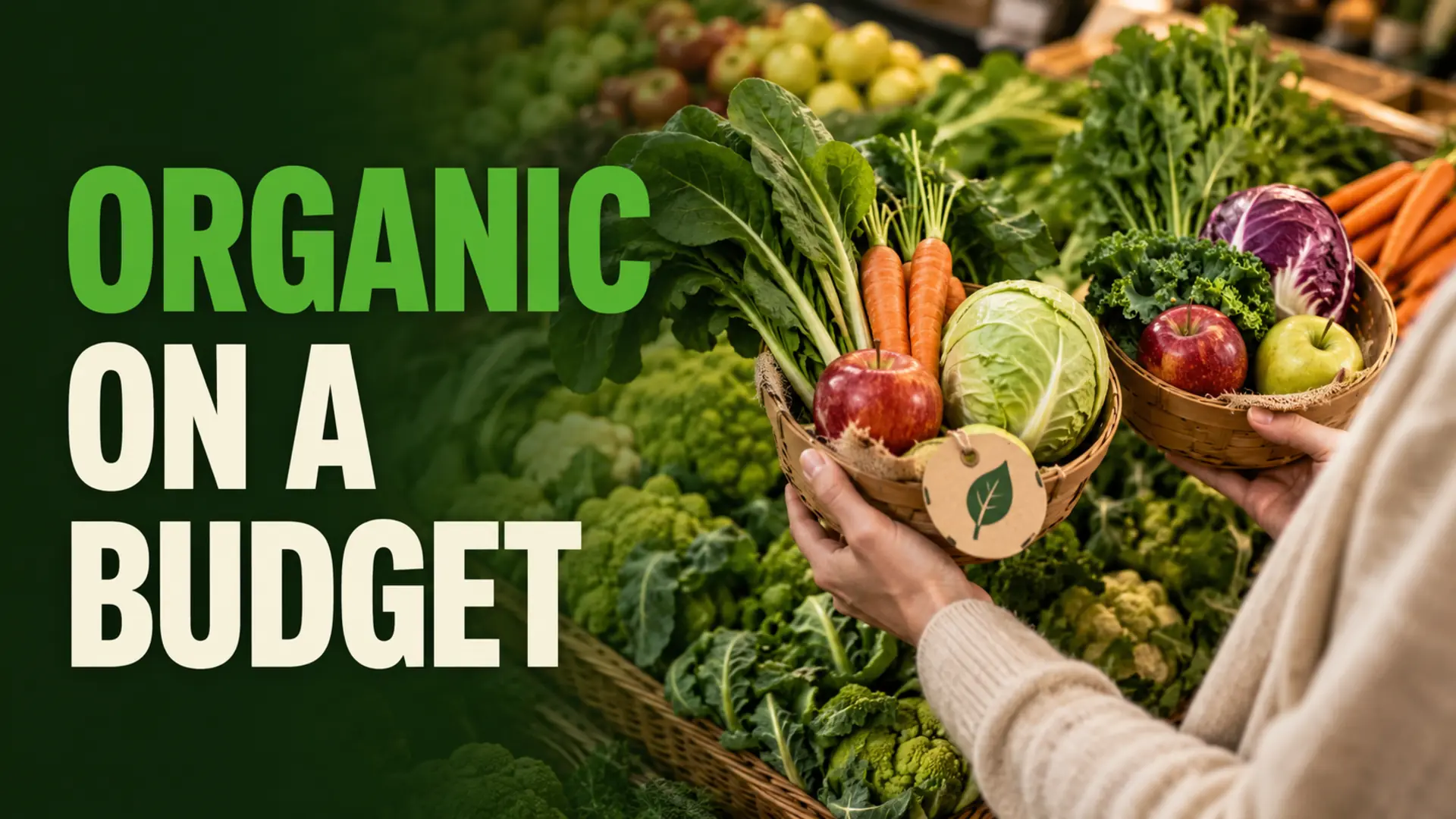
You can eat organic on a budget by choosing a few certified organic products that matter most to you, comparing their unit prices and keeping the rest of your grocery list flexible. An all-organic cart is not required, and conventional produce remains a valid option when it suits your needs and budget.
Organic standards, labels, availability and prices vary by country. Use the official certification mark recognized where you shop, and avoid vague package language such as “natural” when certification is your goal.
Decide Why You Want to Eat Organic on a Budget
Your priorities may include farming practices, environmental concerns, animal-welfare standards, ingredient preferences or supporting particular producers. Write down the reasons that matter to your household. A clear priority makes it easier to choose where a price premium is worthwhile and where it is not.
Set a Realistic Organic Spending Limit
- Review recent grocery receipts.
- Set the maximum monthly or weekly amount available for organic upgrades.
- Choose two or three frequently used products to compare first.
- Reassess after several shopping trips using actual prices and waste.
If food prices are changing quickly, use our guide to adapting your food budget before adding new priorities.
Prioritize Foods You Buy and Eat Regularly
Start with products your household purchases often rather than following a universal “must-buy” list. A certified organic item provides little value when it spoils, sits unused or replaces an affordable food you enjoy.
- Choose a small number of recurring staples.
- Consider the quantity your household can finish.
- Check dietary needs and ingredient labels.
- Prefer products that can support several planned meals.
Compare Organic and Conventional Unit Prices
Compare equivalent forms and sizes using price per kilogram, pound, litre, ounce or item. Include the edible or drained quantity when relevant. A smaller organic package might fit your budget and reduce waste, while a conventional family-size package might be better value for a larger household.
Learn the calculation in our guide to using unit pricing for grocery shopping.
Look Beyond Fresh Produce
When fresh organic produce is expensive or likely to spoil, compare frozen, canned and shelf-stable alternatives. Check the ingredients, package size and intended use rather than assuming one form is always superior.
- Frozen vegetables for soups, curries and stir-fries.
- Canned beans or tomatoes for quick meals.
- Oats, grains and legumes when certified options are competitively priced.
- Store-brand products that meet the same recognized certification standard.
Use Seasonal and Local Availability
Seasonal supply can affect price and quality, but local does not automatically mean organic. Ask vendors or check labels when certification matters. Plan flexible meals so an expensive or unavailable ingredient can be replaced with another suitable vegetable, grain or protein.
Our guide to planning meals around seasonal produce offers a reusable method.
Check Sales Without Overbuying
Compare current promotions with normal local prices, then buy only what your household can store and use. A discount does not create value when the food goes to waste. Avoid driving to several stores unless the likely difference justifies the additional time and transport.
Reduce Waste to Protect the Budget
- Check the fridge, freezer and pantry before shopping.
- Plan the most perishable ingredients for earlier meals.
- Store each product appropriately.
- Freeze suitable extras before quality declines.
- Use stems, leaves or peels only when they are edible and appropriate for the recipe.
A waste-aware meal plan can make a modest organic budget go further.
A Flexible Organic Grocery Template
| Category | Budget approach |
|---|---|
| Priority organic items | Choose a small number used every week |
| Produce | Compare seasonal, frozen and conventional options |
| Pantry staples | Check store brands and unit prices |
| Flexible items | Buy the suitable option offering the best current value |
Avoid All-or-Nothing Organic Shopping
To eat organic on a budget, prioritize deliberately, verify certification and compare the final cost in a consistent unit. Mix organic and conventional foods as needed, choose realistic quantities and focus on an overall grocery plan your household can sustain.
Frequently Asked Questions
Is organic food always more expensive?
Not always. The price gap depends on product, retailer, season, package size, and location. Compare organic and conventional versions using the same unit, including frozen and store-brand options. Choose organic selectively when its price and production standards match your priorities and budget.
What does the USDA Organic label mean?
In the United States, organic is a regulated production and handling label, not simply a marketing synonym for “natural.” The USDA Agricultural Marketing Service explains certification and oversight. Other countries use their own official standards and marks.
Is “natural” the same as certified organic?
No. “Natural” does not substitute for an official organic certification. If organic production standards matter to you, look for the recognized certification mark and read the label. For multi-ingredient foods, wording such as “organic” and “made with organic” can represent different certified-content thresholds.
Which organic foods should I prioritize on a tight budget?
Prioritize products you buy frequently and the production practices that matter most to your household. There is no universal must-buy list. Review receipts, choose a small number of intentional upgrades, and keep conventional options when the organic premium would displace needed food.
Can frozen and canned organic food save money?
They can, especially when fresh organic produce spoils before use. Compare unit prices and ingredient lists, and choose package sizes you can finish. Frozen produce lets you portion gradually, while canned and shelf-stable products may be useful when storage and cooking time are limited.
Are conventional fruits and vegetables still a valid choice?
Yes. An all-or-nothing rule can make produce less affordable. Buy the fruits and vegetables that fit your needs and budget, organic or conventional, and follow local food-safety advice for selection, washing, storage, and preparation.
How can I compare organic prices accurately?
Compare the same product form, grade, and unit; check edible or drained weight where relevant; and account for multi-buy requirements. A larger organic package may lower the unit price but still waste money if the household cannot use or store it.
Do farmers’ markets always sell cheaper organic produce?
No. Prices and certification vary by market, seller, season, and location. Ask whether a product is certified under the applicable local standard, compare current prices, and buy realistic quantities. Direct purchasing can offer other values, but it does not guarantee a lower price.
How can I reduce waste when buying organic groceries?
Plan uses before buying, choose realistic quantities, store products correctly, and schedule delicate foods early in the week. Freeze suitable extras before quality declines. Reducing waste often creates more room in the budget than chasing a small discount on food that will not be eaten.
Can I eat organic on a budget without buying everything organic?
Yes. Set a defined organic allowance and apply it to a few high-priority products, then choose the best suitable value elsewhere. A mixed basket is a practical approach. Reassess monthly as prices, availability, and household priorities change.