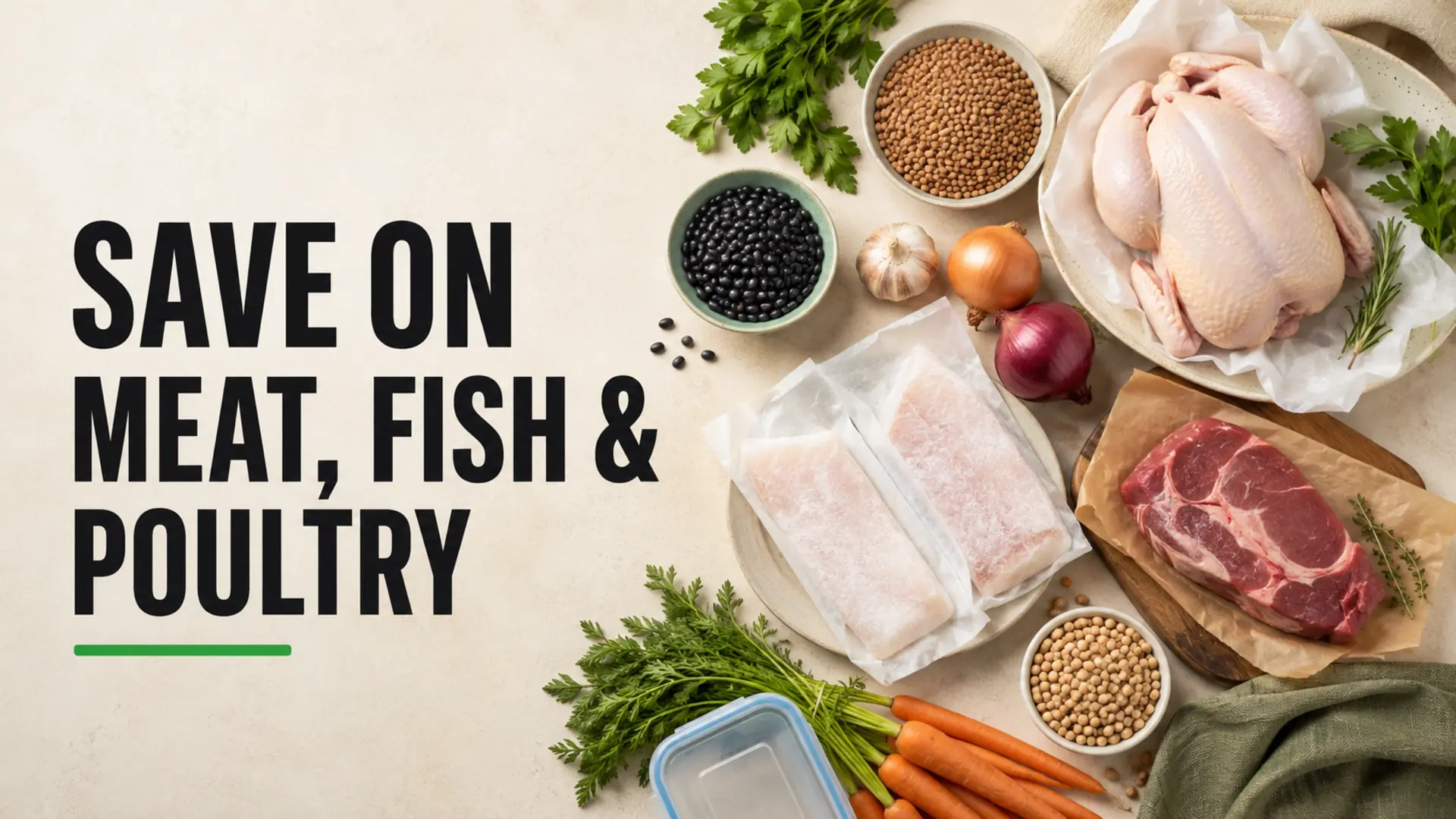
You can save money on meat, fish and poultry without relying on fixed prices or buying more than your household can use. The strongest approach combines unit-price comparisons, flexible recipes, safe storage and a willingness to choose different cuts or protein sources when they offer better value.
How to save money on meat, fish and poultry
Start with the meals you intend to cook, then compare suitable proteins rather than shopping for one exact package. A stir-fry may work with chicken thighs, tofu, fish or a smaller amount of meat extended with vegetables. A stew can use a slow-cooking cut instead of a tender cut intended for quick cooking.
- Check the price per unit of weight, not only the package price.
- Compare fresh, frozen and canned forms when each suits the recipe.
- Buy a larger pack only when you can portion, store and use it safely.
- Keep two or three acceptable substitutions on the grocery list.
- Plan the most perishable purchase for an early meal.
Compare the usable cost
Unit price is a useful starting point, but edible yield matters. Bone-in cuts may cost less per unit of weight while providing less edible meat; boneless cuts may cost more but require less preparation. Neither is automatically the better deal. Consider how you will use bones, skin and cooking liquid, as well as the time and tools required for preparation.
Follow the method in our guide to using unit pricing for grocery comparisons, then record the packages your household actually prefers in a grocery price book.
Choose flexible cuts and cooking methods
Less tender cuts can work well in braises, stews and pressure-cooked dishes when prepared correctly. Whole poultry or larger cuts may provide several components, but breaking them down safely takes practice. If you lack the equipment, time or confidence, a smaller ready-to-cook cut may still be the better household value.
- Slow cooking: suitable for many shoulder, chuck and stewing cuts.
- Roasting: useful for whole poultry and larger cuts that can become multiple meals.
- Quick cooking: best reserved for naturally tender, evenly portioned pieces.
- Batch cooking: helpful when cooked portions can be cooled, stored and reheated safely.
Compare fresh and frozen seafood
Frozen seafood can offer convenient portioning and a longer storage window. Fresh seafood may be preferable when quality, local availability and immediate cooking plans align. Check labels for the species, added ingredients, net weight and storage instructions. Avoid assuming every display-counter item or frozen product has followed the same supply path.
When comparing packages, calculate the cost using the stated net weight and consider whether glazing, bones or skin affect the portion you will eat.
Use markdowns only with a safe plan
Reduced-price packages can be useful, but markdown timing and discounts vary by store. Inspect the packaging, follow the use-by or safety information supplied, and decide before buying whether the food will be cooked promptly or frozen appropriately. A discount that is forgotten in the refrigerator creates waste rather than savings.
Store raw meat, fish and poultry separately from ready-to-eat food, and follow authoritative guidance such as FoodSafety.gov’s cooking and storage charts.
Stretch meals with other ingredients
You do not need a rigid half-meat, half-legume formula. Depending on the recipe, add beans, lentils, mushrooms, grains or vegetables to chili, pasta sauce, soup, curry or filling. Start with a modest change so the flavor and texture still suit your household. This can create more servings while adding variety.
For additional options, use these budget-friendly meal staples to build complete meals around the protein you choose.
Plan several meals from one purchase
Before buying a family pack or whole bird, assign each portion to a meal. For example, one cooked component may appear in a grain bowl, soup and sandwich filling, provided it is cooled and stored safely. Freeze portions you will not use within the recommended refrigeration window and label them with the contents and date.
Weekly promotions can guide the starting ingredient, but the rest of the plan should remain flexible. Our guide to meal planning around supermarket loss leaders explains how to verify a promotion without overbuying.
A practical shopping checklist
- Choose meals and acceptable protein substitutions.
- Check what is already in the refrigerator and freezer.
- Compare unit prices, edible yield and package size.
- Review labels and storage requirements.
- Decide which portions will be cooked, refrigerated or frozen.
- Skip any deal that does not fit the plan.
Build savings around what you will use
The most reliable way to save money on meat, fish and poultry is to compare realistic alternatives and prevent waste. Flexible cuts, frozen options, meal extensions and markdowns can all help, but only when they match your cooking skills, storage space, dietary needs and schedule.