Budget-friendly meal staples are versatile ingredients that can support several breakfasts, lunches and dinners without requiring a completely different shopping list for every recipe. Their value depends on local prices, dietary needs and what your household actually eats, so treat this list as a flexible starting point.
Choose a smaller selection that works across your regular meals. Compare unit prices, buy quantities you can store and use, and substitute based on availability rather than expecting every ingredient to be inexpensive everywhere.
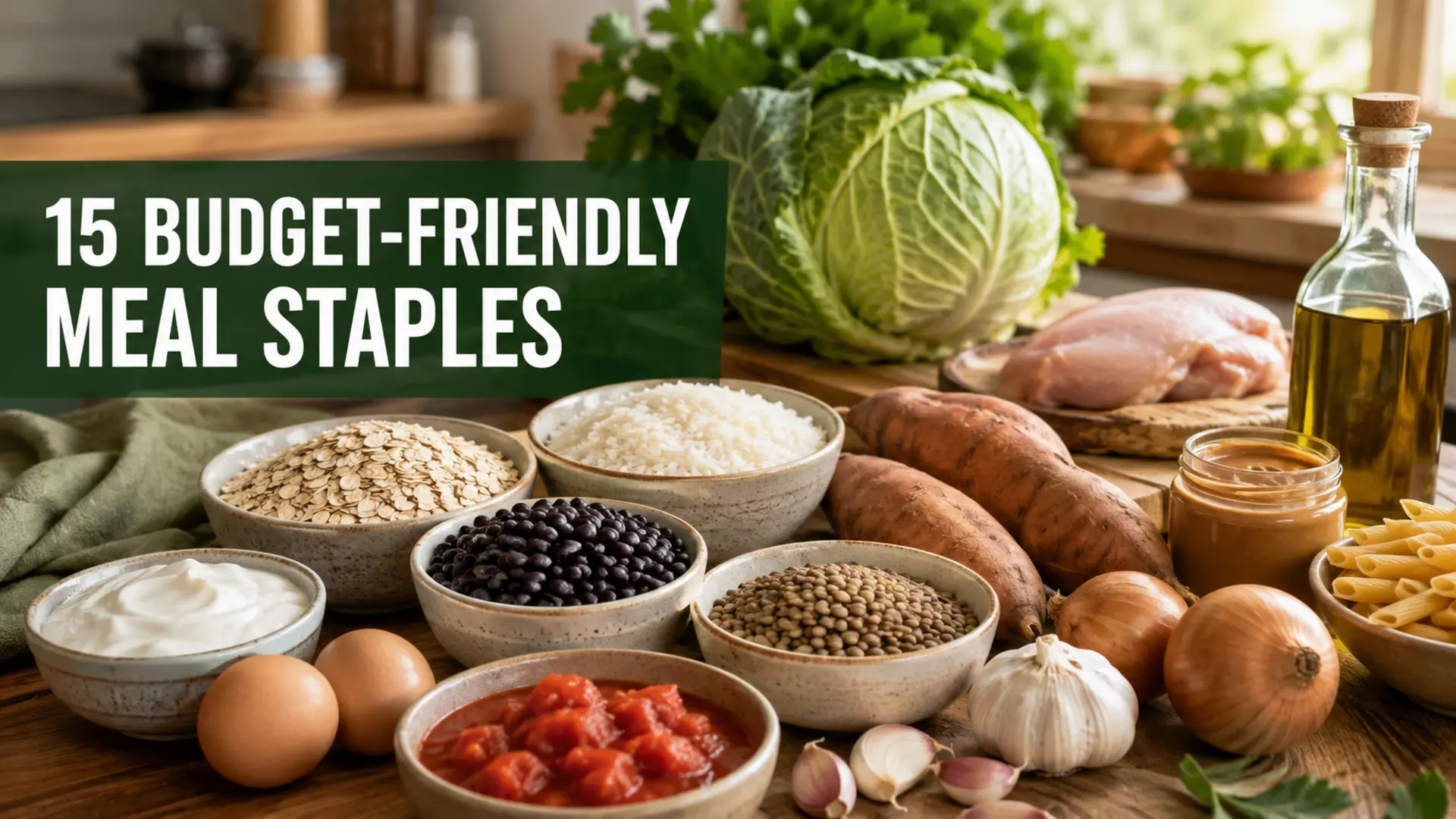
15 Budget-Friendly Meal Staples to Consider
1. Eggs
Eggs can become scrambled breakfasts, boiled snacks, frittatas, fried-rice additions or toppings for grain bowls. Availability, price and dietary suitability vary, so plant-based proteins may fill the same planning role.
2. Rice
Choose a rice variety your household enjoys and prepares confidently. Use it for bowls, curries, stir-fries, soups and side dishes. Cook an appropriate amount and cool and store leftovers safely.
3. Rolled Oats
Oats work in porridge, overnight oats, baked breakfasts and some savoury dishes. A plain larger package may offer more flexibility than individual flavoured portions when it matches your household use.
4. Beans
Canned or cooked dried beans can support soups, tacos, dips, salads and grain bowls. Compare drained weight, preparation time and storage when deciding which form provides better household value.
5. Lentils
Lentils can add substance to soups, stews, curries, salads and sauces. Different varieties cook differently, so choose one that suits the texture and preparation time you prefer.
6. Potatoes or Sweet Potatoes
Roast, mash, bake or add them to soups and skillet meals. Buy a quantity that can be stored in a cool, suitable place and used before quality declines.
7. Cabbage
Cabbage can be served raw in slaws, sautéed, roasted or added to soups and stir-fries. Its versatility makes it useful when the local price and household preference are favourable.
8. A Flexible Protein
This might be chicken thighs, tofu, tinned fish, eggs, beans or another option that meets your dietary and cultural needs. Compare the usable portion, preparation requirements and likely waste rather than relying only on package price.
9. Canned Tomatoes
Plain canned tomatoes can become pasta sauce, soup, stew, curry or a base for baked eggs. Check the size, ingredients and form—whole, diced, crushed or puréed—against the meals you cook most often.
10. Pasta or Noodles
Pasta and noodles are quick foundations for vegetable sauces, soups, salads and skillet meals. Choose varieties that fit your nutritional needs and pair them with vegetables and a suitable protein.
11. Onions
Onions add flavour to soups, sauces, curries, grain dishes and roasted vegetables. If fresh onions are unsuitable, another aromatic such as leek, scallion or asafoetida may work depending on the recipe and dietary needs.
12. Garlic or Another Aromatic
Garlic is useful across many cuisines, but it is not essential for every household. Ginger, herbs, spices or other aromatics can create variety with the staples you already own.
13. Plain Yogurt or a Suitable Alternative
Plain yogurt can support breakfasts, sauces, dips and marinades. Choose dairy or plant-based versions according to dietary needs, and buy a container size your household can finish.
14. Cooking Oil
A versatile oil supports roasting, sautéing and dressings. Select one appropriate for your cooking methods, flavour preferences and local availability rather than assuming one oil is best for every purpose.
15. Nut or Seed Butter
Where allergies allow, nut or seed butter can be used in toast, oats, sauces and snacks. Compare ingredients and package size, and use a suitable seed-based alternative when nuts are not appropriate.
How to Turn Staples Into Complete Meals
Use a simple structure instead of treating each staple as a meal by itself:
- Base: rice, pasta, potatoes, oats or another grain.
- Protein: beans, lentils, eggs, tofu, fish, poultry or another suitable choice.
- Vegetables: fresh, frozen or canned options that fit the dish.
- Flavour: aromatics, herbs, spices, sauce or dressing.
This approach supports bowls, soups, sheet-pan meals, curries and skillets. For a smaller core system, see our guide to a minimalist kitchen with versatile ingredients.
Build a Staple List Around Your Household
- Review the meals your household already repeats.
- Identify ingredients that appear in several of them.
- Choose shelf-stable, refrigerated and frozen options that fit your storage.
- Compare unit prices and realistic usable quantities.
- Add only a few new staples at a time.
A monthly pantry audit helps prevent duplicate purchases and shows which supposed staples are not being used.
Adapt the List for Plant-Based Meals
Beans, lentils, tofu, grains, vegetables, nuts and seeds can create a flexible plant-focused foundation. Our budget-friendly plant-based shopping guide offers more adaptable combinations without assuming one diet fits everyone.
Substitute Before Making an Extra Trip
If one staple is unavailable, expensive or unsuitable, replace its role rather than copying it exactly. Rice may replace pasta as a meal base; beans may replace another protein in some dishes; frozen vegetables may replace fresh. Review these ingredient-swapping tips for practical examples.
Keep the List Flexible
The best budget-friendly meal staples are the ingredients your household enjoys, can store safely and uses across several dishes. Start with a manageable core, compare local prices and add variety through seasonings and substitutions rather than accumulating rarely used products.