
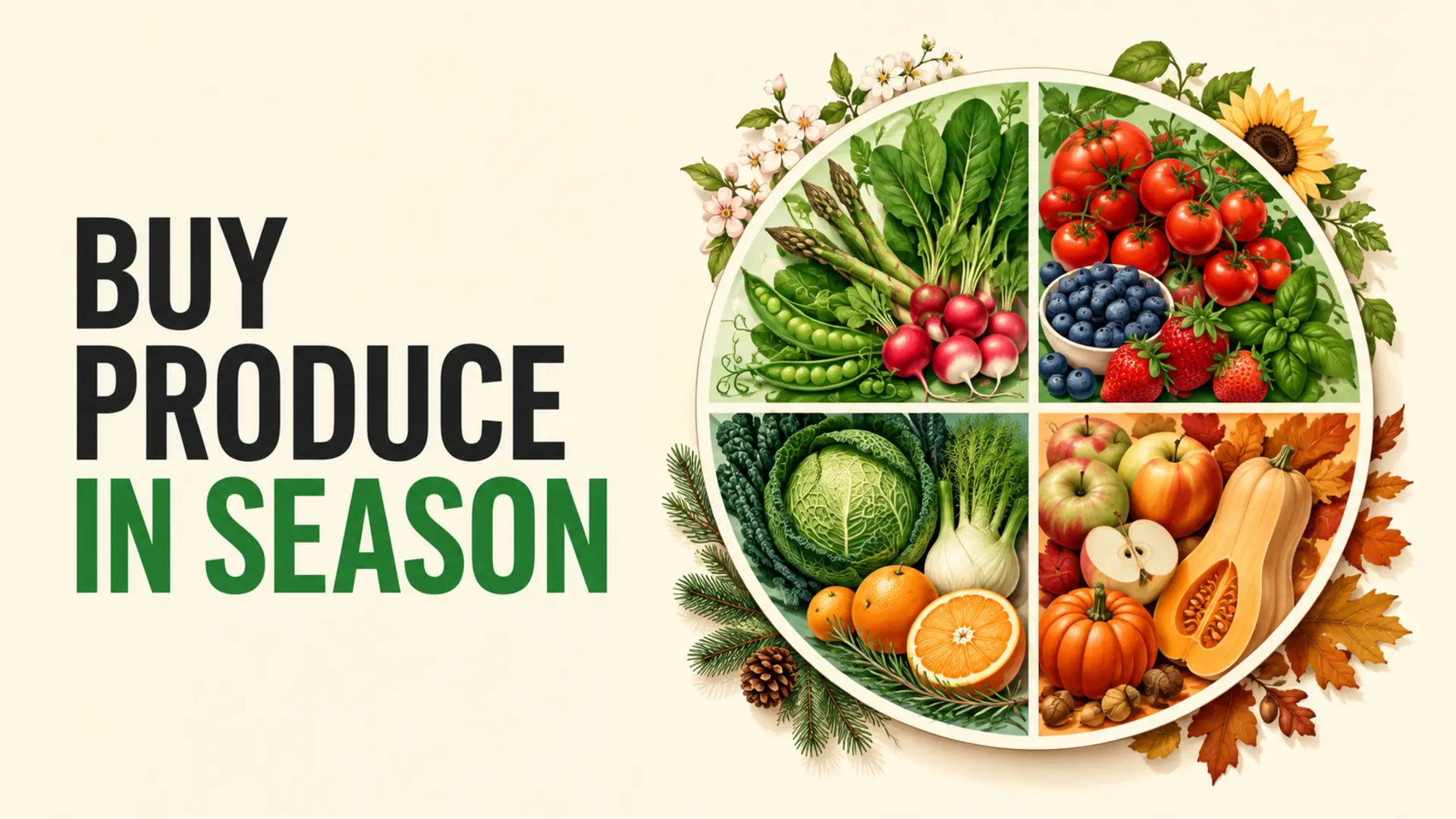
Buying seasonally can be a useful way to find fresh produce at a good value, but it does not guarantee the lowest price. Harvest periods vary by climate, weather, growing method and location, while supermarkets may source the same ingredient from several regions. A better strategy is to treat seasonality as a shopping clue, then confirm value by comparing unit prices, quality and the amount your household can realistically use.
This flexible approach works anywhere: check what is being harvested near you, compare it with frozen or canned alternatives, and build meals around the best combination of price, flavour, convenience and storage life.
Why Buying Seasonally Can Help Your Grocery Budget
When an ingredient is arriving in volume, stores and markets may offer more choices, promotions or larger packages. Peak supply can also mean better quality, which matters because produce that is appealing is more likely to be eaten. However, transport, labour, crop conditions and retailer pricing also affect the shelf price. Use seasonal availability as a starting point rather than assuming every local product is automatically cheaper.
Start With Your Local Growing Calendar
Search for a produce calendar from your regional agriculture department, extension service, growers’ association or farmers’ market. A national chart may be too broad for your climate. The same fruit can peak at different times across provinces, states, countries and hemispheres. Greenhouses, protected growing and imported produce also extend availability beyond traditional harvest windows.
Use a Flexible Four-Season Framework
Instead of memorizing a universal list, think in broad categories and verify them locally:
- Cool-season greens and shoots: leafy greens, radishes, peas, spring onions and asparagus may appear during cooler spring conditions.
- Warm-season produce: tomatoes, peppers, zucchini, berries, melons and sweet corn often become more abundant during locally warm months.
- Storage crops: apples, potatoes, onions, carrots and hard squash are often associated with autumn harvests and may remain available from storage.
- Cold-season and imported options: cabbage, roots and some citrus can be practical winter choices, depending on where they are grown and sold.
These are examples, not fixed rules. Let local availability and the store shelf decide what belongs on this week’s list.
Compare Unit Prices Before Choosing
Compare produce using the same unit—such as price per kilogram, pound or item—rather than looking only at the package total. Then consider edible yield. A cheaper whole item may create peel, cores or stems, while a prepared product may cost more but produce less waste or save necessary time. Our guide to planning dinners around supermarket flyers can help connect seasonal ideas with actual weekly promotions.
Judge Quality, Not Just Appearance
Choose produce that suits when you plan to eat it. Ripe fruit may be ideal for today, while firmer pieces can be better for later in the week. Minor cosmetic variation does not necessarily affect eating quality, but avoid items with signs of spoilage, leaking packages or extensive damage. At markets, ask vendors what was recently harvested and how they recommend storing it.
Plan Meals That Accept Substitutions
Flexible meal formats make buying seasonally easier. Stir-fries, soups, grain bowls, pasta sauces, curries, frittatas and sheet-pan meals can accommodate whichever vegetables offer the best value. Write categories such as “two vegetables for roasting” or “one fruit for breakfasts,” then note acceptable substitutes. A structured grocery list keeps those choices clear without locking you into one expensive ingredient.
Check Frozen and Canned Alternatives
Fresh is not automatically the most economical format. Frozen berries, peas, spinach or mixed vegetables can be useful when fresh quality is inconsistent or the package would spoil before use. Canned tomatoes, corn, beans and fruit may also fit certain meals. Compare drained weight, added ingredients, storage space and intended use—not just the front-of-package price.
Buy Only What You Can Store and Use
A promotion is poor value if much of it is discarded. Before buying a large quantity, decide which meals will use it, where it will be stored and whether preparation time fits your schedule. A quick pantry and freezer audit can prevent duplicates and reveal ingredients that pair with the produce already on your list.
Preserve a Surplus Safely
Freezing, canning, pickling and dehydrating require different preparation and safety procedures. Do not assume every fruit or vegetable can simply be placed in the freezer with the same result. Some benefit from washing, trimming or blanching; others change texture after thawing. Follow tested instructions from a government food-safety or extension source. FoodSafety.gov’s four food-safety steps explain safe produce washing and handling, while its cold-storage guidance helps with refrigerator and freezer decisions.
Build a Personal Seasonal Price Record
For a few commonly purchased items, record the date, store, format, unit price and quality. After several months, patterns will be more useful than a generic price claim. You may find that one store offers reliable frozen produce while another has better fresh promotions, or that a farmers’ market provides the quality you prefer even when its price is not the lowest.
A Simple Seasonal Shopping Routine
- Check a trustworthy local harvest calendar.
- Choose two or three seasonal candidates, not a rigid menu.
- Compare fresh, frozen and canned unit prices in the store.
- Inspect quality and buy an amount your household can use.
- Assign each perishable item to a meal or snack.
- Record unusually good value for future planning.
Buying seasonally works best as a flexible decision process, not a promise of fixed savings. Combine local harvest information with unit-price comparisons, sensible quantities and adaptable meals. That approach can improve value while keeping the grocery plan practical for your climate, culture, household and available stores. For more low-cost meal components, see our budget-friendly plant-based shopping list. Readers in Canada can also consult Canada’s Food Guide; readers elsewhere should use their local public-health guidance.
Frequently Asked Questions
Does buying seasonal produce always save money?
No. Seasonality can increase local supply, but transport, weather, store promotions, imports, and demand also affect price. Treat a growing calendar as a clue, then compare current unit prices, quality, edible yield, and how much the household will actually use.
How can I find what produce is in season locally?
Use a regional agriculture department, extension service, growers’ association, or farmers-market calendar. Climate zones and weather shift harvest dates, so national lists may be too broad. Store signs can help, but verify origin when local production matters to you.
Is locally grown produce always seasonal?
Usually local field crops follow regional harvests, but greenhouses, storage, and controlled environments can extend availability. “Local” describes origin, not necessarily field season or lower price. Ask the seller or read the label when production method matters.
Are farmers markets cheaper than supermarkets?
Sometimes, but not consistently. Compare the same quantity, grade, and usable quality, and include travel and payment options. Markets can provide freshness, variety, or direct producer contact without guaranteeing the lowest price.
What is the cheapest way to buy seasonal fruit?
Compare price per usable weight across loose, bagged, pick-your-own, frozen, and canned options. Buy only a quantity you can eat or preserve safely. A large case is not economical if much of it spoils before use.
How do I meal plan around seasonal vegetables?
Plan flexible formats—soups, salads, roasted trays, stir-fries, grain bowls, and pasta—then choose the best suitable vegetable available. Keep a frozen or canned backup so a short harvest or poor quality does not disrupt the week.
Is frozen produce still useful when fresh produce is in season?
Yes. Frozen vegetables and fruit may offer stable pricing, longer storage, and convenient portions. Compare ingredients and unit price. Use fresh for textures you value and frozen for cooked meals or times when spoilage is likely.
How can I preserve a seasonal surplus safely?
Freeze, dry, pickle, or can food only with reliable, current instructions suited to that product. Home canning requires tested recipes and correct equipment because unsafe methods can cause serious illness. Small batches reduce both workload and waste.
Should I buy imperfect seasonal produce?
Cosmetic imperfections can be acceptable when the food is sound and priced fairly. Avoid mold, decay, leaking, or damage that affects safety or usable yield. Plan an immediate use for ripe items rather than buying them solely because they are discounted.
How do I track seasonal prices from year to year?
Record the item, date, store or market, origin, package size, unit price, and quality. A short personal price history reveals local patterns better than a universal chart. Weather and supply conditions mean last year’s lowest week may not repeat exactly.