
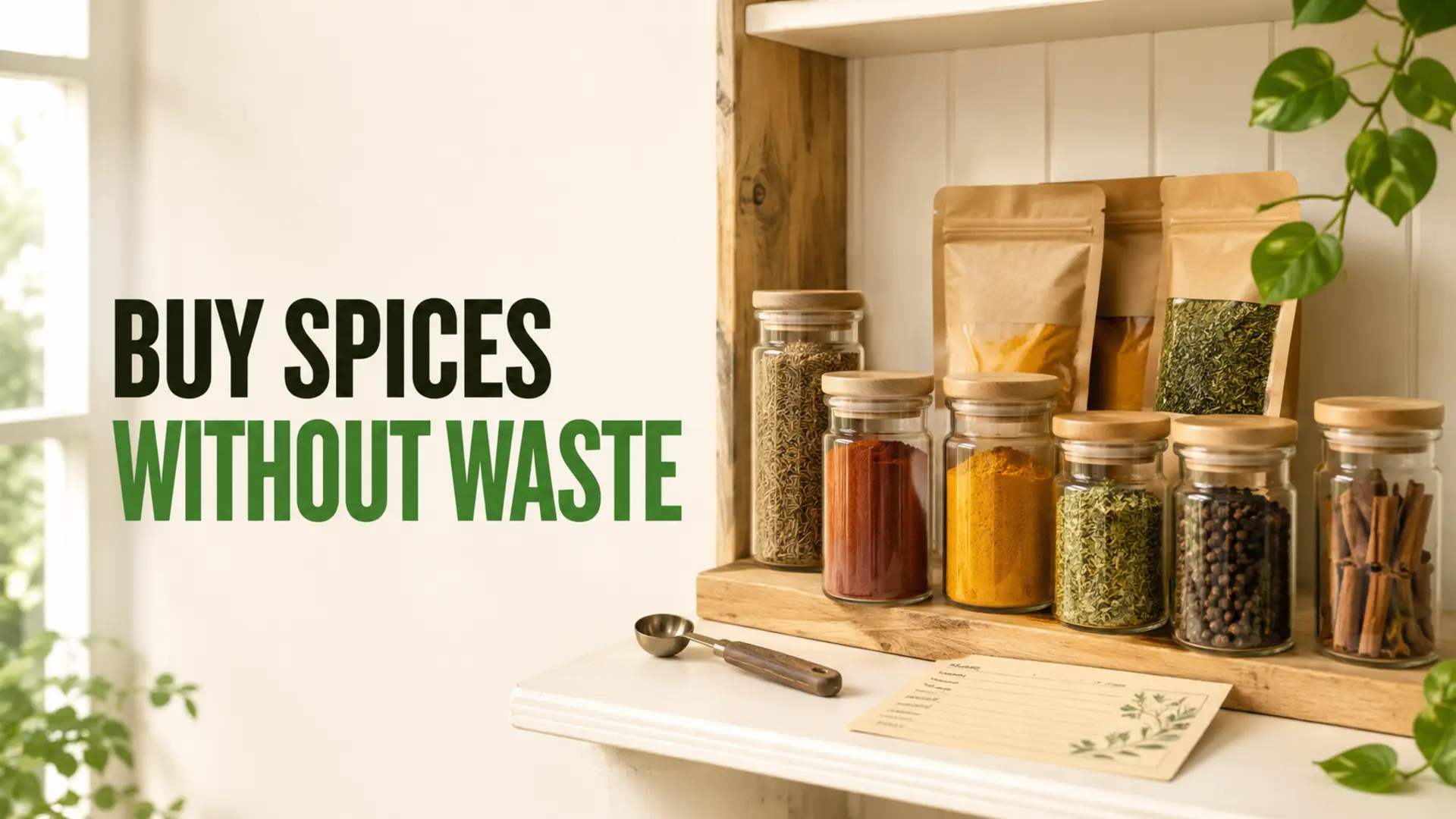
You can save money on specialty spices by buying the right quantity for your actual cooking habits, comparing unit prices and using what is already in your pantry before adding another blend. A large bag is not automatically economical, and a small jar is not always wasteful. The best choice is the package that delivers the flavour you need while it is still useful and appealing.
Start with a spice inventory, identify the recipes you repeat, and test unfamiliar flavours in small quantities. This avoids paying for duplicate ingredients or storing a rarely used spice until its aroma fades.
Audit Your Spice Shelf First
Take every spice and seasoning blend out of the cupboard. Group duplicates, check labels, and note which containers have lost their aroma, changed colour, absorbed moisture or developed signs of contamination. Do not taste a product that appears spoiled. A broader monthly pantry audit can help you repeat this process before future shopping trips.
Match the Quantity to Your Cooking Frequency
Estimate how often you will use the spice and how much each recipe requires. A larger package can make sense for a household that cooks with cumin or paprika every week. For a spice needed in one occasional dish, a smaller container, refill station or measured bulk purchase may create better value even when its unit price is higher.
Compare Unit Prices Across Formats
Compare the price per standard weight rather than comparing containers by sight. Check supermarket spice aisles, international-food sections, refill shops, co-operatives, markets and specialist grocers available in your area. Packaging, quality, origin and grind can differ, so compare like with like. Avoid assuming that one type of store is always cheaper.
Buy Small Amounts of Unfamiliar Spices
If a recipe calls for a flavour you have never used, start with the smallest practical amount. Consider whether a friend or family member can share some, whether the store sells it by weight, or whether another recipe will use the remainder. Our guide to ingredient substitutions that prevent extra shopping trips can help when an exact spice is not essential to the dish.
Choose Versatile Foundations for Your Kitchen
There is no universal set of six spices that suits every household. Build a core collection around the cuisines and recipes you actually cook. That might include black pepper, cumin, paprika, garlic powder, turmeric, cinnamon, oregano or something entirely different. The right foundations reflect your culture, dietary needs and preferred meals—not a generic checklist.
Mix Simple Blends in Small Batches
Homemade blends can be useful when their component spices are already in regular rotation. Start with a small batch, write down the proportions and adjust after cooking. For example, combine a chilli powder appropriate to your heat preference with cumin, paprika, garlic and oregano for a taco-style blend, or mix dried basil, oregano, thyme and rosemary for an herb blend.
Check every component for allergens or dietary restrictions, and remember that commercial chilli powders and seasoning blends can vary. Add salt separately when possible so each cook can control the final dish. If you would need to buy several new jars to make one blend, the prepared option may be more economical.
Store Spices to Protect Quality
Keep spices tightly sealed in a cool, dry, dark place away from steam, direct sunlight and strong heat. Avoid shaking a container directly over a steaming pan because moisture can enter it. Use a clean, dry measuring spoon and return the lid promptly. Label refill containers with the ingredient and purchase or refill date so older stock is used first.
Use Whole Spices When They Fit Your Routine
Whole peppercorns, cumin seeds or coriander seeds may retain their character differently from pre-ground versions, but they also require suitable equipment and preparation. Buy them only if you are comfortable toasting or grinding them and will use them often enough. Convenience has value, and ground spices may be the practical choice for many households.
Plan Meals That Use an Opened Spice
When adding a specialty spice to the list, assign it to more than one meal. The same spice might season a soup, roasted vegetables, grains, eggs or a sauce. A minimalist kitchen framework can help you choose recipes with overlapping ingredients instead of accumulating one-purpose products.
Know When Bulk Buying Makes Sense
Bulk buying works when the unit price is favourable, the seller has good turnover, the product can be stored properly and your household will use it. It is less attractive when a package is difficult to reseal or occupies space needed for everyday food. Apply the same calculations from our guide to bulk buying without wasting food.
A Practical Spice-Shopping Checklist
- Check the pantry for the spice and any suitable blend containing it.
- Confirm how much the recipe needs and whether another planned meal will use it.
- Compare equivalent unit prices and package sizes.
- Choose whole or ground according to your tools and routine.
- Buy only the quantity you can store well and use.
- Label refills and rotate older containers forward.
To save money on specialty spices, focus on right-sizing, versatility and storage rather than dramatic discount claims. A small, well-used collection usually offers more value than a crowded shelf of duplicates and fading blends. Keep the spices that support your real cooking, experiment in modest quantities, and expand only when a flavour earns a regular place in your meals.
For broader healthy-eating guidance, Canadian readers can consult Canada’s Food Guide, while readers elsewhere should use their local public-health authority.
Frequently Asked Questions
How long do ground spices stay flavorful?
They do not become flavorless on one exact date, but aroma and strength fade with time, heat, light, air, and moisture. Check the package guidance, smell a small amount, and replace only when the spice no longer performs in cooking or shows contamination.
Is it cheaper to buy spices from bulk bins?
It can be when you buy only the amount needed, but compare unit price and turnover. Use a clean store with clear labels and allergen practices. Bulk bins may not suit households with serious cross-contact concerns or spices used very frequently.
Should I buy whole spices instead of ground spices?
Whole spices often keep their aroma longer, but they require suitable grinding or toasting and are not automatically cheaper. Choose them when the extra preparation fits your routine. A frequently used ground spice may deliver better practical value.
How can I tell whether two spice blends duplicate each other?
Compare ingredient lists in order. Many blends share salt, garlic, onion, paprika, or pepper with small variations. Keep blends tied to meals you cook often and use the overlapping ingredients to make small custom mixes when that is practical.
What is the best way to store specialty spices?
Keep them tightly sealed in a cool, dry, dark area away from the stove, dishwasher, sink, and direct sunlight. Avoid shaking containers over steaming pots because moisture can cause clumping and contamination. Label bulk purchases with the name and date.
Can old spices make you sick?
Age alone usually reduces quality rather than creating a fixed safety deadline, but moisture, pests, mold, contamination, or damaged packaging are reasons to discard them. Follow manufacturer guidance and never taste a product that appears compromised.
How much of an unfamiliar spice should I buy?
Buy the smallest practical amount for one or two planned recipes. If the flavor earns a regular place in your cooking, purchase a larger size after comparing unit prices. Testing first costs less than storing a large bag that remains unused.
Can I substitute common spices for a specialty blend?
Often, if you understand the blend’s ingredient list and role in the recipe. Mix a small batch from spices you already own, then adjust after tasting. Some protected regional blends or complex flavors may not have a close substitute, so be honest about the difference.
How should I use up a spice before buying another jar?
Search your own recipe collection for two or three compatible meals, add the spice to the shopping list notes, and schedule those meals while it is still aromatic. Do not force it into unsuitable dishes; smaller future purchases may be the better lesson.
Are large spice bags a good value?
Only for spices you use quickly or can share appropriately. Calculate unit price, storage space, and likely use while quality remains acceptable. A small jar with higher unit cost can still be cheaper in total and fresher for occasional cooking.