
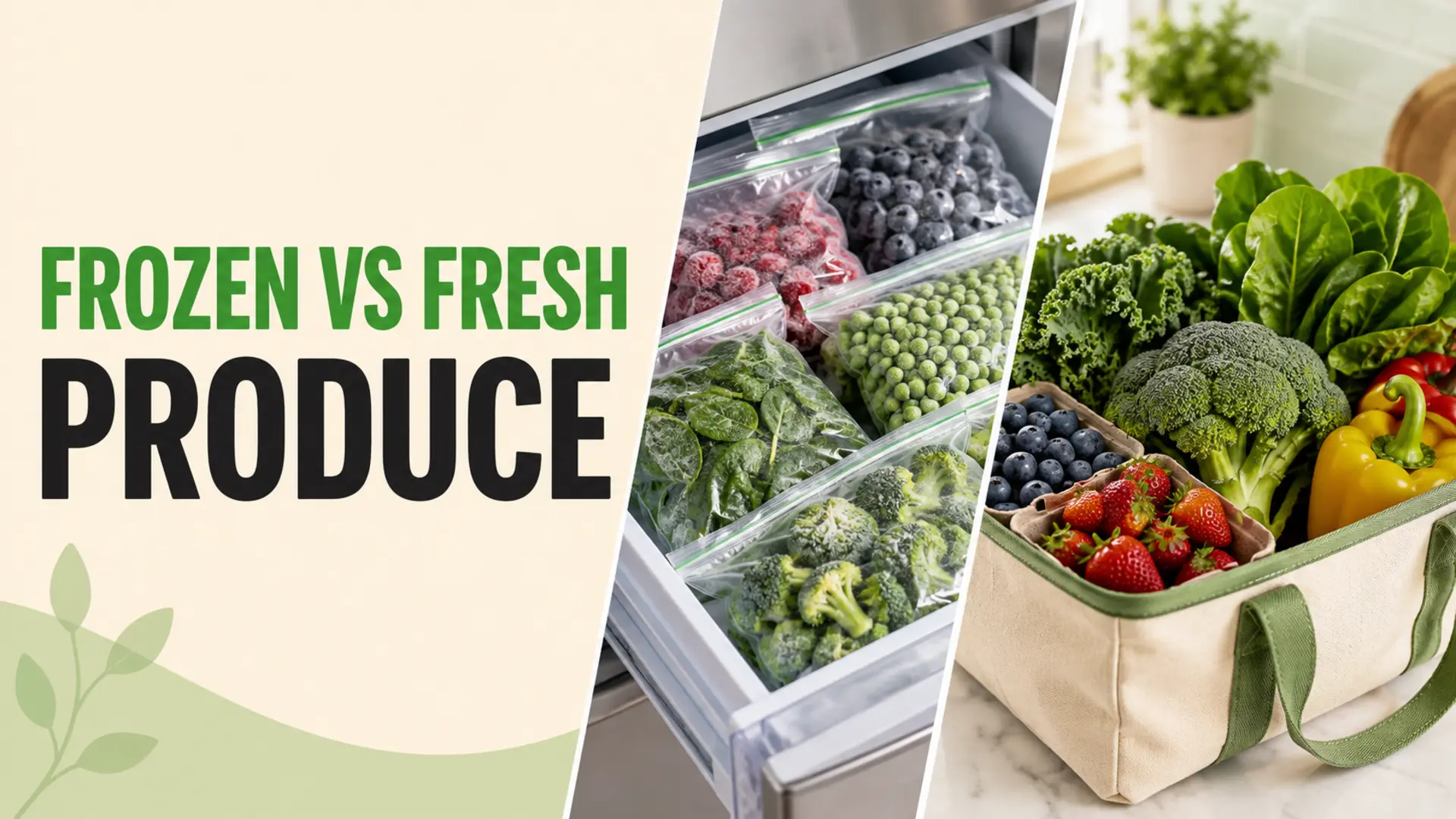
The best choice between frozen vs fresh produce depends on the recipe, local price, edible yield, storage space and how quickly your household will use it. Neither format is automatically cheaper, healthier or less wasteful in every situation. Compare the product that will actually reach the plate—not just the price printed on the package.
Fresh produce can offer crisp texture and flexibility for raw meals. Frozen produce can provide pre-washed or pre-cut convenience and longer storage for cooked dishes. Many practical grocery lists use both.
How to Compare Frozen vs Fresh Produce Fairly
Use the same unit of weight or volume, then account for preparation waste. A fresh broccoli crown may include a usable stem, while a frozen bag may contain mostly florets. Fresh berries may be eaten whole, while damaged fruit may be discarded. The meaningful calculation is cost per usable amount for the recipe.
When Frozen Produce Is Often Practical
Frozen berries, peas, corn, spinach, broccoli and mixed vegetables can work well in smoothies, soups, sauces, casseroles, curries and stir-fries. They are easy to portion and return to the freezer, which can help households that cook irregularly or use small amounts. Availability and quality vary by retailer, so inspect ingredient lists and package condition.
When Fresh Produce May Work Better
Fresh is often preferred when crispness, structure or presentation matters: salads, crudités, sandwiches, fruit plates and garnishes are common examples. It can also be good value when an ingredient is locally abundant, on promotion or likely to be used quickly. Our guide to buying produce in season explains how to verify local harvest patterns rather than relying on universal calendars.
Nutrition Depends on More Than Format
Variety, maturity, processing, transport, storage time and cooking method can all affect a food’s nutrient profile. It is not accurate to claim that frozen and fresh products are always identical or that one is universally superior. Choose plain options that fit your dietary needs, examine labels for sauces or added ingredients, and follow guidance from your local health authority.
Compare Ingredient Lists and Package Details
A bag labelled as frozen vegetables may contain seasoning, sauce, salt, sugar or other ingredients. Fruit products can also differ. Compare plain products when making a direct price comparison, and check allergen information where relevant. Make sure packaging is intact and that frozen pieces have not formed a solid mass suggesting temperature fluctuation.
Include Preparation Time in the Decision
Washing, peeling and chopping require time, tools and physical effort. Pre-cut frozen vegetables can therefore provide meaningful value for busy households and people with accessibility needs. Fresh products may be preferable when preparation is enjoyable, trimmings are useful or the whole item offers more flexibility. The same logic applies when comparing whole and pre-cut produce costs.
Plan for Texture After Cooking
Freezing changes the structure of many fruits and vegetables, so thawed produce may be softer. That can be ideal for soups, sauces, oatmeal and baking but less suitable for a crisp salad. Cook many frozen vegetables directly from frozen according to the package directions, and avoid thawing a large amount when only one portion is needed.
Consider Storage Capacity and Reliability
Frozen produce is only useful when freezer space is available and the appliance maintains a safe temperature. Large bags can crowd a small freezer or be difficult to seal. Fresh produce needs refrigerator or pantry space appropriate to the item. Before stocking up, check what you already have and whether upcoming meals can use it.
Reduce Waste With a Mixed Strategy
Buy fresh items for meals early in the week and keep frozen produce as a flexible backup. This reduces pressure to use every ingredient immediately while preserving options when plans change. A waste-aware meal plan can help assign perishable foods to specific meals before shopping.
Use a Same-Recipe Price Test
- Choose one recipe and determine the usable quantity required.
- Record the fresh product’s unit price and expected trim.
- Record the equivalent frozen product’s unit price and ingredients.
- Consider preparation time, cooking method and leftovers.
- Select the format that offers the best total value for that meal.
Repeat the test occasionally because prices and package sizes change. Weekly promotions can reverse the result, so connect the comparison with flyer-based dinner planning.
Store and Handle Produce Safely
Follow package directions and local food-safety guidance. Keep frozen products frozen until use, return unused portions promptly, and avoid relying on appearance alone after an appliance failure. FoodSafety.gov provides cold-storage guidance and information for handling temperature interruptions.
A Flexible Shopping Rule
Choose fresh when texture and immediate use justify it. Choose frozen when portioning, storage and cooked applications make it practical. Choose both when that combination gives the household dependable produce without overbuying. The frozen vs fresh produce decision is strongest when it reflects the actual recipe, usable yield, schedule and local prices rather than a blanket rule.
Canadian readers can consult Canada’s Food Guide; readers elsewhere should use their local public-health guidance.
Frequently Asked Questions
Is frozen produce cheaper than fresh produce?
Sometimes. Compare the same edible weight, not only package prices. Frozen produce often has little trimming waste and lasts longer, while in-season fresh produce may be inexpensive. The better value depends on the recipe, local prices, storage, and actual use.
Is frozen fruit and vegetable produce as nutritious as fresh?
Both can support a nutritious diet. Nutrient levels vary by crop, harvest, processing, storage, and cooking method. Choose plain products when you want to avoid added sauces, sugar, or sodium, and prioritize the form the household will eat.
Does frozen produce weigh more because of ice?
Plain frozen produce may carry some surface ice, while heavily iced or clumped packages can indicate quality problems or thawing and refreezing. Compare net weight and ingredient lists. Avoid packages that are torn, open, or improperly frozen.
When is fresh produce the better choice?
Fresh is often preferable for raw texture, immediate use, or when local seasonal quality and price are strong. Buy quantities that match the meal plan. A low fresh price loses value when trimming or spoilage leaves little usable food.
When is frozen produce the better budget choice?
Frozen works well for cooked dishes, smoothies, out-of-season items, small households, and unpredictable schedules. It lets you use a portion and return the rest to the freezer, provided the package is resealed and stored according to instructions.
Should frozen vegetables be thawed before cooking?
Follow the package and recipe. Many vegetables can cook directly from frozen, while some dishes require thawing and draining to control moisture. Safe handling and texture depend on the product; a universal rule can produce poor results.
Are frozen fruits safe to eat without cooking?
Use the package instructions and current recall information. Freezing does not eliminate every pathogen, and some products may be intended for cooking. People at higher risk of foodborne illness should follow advice from their local food-safety or healthcare authority.
How do I compare the usable cost of fresh and frozen produce?
Divide price by the amount likely to reach the plate. For fresh produce, subtract peels, cores, stems, and expected spoilage. For frozen, consider sauce, ice, and package size. Run the comparison for the actual recipe rather than an abstract serving.
Can frozen produce reduce household food waste?
Yes, because it stores longer and can be portioned, but forgotten freezer bags still become waste. Label opened packages, rotate older items forward, prevent freezer burn, and include frozen ingredients in weekly meal planning.
Is a mix of frozen and fresh produce best for budgeting?
Often. Use fresh items for raw meals and early-week cooking, then rely on frozen produce for later meals and backups. A mixed strategy protects variety and reduces the need to predict exactly how much fresh food the household will consume.