
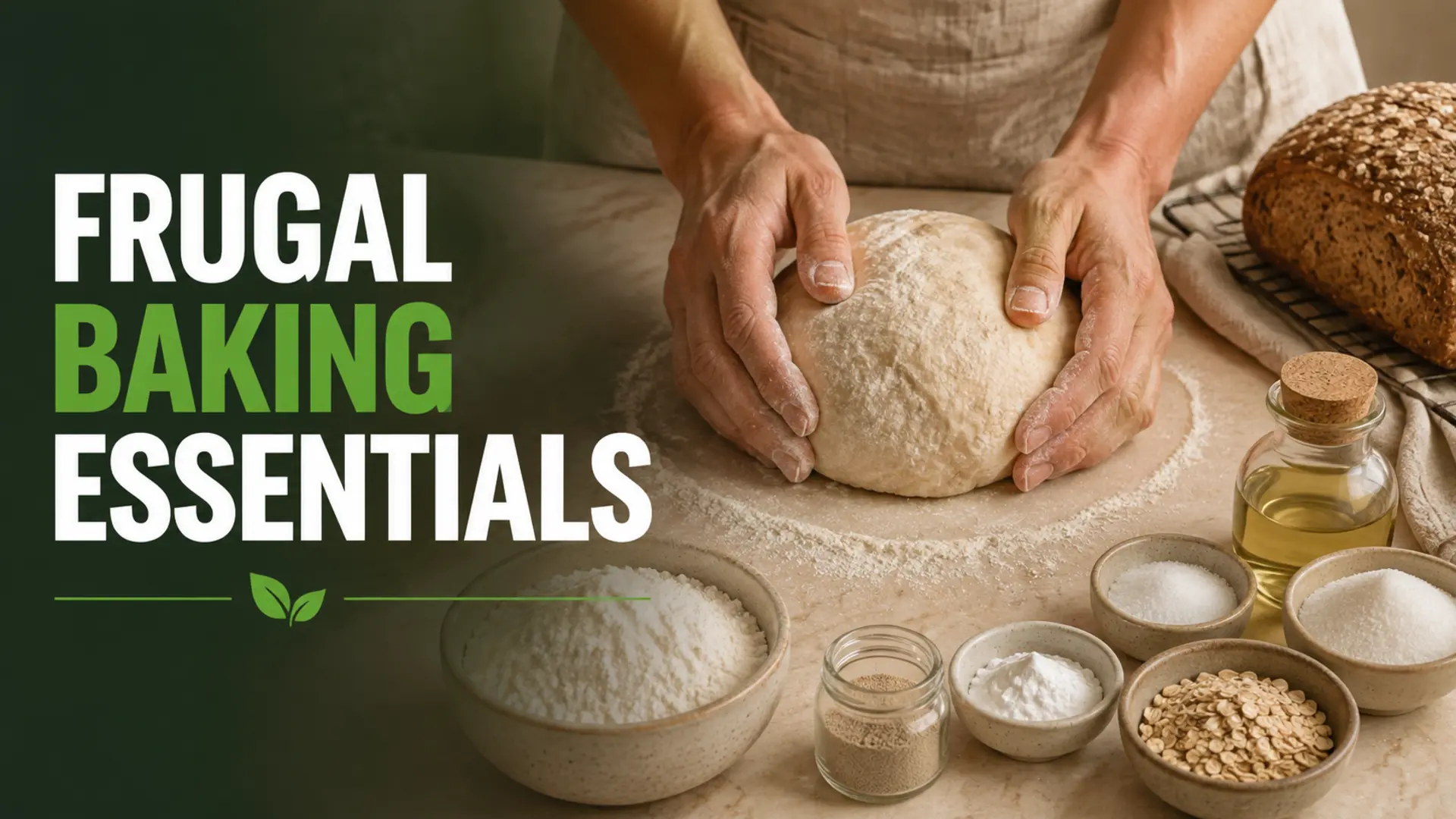
Frugal baking essentials are the ingredients you use across several reliable recipes—not every flour, sweetener or decorating product on the shelf. A compact pantry can make bread, flatbreads, pancakes, muffins and simple treats more convenient, but savings depend on local prices, batch size, energy use and whether ingredients are finished before they lose quality.
Choose Frugal Baking Essentials From Real Recipes
List three to five baked foods your household genuinely eats, then check which ingredients overlap. If you mainly make pancakes and muffins, yeast may not be essential. If you regularly bake bread, yeast and suitable flour may deserve permanent space. This recipe-first approach prevents a “starter pantry” from becoming a collection of rarely used products.
Start With a Pantry Audit
Before shopping, check open packages, best-before guidance, storage conditions and available space. Combine duplicates when safe and appropriate, and place older ingredients where they will be used first. The monthly pantry audit checklist provides a repeatable inventory method.
Do not taste raw flour or dough to test freshness. Discard ingredients affected by pests, moisture, mould, unusual odours or damaged packaging.
Core Flour and Grain Options
All-purpose or plain flour is versatile for many common recipes, but it is not the right choice for everyone. Whole-grain flour, bread flour, self-raising flour and gluten-free blends behave differently. Buy the type required by recipes you plan to make rather than assuming one product is interchangeable in every bake.
- Plain or all-purpose flour: useful for many quick breads, pancakes, cookies, sauces and some breads.
- Whole-grain flour: suitable for recipes developed for its flavour, texture and absorption.
- Rolled oats: useful in porridge, muffins, oat bars and toppings when compatible with dietary needs.
- Specialty flour: buy in a small quantity when a tested recipe specifically requires it.
Keep Only the Leaveners You Use
Baking powder, baking soda and yeast are not direct substitutes. Each works within a particular recipe and can lose effectiveness over time after opening. Label the opening date, close containers well and follow package storage guidance. Purchase a package size that matches your baking frequency rather than choosing bulk automatically.
Salt, Sweeteners and Fats
Salt is common in both savoury and sweet baking. A single familiar granulated sugar may cover most household recipes; brown sugar, syrup and other sweeteners are optional unless used regularly. Butter, margarine and oils produce different results, so follow the recipe and account for dietary requirements.
A small, frequently used selection is usually easier to manage than several sugars and fats opened at once. This principle also applies to flavourings: vanilla, cocoa, spices, dried fruit, nuts and chocolate are useful only when they appear in planned recipes. The guide to buying specialty spices without waste offers the same right-sizing approach.
Flexible Refrigerated Ingredients
Eggs, milk, yogurt and suitable alternatives can support baking and everyday meals, which may improve usable value. Choose products that fit allergies, dietary preferences and tested recipes. Do not assume every plant-based alternative will behave identically in baking.
Build a Short Frugal Baking Shopping List
- One primary flour or flour blend
- One leavener used by the chosen recipes
- Salt
- One regular sweetener
- One suitable fat or oil
- Eggs, milk or alternatives only when required
- One or two flavour additions used across several recipes
Adjust this list to your recipes rather than treating every item as mandatory. A minimalist kitchen framework can help identify ingredients that work in both baking and everyday cooking.
Compare Homemade and Store-Bought Fairly
Use receipt prices to calculate the portion of each ingredient used. Add toppings, fillings and packaging if relevant. For a fuller comparison, consider oven energy, active time, batch yield and food that goes uneaten. Compare a homemade product with a similar store product in size and ingredients.
Cost per usable serving = ingredients used plus relevant additional costs ÷ servings actually eaten or stored safely.
Homemade may offer better value for a frequently eaten basic bake, while a shop purchase may make more sense for an occasional complex item requiring several specialty ingredients. Avoid converting one successful batch into a guaranteed annual saving.
Choose High-Overlap Bakes
Start with forgiving recipes that share ingredients and match your equipment. Pancakes, simple muffins, flatbreads, soda breads or yeast breads may work, depending on your skills and dietary needs. Save tested recipes with clear measurements and repeat the ones that produce usable results.
If an ingredient is missing, consult the recipe before improvising. These ingredient-swapping tips explain how substitutions can affect moisture, structure, flavour and food safety.
Store Baking Ingredients Carefully
- Keep dry goods sealed, labelled and away from moisture and pests.
- Follow package directions for yeast, flour, nuts, seeds and oils.
- Use older suitable packages first.
- Freeze ingredients only when recommended and when containers are appropriate.
- Keep allergens clearly identified and prevent cross-contact where necessary.
Avoid Bulk-Buying Traps
Compare unit prices, but check the cash outlay, storage space and expected use date. A large package is poor value if quality declines or pests reach it before it is finished. Test a recipe and track consumption before increasing package size.
Review the Pantry Every Month
Note which bakes were made, which ingredients moved slowly and what had to be discarded. Remove unnecessary items from the standard list and replace staples only when stock is low. Over time, this creates a baking pantry tailored to the household rather than to a generic checklist.
Keep Frugal Baking Practical
Frugal baking essentials should make a small set of useful recipes easier and reduce waste. Begin with the flour, leavener, salt, sweetener and fat your tested recipes require, then add extras only when they earn regular use. Compare complete costs honestly and let your actual baking habits determine what stays on hand.
Frequently Asked Questions
What are the essential ingredients for frugal baking?
Choose ingredients shared by recipes you actually make: a suitable flour, salt, one leavener, a sweetener, and a fat, plus eggs or milk when required. Add cocoa, spices, extracts, or specialty flours only when several planned bakes use them.
Is homemade bread cheaper than store-bought bread?
It can be, but compare complete ingredient cost, energy, yield, equipment, time, and waste with the bread you would actually buy. A homemade loaf is not economical if it repeatedly fails, goes stale, or requires ingredients used nowhere else.
What is the difference between baking soda and baking powder?
Baking soda generally needs an acid in the recipe, while baking powder contains its own acid-base system and activates with moisture and often heat. They are not freely interchangeable. Follow tested recipes because changing leavening can alter rise, taste, and safety.
How long do baking powder and baking soda last?
Quality depends on the product, storage, and opening date. Keep them tightly sealed, dry, and away from heat, and follow manufacturer guidance. Test performance using a reliable method before an important bake rather than relying only on a calendar date.
Is buying flour in bulk always cheaper?
A larger bag may have a lower unit price, but only if it is used while quality remains good and can be stored safely from moisture and pests. Compare total cash cost and turnover. Small households may save more with a modest package.
How should flour be stored safely?
Keep flour sealed in a food-safe container in a cool, dry place and label its type and purchase date. Whole-grain and nut flours often benefit from cooler storage. Follow package directions, and discard flour affected by pests, moisture, mold, or unusual odor.
Is raw cookie dough safe to taste?
No. Raw flour and raw eggs can contain harmful germs. The FDA advises against eating raw dough or batter unless ingredients are specifically treated for safe uncooked use. Bake according to the recipe.
Which baked goods use the most overlapping ingredients?
Pancakes, muffins, biscuits, flatbreads, quick breads, and simple cakes often share flour, salt, leavener, fat, milk, eggs, or sweetener. Select three reliable recipes with strong overlap so each purchase serves more than one purpose.
Can oil replace butter to reduce baking costs?
Sometimes, but not in every recipe. Butter supplies water, flavor, structure, and creaming properties that oil does not. Use a tested recipe or verified substitution for the specific bake; an unsuccessful swap wastes more than the ingredient saving.
How do I know whether frugal baking actually saves money?
Track ingredient amounts, energy, yield, and discarded food for several bakes, then compare with the store product you normally purchase. Include enjoyment and freshness, but do not count unused specialty ingredients as savings. Keep only recipes that perform consistently.