
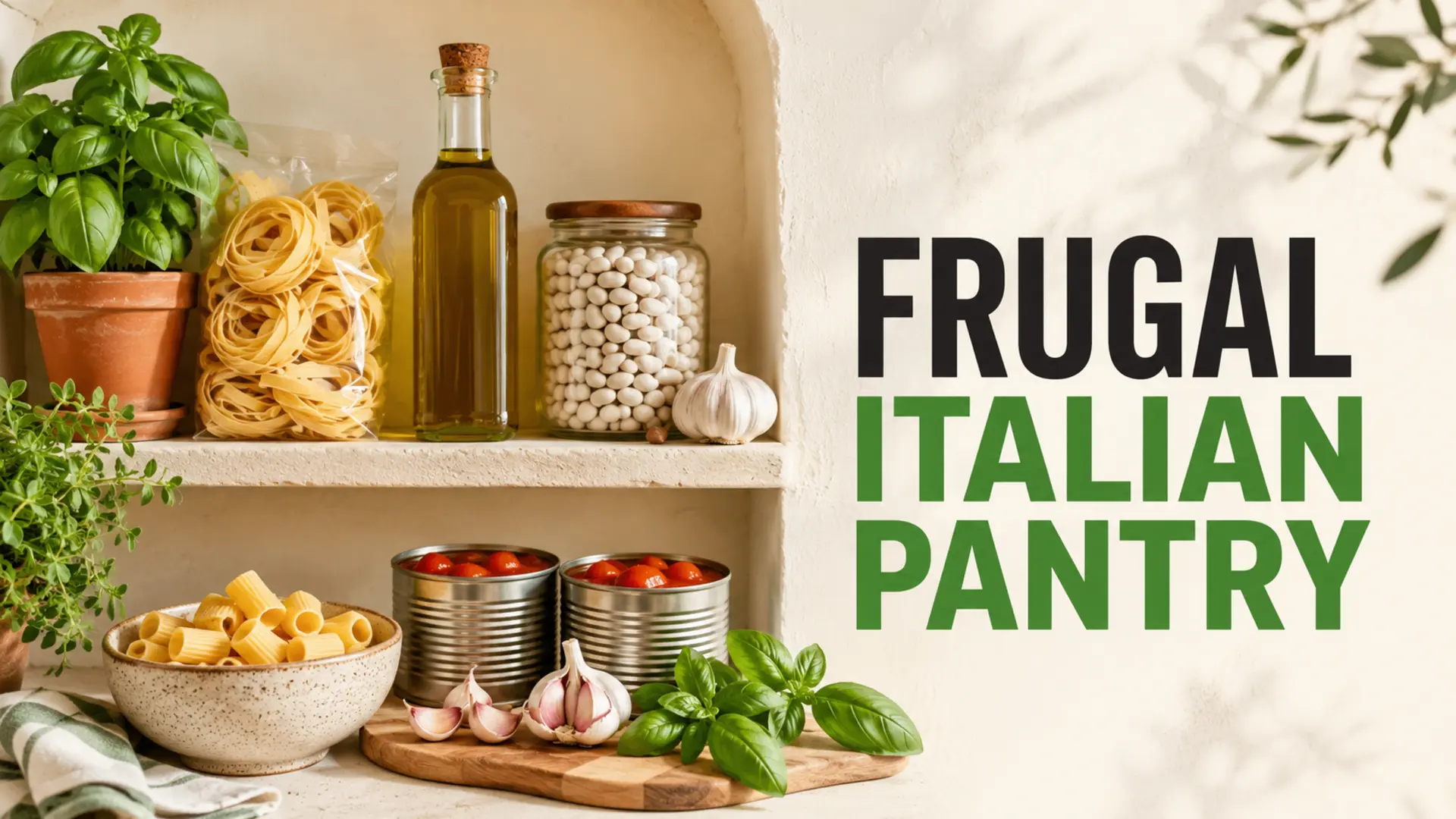
Italian pantry staples can support many affordable, satisfying meals without requiring a shelf full of specialty products. Pasta, canned tomatoes, beans, olive oil, garlic, vinegar, and a few herbs create a flexible base for soups, sauces, salads, and simple main dishes. Choose ingredients your household will actually use and adapt the list to local prices.
Core Italian pantry staples
- Dry pasta: keep one long shape and one short shape if you use both regularly.
- Canned tomatoes: whole, crushed, or diced tomatoes can become sauce, soup, or braising liquid.
- Beans: cannellini, chickpeas, or lentils add substance to soups, salads, and pasta dishes.
- Olive oil: choose a bottle size you can finish while it still tastes fresh and store it away from heat and light.
- Garlic and onions: versatile aromatics for sauces, vegetables, beans, and soups.
- Herbs and spices: dried oregano, basil, rosemary, black pepper, and red pepper flakes cover many familiar flavour profiles.
- Vinegar: red wine or white wine vinegar works for dressings, marinades, and balancing rich dishes.
- Cheese: buy only if it fits the week’s meals; a strongly flavoured hard cheese can be used in modest amounts.
Before stocking up, complete a monthly pantry audit. It prevents duplicate bags of pasta and forgotten cans from accumulating at the back of a shelf.
A frugal Italian pantry shopping strategy
Compare unit prices, but also consider package size, storage, and how quickly your household uses the product. Store brands can be a practical choice when the ingredient list and quality suit the recipe. Imported or premium products may be worthwhile for a dish where the ingredient is central, but they are not required for every meal.
Use our unit-pricing guide to compare different sizes fairly. Prices vary widely by country, store, and season, so a rigid dollar-per-serving promise is rarely useful.
Simple meals from the same staples
- Pasta with tomato and garlic: simmer canned tomatoes with olive oil, garlic, and herbs.
- Pasta e fagioli-style soup: combine short pasta, beans, tomatoes, aromatics, and stock or water.
- White bean salad: toss beans with vinegar, olive oil, herbs, and available vegetables.
- Vegetable minestrone: use seasonal vegetables, beans, tomatoes, and a small pasta shape.
- Garlic-and-oil pasta: add leafy greens or beans to turn a simple base into a fuller meal.
These formats also work well with the substitution ideas in our ingredient-swapping guide.
Store ingredients for quality and less waste
Keep dry goods sealed in a cool, dry place and rotate older packages forward. Refrigerate opened tomato products and follow their package guidance. Label frozen portions of sauce with the date. Store olive oil away from the stove, where heat and light can shorten its useful life.
A frugal Italian-inspired pantry is less about owning every traditional ingredient and more about choosing a small, versatile set. Start with the meals you cook most often, add missing staples to one organized list, and expand only when an ingredient earns a regular place in your kitchen.
Frequently Asked Questions
What are the essential staples for an Italian-inspired pantry?
Start with foods used in your own meals: pasta, rice or polenta, canned tomatoes, beans, olive oil, vinegar, garlic, onions, dried herbs, and a hard cheese or alternative when appropriate.
Do I need expensive imported ingredients for Italian-style cooking?
No. Technique, balance, and compatible ingredients matter more than buying every specialty product. Use reliable local options and reserve imported items for cases where you value the difference.
Which pasta shapes should a frugal pantry include?
One short shape and one long shape cover many meals. Add specialty shapes only for recipes you cook regularly; too many open packages create clutter without expanding the menu meaningfully.
Are canned tomatoes worth buying in bulk?
Only when you use them often, have storage space, and the unit price is lower. Buy a small quantity first to confirm flavor because tomato products vary in acidity and texture.
How should olive oil be stored?
Keep it tightly closed in a cool, dark place away from the stove, oven, and direct sunlight. Buy a container size you can finish while flavor remains good rather than chasing the lowest unit price.
What inexpensive proteins fit an Italian-inspired pantry?
Beans, lentils, eggs, canned fish, and modest amounts of cheese or meat can complement pasta, polenta, soups, and vegetables. Select options that fit dietary needs and local prices.
How can the same pantry staples make different meals?
Canned tomatoes, beans, pasta, aromatics, and herbs can become soup, pasta sauce, a bean stew, baked pasta, grain bowls, or bruschetta-style toppings with a few fresh additions.
Which Italian herbs should I buy first?
Choose herbs used by your regular recipes—often oregano, basil, rosemary, or parsley—rather than a large collection. Dried herbs offer shelf life, while fresh herbs need a specific near-term use.
How do I prevent pantry staples from expiring?
Keep older packages visible, label opened items, store food in suitable sealed containers, and plan from inventory before shopping. Buy new specialty items only when a recipe is scheduled.
What fresh foods complement a frugal Italian pantry?
Onions, garlic, carrots, celery, leafy greens, seasonal vegetables, lemons, and modest amounts of cheese or herbs can turn shelf-stable basics into varied meals. Choose only quantities the household can use.