
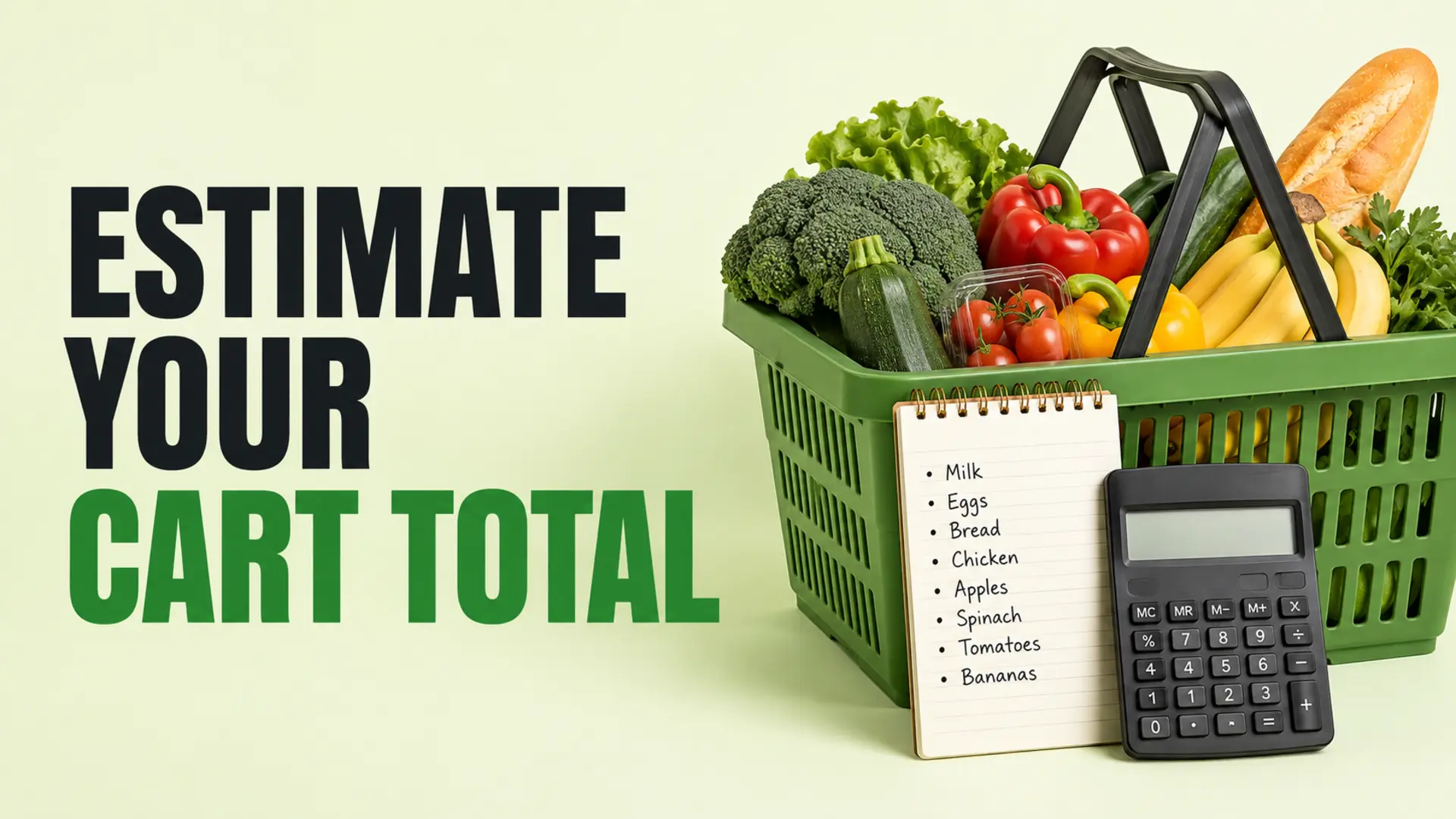
An estimated grocery cart total gives you a working budget before you reach checkout. It does not need to be exact. By attaching a reasonable price estimate to each item and updating the running total while you shop, you can spot an overage early and make deliberate substitutions instead of reacting under pressure.
How to calculate an estimated grocery cart total
- Write the quantity needed beside every item.
- Add a recent or expected price using receipts, store listings, or your own price notes.
- Multiply price by quantity and total the list.
- Add a small buffer for price changes, deposits, taxes where applicable, or an unplanned essential.
- Compare the estimate with your grocery budget before leaving home.
If you shop from the same stores regularly, a simple grocery price book can make future estimates faster. Prices still change, so treat older figures as a guide rather than a guarantee.
Track the running total while shopping
Use a calculator, a note on your phone, or paper—whichever method you can update quickly. Replace the estimate with the shelf price as items enter the cart. If an item is sold by weight, use the label or scale to estimate the actual cost.
Keep the list organized by aisle so you can see which planned items remain. Our guide to organizing a shopping list by supermarket aisle can reduce backtracking and make the running total easier to manage.
What to do when the estimate is too high
- Check whether a different size offers a better usable value.
- Compare the unit price rather than the package price alone.
- Swap a flexible ingredient for a lower-cost alternative.
- Remove optional extras before cutting ingredients required for planned meals.
- Delay stock-up purchases if they strain the current budget or storage space.
Do not assume the cheapest package is always best. A larger product can cost more overall or create waste. Read our unit-pricing guide for a fair comparison method.
Review the final receipt
After shopping, compare the estimate with the receipt. Note which items were consistently higher or lower than expected and update your price records. This turns each trip into better information for the next one.
An estimated grocery cart total is a decision tool, not a promise of a perfect checkout number. Keep estimates realistic, update them calmly, and use the total to protect the meals and essentials that matter most. If impulse items are the main problem, see our tips for reducing impulse buys with a focused list.
Frequently Asked Questions
What is an estimated grocery cart total?
It is a pre-shopping estimate created by multiplying planned quantities by realistic recent prices and adding the results. It gives the list a financial limit before items enter the cart.
How accurate does a grocery estimate need to be?
It does not need to match the receipt exactly. Use recent receipts, store listings, or a price book, then include a modest buffer for variable weights, substitutions, taxes where applicable, and price changes.
How can I estimate groceries without checking every price online?
Use rounded recent prices for regular items and look up only expensive, unfamiliar, or promotional products. Update the estimate after shopping so the next list becomes easier.
Should I include tax in an estimated cart total?
Include taxes that apply in your location and to your products. Rules vary, so base the buffer on previous receipts rather than assuming all groceries are taxed the same way.
How do I track the running total while shopping?
Use a calculator, note prices beside list items, or update a digital list. For weighed produce and meat, estimate slightly high until the exact label price is available.
What should I remove first when the estimate exceeds the budget?
Protect essential meal ingredients and dietary needs. Review optional drinks, duplicate snacks, speculative stock-ups, convenience upgrades, and products without a specific use before cutting core foods.
How do substitutions affect an estimated grocery total?
A replacement may differ in size, unit price, and yield. Recalculate the new option rather than comparing shelf prices alone, and confirm that it still works for the planned meal.
Can an estimated cart total prevent impulse buying?
It creates a clear tradeoff: an unplanned item must fit the total or replace something else. It will not eliminate impulses, but it makes their effect visible before checkout.
What if shelf prices are much higher than my estimate?
Pause and revise the list using current unit prices. Substitute flexible items, reduce optional quantities, or raise an outdated budget honestly instead of forcing a plan based on old prices.
How should I review the receipt afterward?
Compare estimated and actual totals, check discounts and quantities, and note the largest differences. Update only the prices that materially affected the result rather than rebuilding the entire price list.