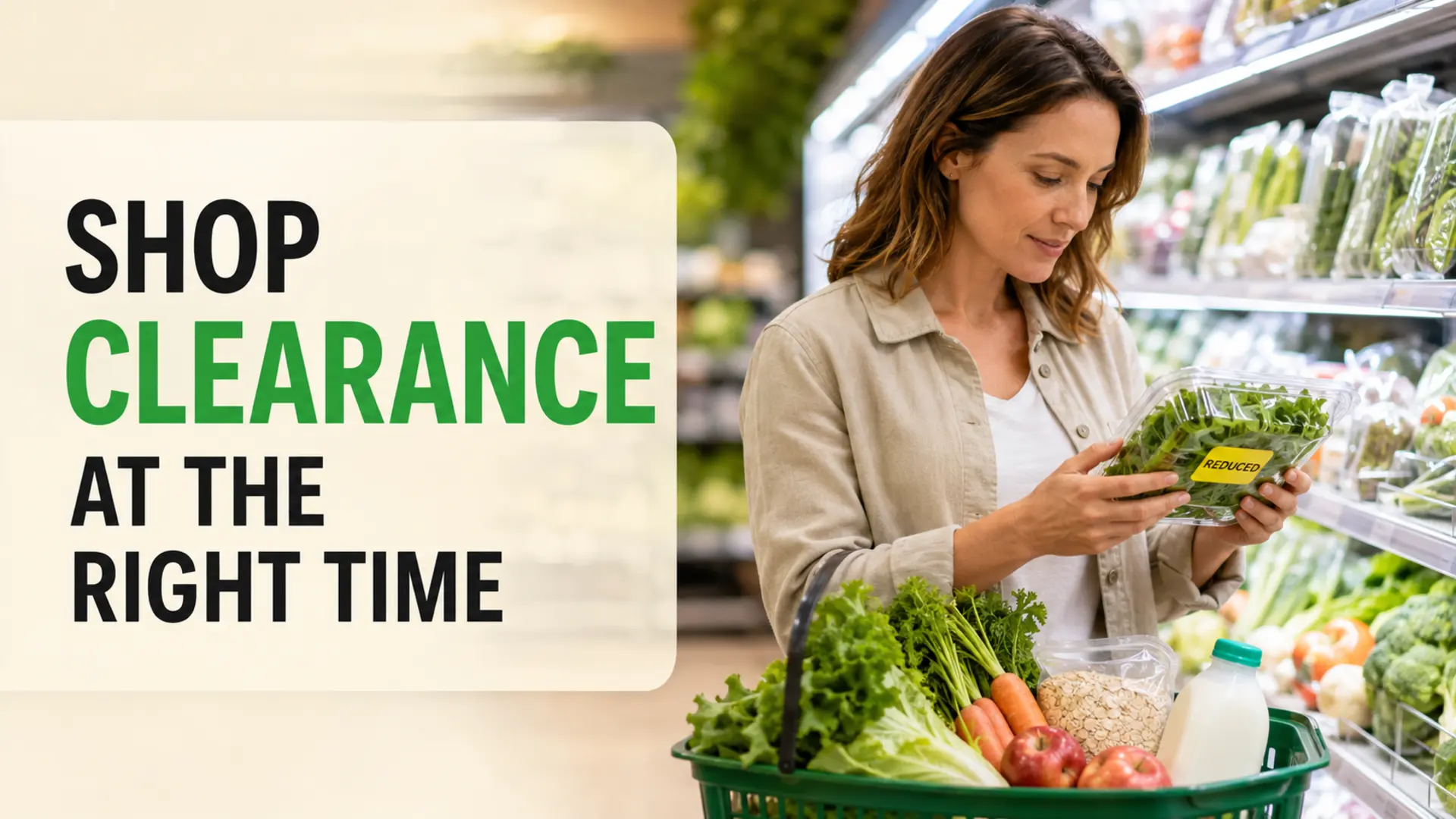
The best time to shop supermarket clearance is not the same at every store. Markdown routines depend on delivery days, staffing, department practices and local demand. Instead of relying on a universal weekday or hour, learn your store’s pattern, arrive with a flexible list and buy discounted food only when you can use or store it safely.
How to find the best time to shop supermarket clearance
Visit the same store at two or three different times over several weeks and note when reduced-price items appear. Early morning can be productive at stores that review dates before opening, while late afternoon or evening may work better for bakeries and prepared-food counters. Some stores mark items throughout the day rather than in one predictable window.
Ask an employee a simple, respectful question: “When does this department usually review items for markdown?” Staff may share a general routine, but treat it as guidance rather than a guarantee. Deliveries, holidays and inventory levels can change the schedule.
Track patterns instead of chasing a “golden hour”
Create a short note with the store, department, day and approximate time. Record whether you found useful items—not merely whether the clearance shelf was full. After a few visits, you may see a reliable pattern for meat, dairy, produce, bakery goods or shelf-stable products.
- Store and department: markdown routines may differ within the same location.
- Day and time: use broad windows rather than expecting an exact minute.
- Useful selection: note items your household genuinely eats.
- Condition and date: record whether products were practical to use safely.
Check the clearance area and regular shelves
Some stores collect reduced products in one section; others leave them in their normal departments. Check refrigerated cases, endcaps, bakery racks and produce areas without wandering every aisle. If you also shop at value-focused retailers, these discount-supermarket shopping strategies can help you prepare for different layouts and checkout routines.
Compare the final unit price
A clearance sticker does not automatically make an item the best value. Compare the reduced price per unit with store brands, frozen alternatives and current promotions. A smaller regular-price package may cost less overall and fit your meal plan better.
Also check whether the markdown can be combined with a loyalty offer or coupon. Policies vary, so read the terms rather than assuming discounts will stack. The same discipline applies when you plan meals around supermarket loss leaders.
Buy clearance food with a use-first plan
Before placing a reduced item in your basket, decide what will happen to it. Will you cook it tonight, include it in tomorrow’s meal, portion it for later or freeze it promptly? If none of those options is realistic, the apparent bargain may become waste.
- Check your meal plan and available storage space.
- Choose a realistic quantity rather than buying every marked-down package.
- Add the item to a use-first section of your list.
- Label anything you freeze with the item and freezing date.
Inspect packaging and follow food-safety guidance
Do not buy packages that are leaking, swollen, open or badly damaged. Keep chilled and frozen foods cold during transport, and follow the product’s handling instructions. A markdown does not override a recall, safe-temperature requirement or product-specific storage limit.
For meat, poultry, seafood, dairy and prepared foods, consult the official FoodSafety.gov cold-storage chart or the equivalent authority where you live. USDA’s food product dating guidance also explains why package dates need context. If an item is recalled, follow the recall notice even when it looks normal.
Use different rules for different departments
Produce
Choose produce that can be trimmed or used soon, but skip items with extensive decay, leaking packages or signs that do not fit your planned use. Soft fruit may suit smoothies or cooking, while wilted greens may not be useful at any price.
Bakery and shelf-stable goods
Check package integrity and confirm that you have freezer or pantry space. Large quantities are only economical when they will be used. A quick pantry audit before shopping helps prevent duplicate purchases.
Meat, seafood and prepared foods
Keep these products cold, avoid damaged packaging and follow official storage and cooking guidance. Never assume freezing reverses unsafe handling; it preserves food at its current condition rather than making mishandled food safe.
Build a flexible clearance shopping list
Write categories rather than rigid products: “protein for two dinners,” “fruit for breakfasts” or “vegetable for soup.” Flexible categories let you use genuine deals without buying random food. Include a firm quantity limit and one backup option so an empty clearance section does not derail the trip.
Review whether the trip actually saved money
After the week, check what was eaten, frozen or discarded. Clearance shopping works when it lowers the cost of planned food—not when it creates extra trips and unused purchases. If discounted items repeatedly go to waste, reduce the quantity or frequency. These household food-waste checks can help identify the pattern.
A better clearance routine
The best time to shop supermarket clearance is the reliable local window that fits your schedule and leaves enough time to use the food safely. Track your store, compare unit prices, inspect every package and shop with a use-first plan. A smaller basket of practical markdowns is usually more valuable than a large haul chosen only because the stickers look appealing.