
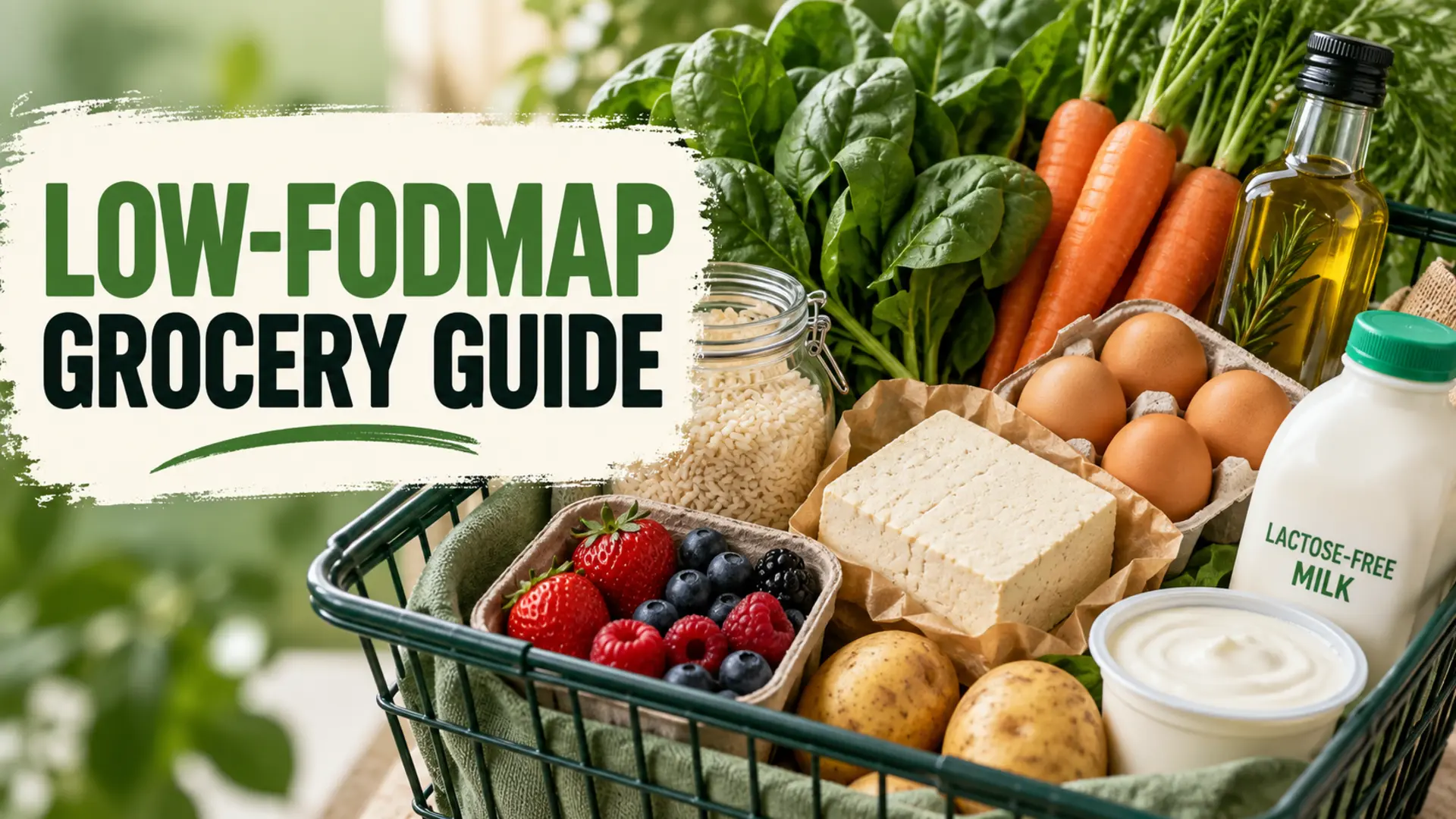
A low-FODMAP grocery guide can make a clinician-supported trial easier to manage, but food suitability often depends on portion size, processing, and individual tolerance. The low-FODMAP approach is normally a temporary elimination followed by structured reintroduction and personalization—not a permanent list of “good” and “bad” foods.
Use this low-FODMAP grocery guide with qualified support
FODMAP stands for fermentable oligosaccharides, disaccharides, monosaccharides, and polyols. Restricting them can help some people with diagnosed irritable bowel syndrome, but digestive symptoms can have other causes. Work with a registered dietitian or appropriate clinician before starting, particularly if you have weight loss, bleeding, anaemia, persistent vomiting, fever, severe pain, or other concerning symptoms.
Build a practical shopping list
Depending on verified serving sizes and personal tolerance, a plan may include plain eggs, unseasoned meat or fish, firm tofu, rice, oats, potatoes, carrots, spinach, cucumber, selected fruit, lactose-free dairy, hard cheeses, and suitable oils. This is not a complete or universal list. Check a current, reputable FODMAP resource because tested portions can change as evidence is updated.
Read labels for concentrated ingredients
- Check stocks, sauces, spice blends, marinades, and prepared meats for onion and garlic ingredients.
- Look for inulin, chicory root, certain fruit concentrates, and polyol sweeteners when relevant to your plan.
- Do not assume “gluten-free” means low-FODMAP; the two terms describe different issues.
- Keep allergy and coeliac requirements separate from FODMAP choices.
Plan simple meals during the trial
- Rice with a suitable protein and tolerated vegetables.
- Potatoes with eggs, greens, and a checked dressing.
- Firm tofu with rice noodles and individually tolerated vegetables.
- Oats with lactose-free milk or a suitable alternative and a tested portion of fruit.
Serving size matters, and combining several foods can change the total FODMAP load. Avoid rigid rules about meal spacing or claims that one restaurant order is guaranteed symptom-free. Kitchens, recipes, portions, and individual responses vary.
Use infused oils safely
Commercial garlic-infused oil can add flavour without whole garlic when it has been produced and stored safely. Homemade oil containing fresh garlic can present a botulism risk if handled or stored incorrectly, so follow reliable food-safety guidance rather than keeping it at room temperature.
Reintroduce and personalize
After the short elimination phase, systematic reintroduction helps identify which groups and portions are tolerated. A dietitian can help sequence challenges and protect dietary variety and adequacy. Track foods and symptoms without assuming that every change is caused by a single ingredient.
See our gluten-free shopping guide for the important distinction between coeliac safety and FODMAP choices, plus the last-minute pantry checklist for adaptable backup meals.
Conclusion
A useful low-FODMAP grocery guide supports a temporary, structured process. Verify portions, simplify meals, read labels, and work toward the broadest varied diet you can comfortably tolerate with qualified support.