
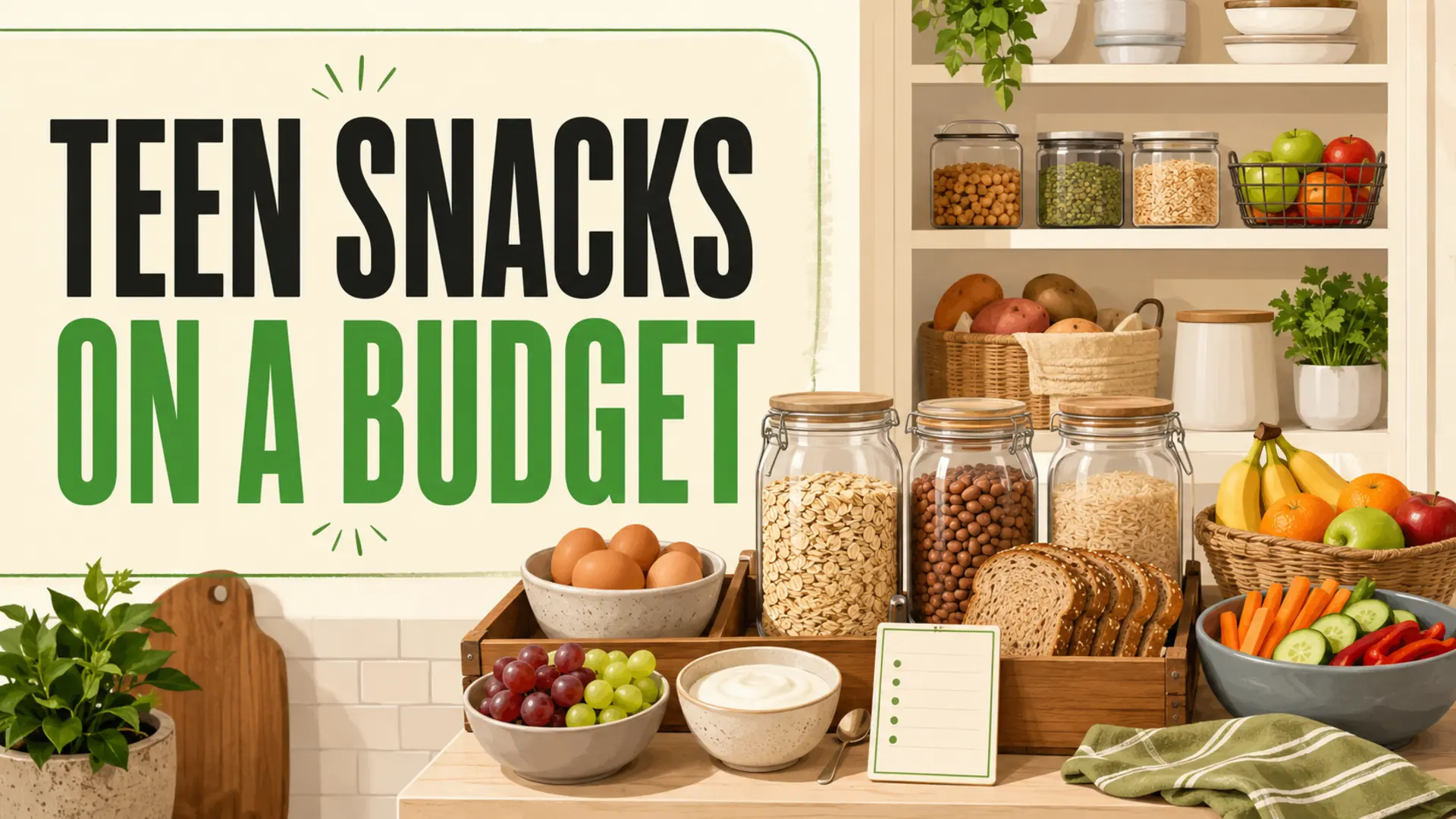
A teen grocery budget works better when it plans for flexible appetites instead of trying to predict one exact amount of food. Stock a mix of affordable staples, filling meal components, and easy snacks, then involve teenagers in choosing, preparing, and reviewing what the household actually uses. Appetite and nutrition needs vary by age, activity, growth, culture, and health, so use this as a planning framework rather than a prescription.
Start with a realistic teen grocery budget
Review recent grocery spending and separate the list into meals, snacks, drinks, and household items. Decide which foods are always available, which are flexible, and which are occasional purchases. A shared household grocery budget gives teenagers a clear place to suggest foods and understand trade-offs without making them responsible for the family’s entire food plan.
Plan around the week’s schedule. School lunches, sports, part-time jobs, late classes, and family dinners may require different options. Leave room for leftovers and one or two quick meals so the budget does not depend on cooking from scratch every day.
Choose affordable staples teens will actually eat
Build the list from foods your household already uses. Health Canada’s healthy-eating guidance for teens encourages variety across vegetables and fruit, whole-grain foods, and protein foods. Adapt those categories to your family’s culture, dietary needs, and budget.
- Meal foundations: oats, rice, potatoes, pasta, tortillas, bread, and other grains.
- Protein choices: beans, lentils, eggs, tofu, yogurt, cheese, canned fish, chicken, or other foods your family enjoys.
- Produce: seasonal fruit, frozen vegetables, carrots, cabbage, onions, greens, and other ingredients that work across several meals.
- Flexible snacks: fruit, yogurt, toast, popcorn prepared safely, leftovers, hummus with vegetables, or a simple homemade option.
- Drinks: water and the beverages your household has chosen for regular use.
Buy a larger package only when the unit price, storage space, and expected use make sense. Compare costs with a unit-pricing check, and avoid stocking a quantity that will be forgotten or wasted.
Use a flexible snack station
A visible, organized snack area can make choices easier between meals. Place a few approved options together and explain which foods need refrigeration, cooking, or an adult’s help. Keep portions and access appropriate for the teen’s age and your household’s routines.
Ask teenagers to help choose two or three snack options before the shopping trip. Giving them input can improve buy-in while keeping decisions grounded in the shared budget. For a practical starting point, read the kids’ grocery financial-literacy guide.
Plan meals that share ingredients
Look for ingredients that can appear in more than one meal. Beans can work in tacos, soup, or a grain bowl. Cooked vegetables can become a side, filling, or pasta addition. This reduces the number of one-purpose purchases and makes leftovers easier to use.
- Choose a few family meals and ask teens to select one meal they can help prepare.
- List the ingredients and check what is already in the kitchen.
- Add quantities based on the household’s normal use, not an invented calorie target.
- Plan one quick backup meal for late or unpredictable days.
- Review what was eaten before rebuilding the next list.
Teach useful shopping and cooking skills
Teenagers can compare unit prices, read labels, wash produce, prepare simple ingredients, and pack leftovers. Match the task to their skills and supervise knives, heat, and food handling as needed. A batch-cooking guide can help families choose manageable prep tasks without turning one day into an exhausting cooking project.
Review the budget without shame
At the end of the week, check which foods ran out, which snacks were ignored, and where a substitute worked well. Adjust the list instead of blaming anyone for having an appetite. A teen grocery budget should support adequate food, realistic family routines, and respectful communication.
Start small: choose a shared budget, invite teen input, keep dependable staples available, and make the next shopping list from what your household actually used.
Frequently Asked Questions
How much should a family budget for groceries with teenagers?
There is no universal amount because prices, household size, activity level, dietary needs, and location vary. Start with four weeks of actual spending, separate food from household items, and set a workable weekly range. Adjust the plan using receipts rather than an arbitrary target.
Why do teenagers seem hungry all the time?
Adolescence includes growth and, for many teens, increased activity, so appetite can rise. Appetite also varies by day. Offer regular meals and filling snacks built from protein, fibre-rich carbohydrates, and fats. Sudden or concerning changes deserve discussion with a qualified health professional.
What are inexpensive filling foods for teenagers?
Useful budget staples include oats, rice, potatoes, pasta, beans, lentils, eggs, canned fish, peanut or seed butter, yogurt, seasonal produce, and frozen vegetables. Combine two or three food groups in snacks, such as yogurt and fruit or toast with egg, for better staying power.
How can I create a low-cost teen snack station?
Choose one pantry bin and one refrigerator area, then stock portionable basics instead of many single-serve packages. Examples include fruit, yogurt, cheese, hummus, popcorn, boiled eggs, and whole-grain bread. Label foods reserved for planned meals so expectations are clear.
Are store brands a good way to lower a family grocery bill?
Often, yes. Compare unit prices and ingredient or nutrition labels rather than assuming either brand is always cheaper or identical. Store brands can work especially well for oats, pasta, canned beans, frozen vegetables, baking ingredients, and other staples where the household accepts the taste.
How do I plan meals when teenagers have different schedules?
Use component meals that reheat or assemble easily: cooked grains, a protein, vegetables, sauces, and wraps or bowls. Post the weekly plan and identify which portions are reserved. Freeze extras promptly if schedules change rather than leaving them in the refrigerator indefinitely.
How can teenagers help reduce grocery costs?
Teens can inventory snacks, suggest two meals, compare unit prices, prepare one recipe, pack leftovers, and note foods running low. Give them a defined budget or category rather than simply saying “spend less.” Reviewing the receipt together turns cost control into a practical skill.
What should I do if budget foods are not being eaten?
Stop buying large quantities based only on price. Identify a few accepted staples, serve unfamiliar options alongside familiar foods, and buy trial sizes first. Track what is discarded for two weeks; reducing waste can save more than purchasing the cheapest version of food nobody uses.
How can I manage sports nutrition without expensive specialty products?
Most active teens can build meals and snacks from ordinary foods: water, milk or an appropriate alternative, fruit, sandwiches, yogurt, eggs, grains, and family meals. Individual needs vary by sport and health status; consult a registered dietitian for intensive training or medical concerns.
How do I discuss the grocery budget without shaming a hungry teenager?
Frame the limit as a shared household resource, not a judgment about appetite or body size. Explain which foods are freely available, which are reserved for meals, and how substitutions work. Invite the teen to help choose affordable filling options and revisit the plan without blame.