
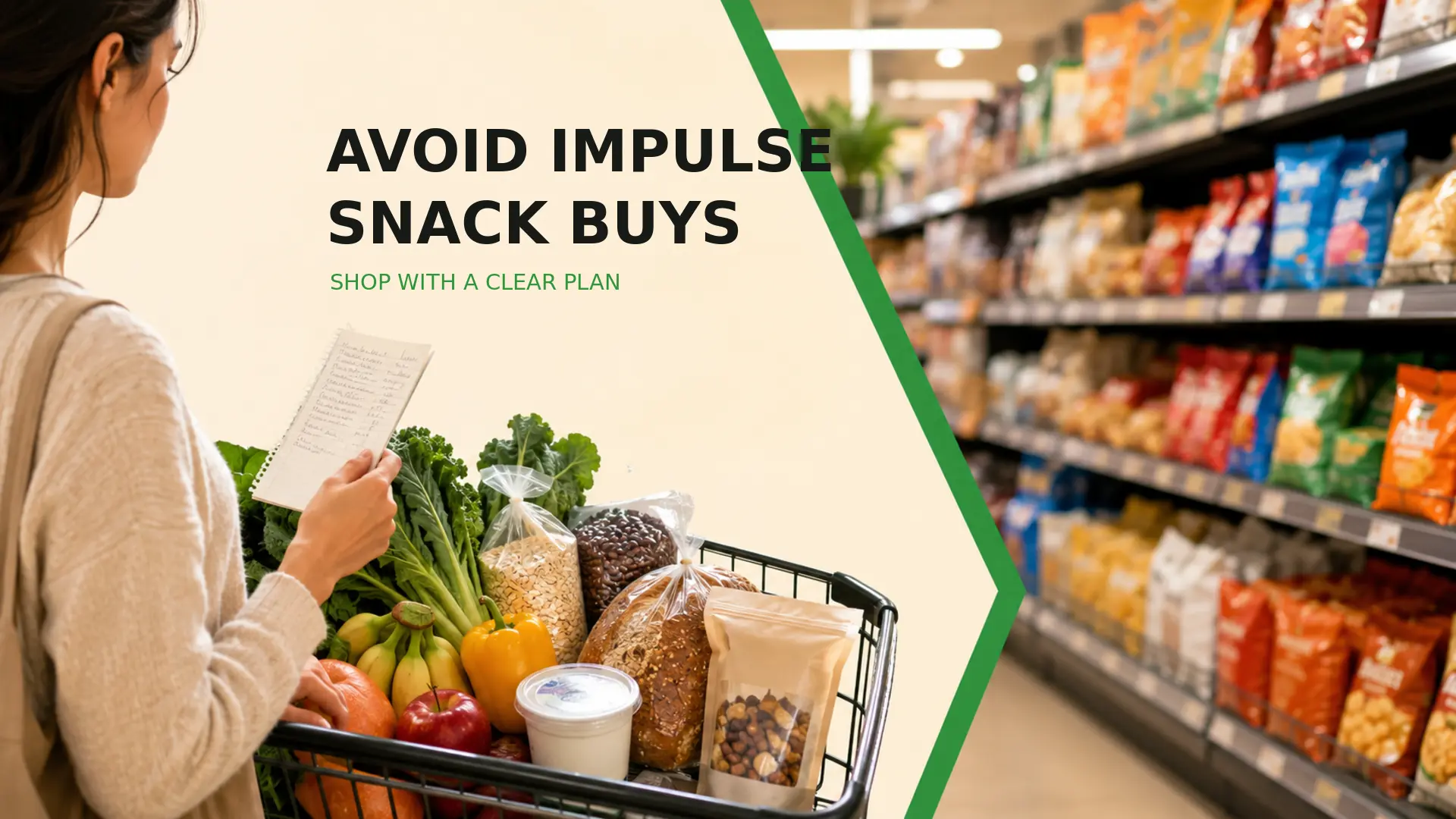
To avoid impulse snack purchases, shop from a specific list, plan a realistic snack allowance and compare products based on price, ingredients, serving usefulness and enjoyment. You do not need to avoid an entire aisle. Grocery layouts vary, and centre aisles also contain practical staples such as oats, beans, rice, canned vegetables and shelf-stable foods.
How to avoid impulse snack purchases without rigid rules
The “Aisle 4 Trap” is better understood as a planning problem than a particular location in every supermarket. Displays, promotions and convenience foods can encourage unplanned additions anywhere in a store, including entrances, aisle ends and checkouts. A flexible plan helps you buy foods that fit your household while leaving room for chosen treats.
Start with a complete grocery list
Review meals, snacks and pantry supplies before shopping. Write down quantities or package sizes when they matter. A vague entry such as “snacks” makes it harder to distinguish a planned choice from an impulse buy. Our guide to making a practical grocery list provides a repeatable structure.
- List snacks you genuinely expect to eat before the next shop.
- Note dietary, allergy, texture and accessibility needs.
- Check what is already open at home.
- Leave one flexible slot if variety helps the plan feel sustainable.
Eat and prepare before entering the store
Shopping while hungry, rushed or mentally overloaded can make any list harder to follow. When possible, eat beforehand, bring water, choose a quieter time and set aside enough time to compare options. If those conditions are unavoidable, use a shorter route or consider online grocery pickup, after checking fees, substitutions and online prices.
Shop by your list, not by a perimeter rule
The often-repeated advice to shop only the perimeter is unreliable. Store layouts differ, and nutritious, affordable foods are found throughout the shop. Use the route that matches your list. You might collect produce and refrigerated items first, then visit only the centre aisles containing your planned staples and snacks.
Frozen vegetables, canned fish, beans, whole grains, nut or seed butters and shelf-stable milk can all be useful packaged foods. Processing alone does not tell you whether a product fits your needs, budget or overall eating pattern.
Create a realistic snack plan
Eliminating every enjoyable snack can make a grocery plan difficult to maintain. Instead, choose a quantity and variety that fit the time until your next shop. Consider how the snack will be used: packed for work, shared at home, kept for travel or paired with another food.
- Fruit with yogurt or a nut or seed butter
- Crackers with cheese, hummus or beans
- Popcorn prepared to your preference
- Vegetables with a dip you enjoy
- A planned portion of chips, biscuits or another favourite food
These are options, not moral rankings. Choose foods that are safe, culturally appropriate, affordable and satisfying for your household.
Compare packaged snacks fairly
Compare the price per unit or weight, but also consider how many usable servings the package provides. The cheapest large bag is poor value if it goes stale or encourages buying more than you intended. Read ingredient and allergen information when relevant, and use the nutrition label to compare similar products rather than judging a single food in isolation.
Public-health guidance differs by country. Canada’s Food Guide offers general advice on making highly processed foods one part of an overall eating pattern; readers elsewhere can consult their national or local health authority.
Handle promotions with a pause
End-cap displays, multi-buy offers and loyalty discounts are not savings unless the final price is competitive and the quantity will be used. Before adding an unlisted item, pause and ask:
- Would I buy this without the promotional sign?
- Does it replace something already on my list?
- Is the unit price actually lower?
- Will the full quantity be eaten before quality declines?
- Does it fit the amount I planned to spend?
Make planned choices easier to see
Use a reusable weekly shopping template for frequently purchased staples and snacks. Organize the list by store section, keep it visible while shopping and check items off as you go. If shopping with others, agree beforehand on substitutions and flexible items.
Use a simple substitution framework
Substitutions should solve a real problem: price, availability, dietary needs, storage or convenience. Compare like with like and avoid promises that homemade versions are always cheaper. Preparation time, ingredients, equipment and leftovers all count. Sometimes the packaged option prevents food waste or makes adequate meals possible during a busy week.
Review the receipt and leftovers
After shopping, mark unplanned purchases on the receipt without self-criticism. At the next shop, check whether those foods were used and enjoyed. This turns one trip into useful information. For a more detailed check, follow the grocery receipt audit process to catch quantity, promotion and scanning errors.
A balanced way to avoid the “Aisle 4 Trap”
Avoiding impulse snack purchases does not require banning centre aisles or treating packaged food as a failure. Plan enough food, include snacks intentionally, compare final value and pause before promotions. The goal is a cart that reflects your needs and priorities—not a perfect route through the store.
Frequently Asked Questions
What is the “Aisle 4 Trap” in grocery shopping?
It describes unplanned spending on prominently displayed snacks and processed foods. The aisle number is symbolic; the same pressure can appear in endcaps, checkout lanes, app promotions, and seasonal displays.
How do I avoid impulse snack purchases at the grocery store?
Plan realistic snacks before shopping, add quantities to the list, eat beforehand, and pause when an unlisted item catches your attention. Ask what it replaces and whether it fits the budget.
Should I completely avoid the snack aisle?
No. Packaged foods can be convenient and appropriate. The practical goal is to choose them intentionally, compare value, and avoid buying more than your household will use—not to impose a rigid perimeter-only rule.
Does shopping while hungry increase impulse buying?
Hunger can make appealing foods harder to ignore. A meal or planned snack before shopping may help, but a complete list and spending limit are still more reliable than depending on willpower.
How can I compare packaged snacks fairly?
Compare unit price, serving size, ingredients relevant to your needs, and how many portions will actually be eaten. A large value pack saves nothing if it becomes stale or encourages unwanted overbuying.
Are supermarket promotions on snacks genuine savings?
Only when the final unit price is competitive and the product was already useful. Multi-buy offers can increase total spending, so check whether the discount requires buying more than you planned.
What are inexpensive alternatives to individually packaged snacks?
Depending on preferences and dietary needs, consider fruit, yogurt, popcorn kernels, oats, cheese, nuts or seeds, vegetables with dip, and larger packages portioned at home. Compare local prices before assuming homemade is cheaper.
How can parents handle children asking for snacks in the store?
Agree on a snack choice or limit before entering, involve children in finding listed items, and keep the rule consistent. Planning one acceptable choice can work better than negotiating beside every display.
How do I stop buying snacks that go uneaten?
Review the pantry before shopping, note which products were unfinished, and buy smaller quantities until demand is clear. Treat discarded portions as part of the product’s true cost.
Can a digital grocery list reduce impulse snack spending?
It can help keep quantities, shared updates, and priorities visible. The tool works best when you still review inventory, plan snacks, and remove promotional additions that do not serve a real need.