
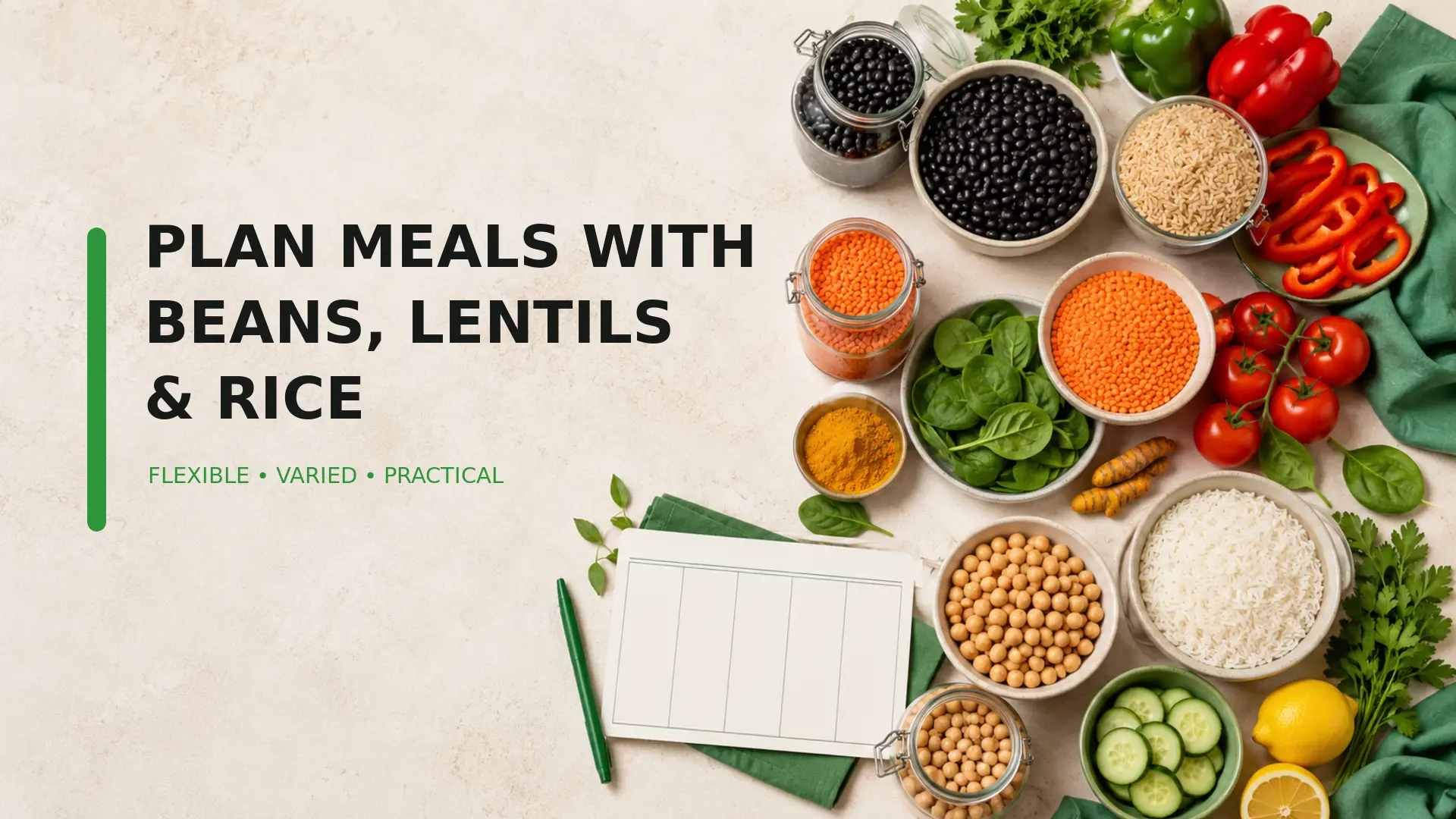
Meal planning with beans, lentils and rice works best when you treat them as flexible components rather than one repetitive dish. Choose one or two legumes, a grain, several vegetables and a few flavour profiles for the week. Compare local prices, plan realistic portions and use canned, dried, frozen or ready-cooked options according to your time and equipment.
Why meal planning with beans, lentils and rice works
Beans, lentils and rice are widely available, adaptable and easy to combine with vegetables, herbs, spices, sauces and other proteins. Their value depends on local prices, cooking fuel, preparation time and waste, so avoid relying on a universal cost-per-meal promise. A simple price comparison can show whether dried, canned or ready-cooked products suit your household best.
Legumes and grains contribute different nutrients and can complement one another across an overall varied eating pattern. They do not have to be eaten in the same bowl or at the same meal. People with specific nutrition needs should follow advice from an appropriate health professional.
Start with a pantry and equipment check
Before choosing recipes, check open packages, canned goods, seasonings and freezer space. A monthly pantry audit helps prevent duplicate bags of rice or forgotten legumes. Also note the equipment and time available: a saucepan may be enough for lentils and rice, while some dried beans need longer cooking or pressure-cooker preparation.
- Legumes: beans, chickpeas, split peas or lentils
- Grains: rice or another grain your household uses
- Vegetables: fresh, frozen or canned options
- Flavour builders: onion, garlic, ginger, herbs, spices, citrus, vinegar or sauces
- Finishing items: yogurt, cheese, seeds, nuts, avocado or fresh herbs, when appropriate
Choose dried or canned legumes intentionally
Dried legumes may have a lower unit price and allow control over texture and seasoning, but they require planning, water, cooking energy and storage. Canned beans and lentils save time and can reduce the chance that a busy evening ends in an unused meal plan. Compare the drained weight and usable servings, not just the container price.
Rinse canned legumes if that matches the recipe and your dietary needs. Follow package directions for soaking and cooking dried products. Kidney beans require particular care: never rely on a slow cooker alone for raw or soaked kidney beans; boil them as directed by a trusted food-safety authority before further cooking.
Build meals with a four-part formula
A repeatable structure keeps the plan flexible:
- Choose beans or lentils for the main legume component.
- Add rice in a quantity that fits the meal and appetite.
- Include one or more vegetables for colour, texture and variety.
- Finish with a flavour profile and optional topping.
This formula can become bowls, soups, stews, stuffed vegetables, salads, wraps or side dishes. It also fits naturally into budget-friendly plant-based shopping lists.
Use varied flavour profiles
Use culinary traditions as inspiration, but do not label an improvised combination “authentic.” Start from recipes written by cooks familiar with the cuisine when you want to learn a specific dish.
- Tomato and herb: beans, rice, tomatoes, garlic and herbs
- Ginger and turmeric: red lentils, rice, vegetables, ginger and warming spices
- Lemon and parsley: chickpeas or lentils, rice, cucumber, greens and lemon
- Smoky pepper: black or pinto beans, rice, peppers, corn and a smoky seasoning
- Coconut and lime: lentils, rice, vegetables, coconut milk and lime
Check your seasonings before buying more; small quantities or versatile blends can be better than accumulating specialty jars that are rarely used.
Plan three meals from one preparation session
Cook one neutral batch of rice and one legume component, then change the vegetables, sauce and format. For example:
- Meal one: a warm bean-and-rice bowl with roasted vegetables
- Meal two: lentil and vegetable soup served with a small portion of rice
- Meal three: a chilled rice-and-chickpea salad or wrap filling
Only batch-cook quantities you can cool, store and use safely. Our guide to planning meatless meals offers more ways to fit these components into a mixed weekly menu.
Write a flexible shopping list
List exact amounts only when a recipe requires them. Otherwise, write priorities and acceptable substitutions:
- One dried or canned bean
- One quick-cooking lentil
- One rice variety suited to the planned dishes
- Three to five vegetables, including a frozen backup
- Two flavour profiles using overlapping ingredients
- Optional toppings that will be used in other meals
Use supermarket flyers only after setting the meal framework. The method in our sales-flyer dinner-planning guide helps distinguish a useful substitution from an unnecessary deal.
Compare true meal cost
Add the portion cost of legumes, rice, vegetables, seasonings and toppings. Include unavoidable waste and, when meaningful, cooking energy. Divide by the number of portions your household actually eats. This produces a local, repeatable estimate without inventing a universal price.
Store and reheat safely
Cooked rice and legumes should be cooled promptly, stored in shallow containers and refrigerated or frozen according to current local food-safety guidance. Reheat leftovers thoroughly and only keep them for the recommended time. Because guidance and appliances vary, consult your national food-safety authority; Canada’s Food Guide also provides broadly useful meal-planning and cooking guidance.
Adjust for digestion and dietary needs
If legumes are new to your routine, increase them gradually and choose amounts that feel comfortable. Preparation methods, portion sizes and types of legumes can affect people differently. Adapt seasonings, textures and ingredients for allergies, medical diets, children, older adults and sensory or accessibility needs.
Make beans, lentils and rice a flexible foundation
Meal planning with beans, lentils and rice can support varied, satisfying meals without relying on rigid prices or repetitive recipes. Start with what you already have, choose convenient formats, rotate flavours and review what was actually eaten. The best plan is the one your household can prepare, enjoy and repeat with minimal waste.
Frequently Asked Questions
Are beans, lentils, and rice enough for a complete meal?
They can form a strong base, but meals are more varied and satisfying when they also include vegetables, a flavorful sauce or seasoning, and other foods that fit your dietary needs.
Is it cheaper to buy dried beans or canned beans?
Dried beans often cost less per cooked portion, while canned beans save soaking and cooking time. Compare drained weight, energy use, time, and waste rather than package price alone.
Do lentils need to be soaked before cooking?
Most lentils do not require soaking, although rinsing and sorting are useful. Cooking time varies by type, so follow the package directions and add extra time for older lentils.
How much dried beans should I cook for meal prep?
Start with an amount your household can use or freeze within the planned meals. Dried legumes expand substantially, so consult the package yield and avoid preparing an oversized batch on the first attempt.
How can I keep bean-and-rice meals from becoming repetitive?
Change the flavor profile and format: use curry, tomato-herb, smoky, citrus-chile, or ginger-soy seasonings, then rotate among bowls, soups, salads, patties, wraps, and stuffed vegetables.
Can I freeze cooked beans, lentils, and rice?
Yes. Cool cooked food promptly, portion it in freezer-safe containers, label it, and freeze what will not be used soon. Thaw safely and reheat leftovers thoroughly before serving.
How should cooked rice be stored safely?
Refrigerate cooked rice promptly in shallow containers and use or freeze it within a safe timeframe. Do not leave it sitting at room temperature, and reheat only the amount needed.
How do I reduce digestive discomfort from beans?
Increase portions gradually, drink adequate fluids, and rinse canned beans. Soaking and using fresh cooking water may help some people; persistent symptoms or medical dietary restrictions deserve professional advice.
What vegetables pair well with beans, lentils, and rice?
Use what is affordable and available: onions, carrots, cabbage, tomatoes, peppers, leafy greens, squash, corn, and frozen mixed vegetables all fit different preparations and reduce dependence on one recipe.
What should be on a beans, lentils, and rice shopping list?
Choose one or two legumes, a grain, vegetables, aromatics, a cooking fat, and seasonings for two distinct flavor profiles. Add only the toppings and proteins that have a planned use.