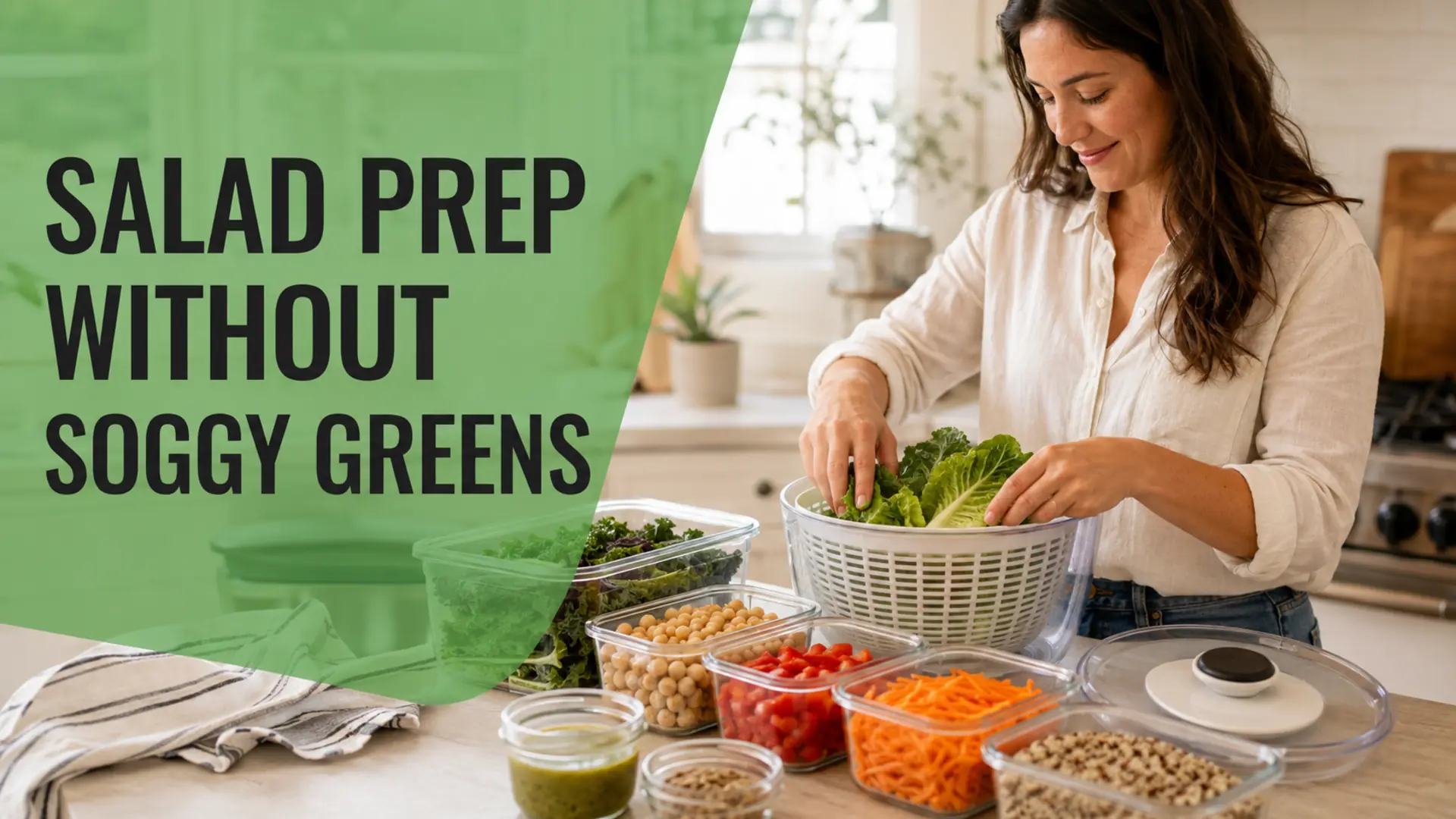
Salad prep without soggy greens starts before assembly: buy fresh ingredients in realistic quantities, rinse produce safely, remove excess surface moisture and keep wet components separate until serving. The best method depends on the greens, toppings, container and how soon the salad will be eaten.
No preparation method can guarantee that every salad will stay crisp for a fixed number of days. Quality and safety depend on ingredient condition, refrigerator temperature, handling and storage. Plan a shorter window for delicate greens and mixed salads containing highly perishable ingredients.
Shop for Salad Prep Without Soggy Greens
Choose greens that look fresh and suit the planned meal. Check for wilted edges, excess liquid, damaged leaves or packages that appear swollen or compromised. Buy only the quantity you can reasonably prepare and eat.
- Sturdier bases: cabbage, kale, romaine and Brussels sprouts often tolerate advance preparation better.
- More delicate bases: spring mixes, butter lettuce and tender baby greens may lose texture sooner.
- Whole versus pre-cut: choose according to convenience, condition, storage space and intended use.
- Package size: avoid oversized containers unless there is a clear plan for the remainder.
Sturdy does not mean indestructible, and delicate does not mean unusable. Match the ingredient to the schedule instead of assigning universal day limits.
Plan the Shopping Order and Trip Home
Shop shelf-stable items first and refrigerated or frozen foods later in the trip. Keep produce away from leaking raw meat, poultry or seafood packages. Go home promptly and refrigerate perishable foods rather than leaving them in a warm vehicle.
The article title emphasizes shopping order because ingredient condition matters, but store sequence alone cannot prevent sogginess. Selection, transport, preparation and storage all contribute to the result.
Wash Produce Safely
Follow package directions for products labelled ready-to-eat or pre-washed. For produce that requires washing, the FDA recommends rinsing it thoroughly under running water before preparation or eating. Do not use soap, detergent or commercial produce wash.
Review the current FDA produce-safety guidance for handling steps. Wash hands, use clean tools and keep ready-to-eat produce separate from raw animal foods.
Remove Surface Moisture Gently
Water left on leaves can dilute dressing and soften the salad. After rinsing, drain greens and use a clean salad spinner or clean towels to remove excess water. Avoid crushing tender leaves or packing them while visibly wet.
- Discard damaged outer leaves as appropriate.
- Rinse according to official guidance and package directions.
- Drain thoroughly.
- Spin or blot gently with clean materials.
- Allow remaining visible droplets to dry before packing.
“Bone dry” is unnecessary language and can encourage excessive handling. The practical aim is to remove free surface water while keeping the leaves intact.
Prepare Ingredients by Moisture Level
Think of salad ingredients in groups rather than forcing everything into one container. Dry greens and firm vegetables can often be prepped together. Juicy vegetables, fruit, pickles and dressing are more likely to release liquid. Crunchy toppings soften when exposed to moisture.
Dry base
Greens, shredded cabbage and other well-drained vegetables form the main container. Avoid compressing tender leaves tightly.
Moist ingredients
Cut tomatoes, fruit, pickled vegetables and other juicy ingredients can be packed separately or added shortly before eating. Cucumbers also release moisture after cutting, so separate storage may improve texture.
Dressings and sauces
Use a leak-resistant container and add dressing near serving time when maximum crispness matters. A jar can keep dressing at the bottom and greens above it, but only if it stays upright and the layers remain separated.
Crunchy toppings
Keep nuts, seeds, toasted grains and croutons dry and separate. Consider allergy needs and choking hazards when serving children or vulnerable individuals.
Handle Proteins and Cooked Grains Carefully
Cooked chicken, fish, eggs, tofu, beans and grains can make a salad more substantial, but they add food-safety and moisture considerations. Cool cooked ingredients promptly and refrigerate them before combining with greens. Do not place warm food directly on salad leaves.
Use current storage guidance for the specific ingredient rather than assuming the salad’s greens determine the whole container’s lifespan. The FoodSafety.gov cold-storage chart provides reference times for many perishable foods.
Choose a Container That Fits the Method
A container should be clean, food-safe, easy to close and large enough to avoid crushing the salad. Shallow containers can make components visible, while jars suit upright layering. Small separate containers are useful for dressing and toppings.
- Confirm that lids close securely.
- Leave enough room to toss the salad.
- Use a barrier or separate cup for dressing.
- Label containers when different allergies or dietary needs are involved.
- Do not reuse damaged containers that cannot be cleaned effectively.
Build Salads in the Right Sequence
For a standard meal-prep container, place dry greens in the main section and separate wet ingredients, dressing and crunchy toppings. For an upright jar, place dressing at the bottom only when firm ingredients can create a reliable buffer. Add delicate greens at the top without packing them too tightly.
There is no mandatory five-layer formula or universal dressing amount. Use enough separation to suit the recipe and container. If the jar may tip over during transport, use a separate dressing cup instead.
Create a Salad Shopping List With Ingredient Overlap
Choose components that can be used beyond salads. Cabbage may become a slaw or stir-fry, chickpeas can go into soup, cooked grains can support a bowl, and herbs can finish several meals. This reduces pressure to make an oversized batch.
- One or two salad bases
- Two or three firm vegetables
- One optional juicy ingredient
- One suitable protein source
- One grain or starchy component, if desired
- One dressing
- One crunchy topping
Use this guide to planning around seasonal produce when deciding which vegetables can appear in several meals.
Adjust Quantities to the Week
Count how many salads will actually be eaten at home or carried to work. Consider restaurant meals, schedule changes and other leftovers. Prepare fewer complete salads than the maximum possible, then keep extra components separate for flexible use.
If a recipe makes more than needed, use this process for scaling recipes and grocery quantities. It is often better to prepare a smaller fresh batch than to rely on a long crispness promise.
A Practical Salad-Prep Workflow
- Choose greens based on condition and the planned serving order.
- Buy refrigerated foods late in the shopping trip.
- Rinse produce as directed and remove excess moisture.
- Cool cooked ingredients before packing.
- Separate greens, wet ingredients, dressing and crunchy toppings.
- Refrigerate promptly in clean covered containers.
- Check each salad before eating and discard food that appears spoiled or has been stored unsafely.
Reliable salad prep without soggy greens comes from managing moisture and temperature, not from a guaranteed five-day formula. Shop for the condition and quantity you need, keep components separate where helpful, and assemble delicate ingredients closer to serving. These small choices improve both texture and flexibility.
For more waste-aware preparation habits, review these common meal-prep shopping mistakes.