
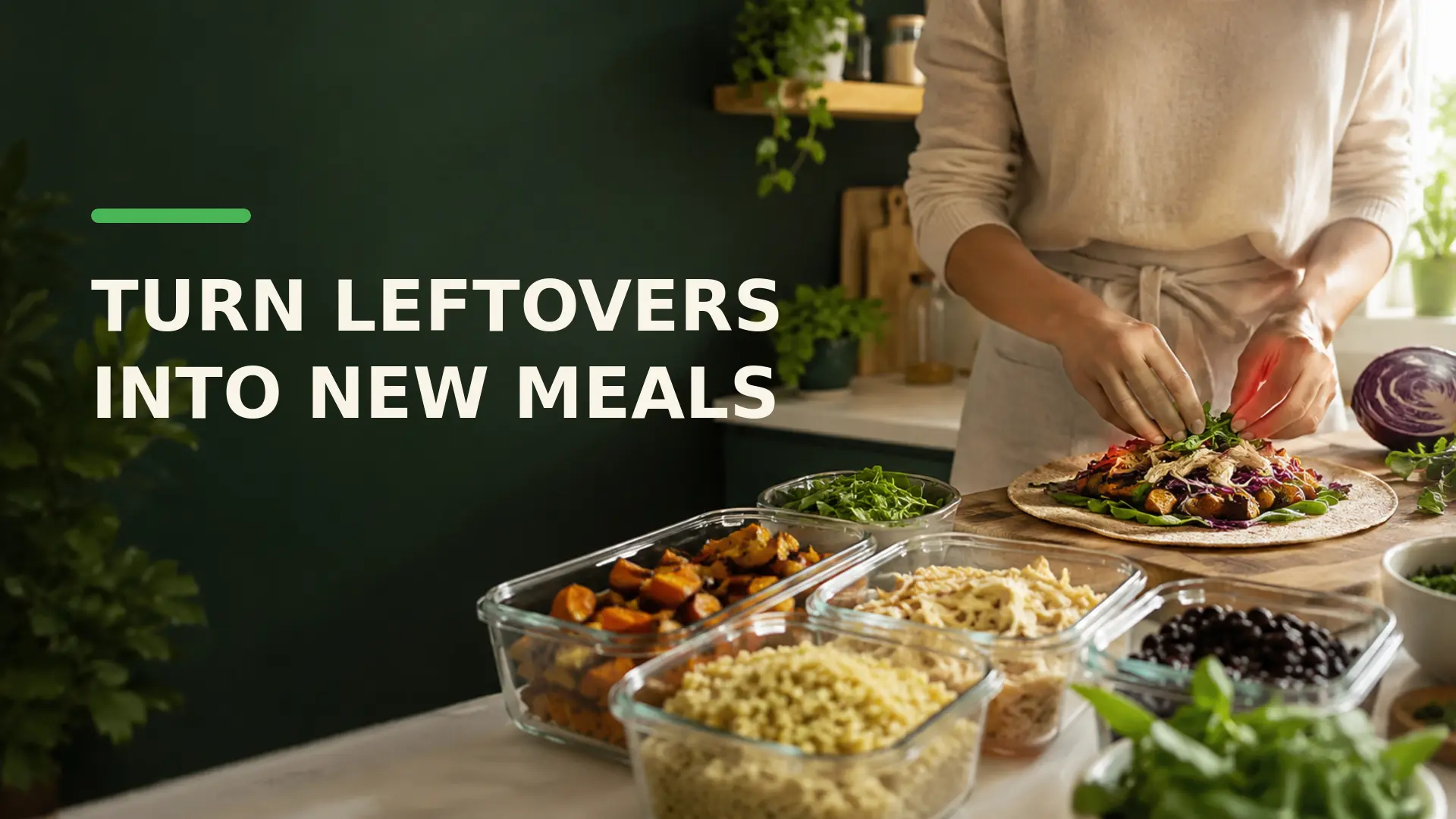
To repurpose leftovers into new meals, first confirm they were stored safely, then change the format, texture and flavour around them. Cooked grains can become a skillet meal, roasted vegetables can fill wraps or enrich soup, and cooked protein can be folded into tacos, salads or casseroles. The goal is a practical second meal—not disguising food that is no longer safe.
Repurpose leftovers safely before changing the recipe
Only reuse food that was cooked, cooled and stored safely. Label containers with the food and storage date, keep the refrigerator at a safe temperature, and use current public-health guidance for storage times. When the history of a perishable food is uncertain, the safest choice may be to discard it.
Do not taste food to test its safety. Visible mould, leaking packaging, unusual texture or other signs of spoilage are reasons to discard food, but the absence of obvious changes does not prove that mishandled food is safe. Refer to FoodSafety.gov’s cooking and storage charts or the food-safety authority where you live.
The four leftover transformation levers
- Change the format: move from a plated dinner to a wrap, bowl, soup, salad, omelette or baked dish.
- Change the texture: crisp soft ingredients, add crunchy vegetables, or loosen a dry component with broth or sauce.
- Change the flavour: use a compatible herb, spice, dressing or sauce while respecting allergies and dietary needs.
- Add a fresh element: brighten the meal with greens, cabbage, herbs, citrus or another suitable ingredient.
You do not need to change every lever. One clear change is often enough to make the meal feel different while keeping preparation simple.
Start with the ingredient, not a rigid recipe
Open the refrigerator before choosing dinner. Group usable leftovers into cooked grains or starches, vegetables, proteins, sauces and small flavour-building ingredients. Then select a format that can accommodate what is available.
This inventory-first approach is central to a practical waste-aware meal plan. It also prevents buying duplicate ingredients for a recipe when a workable substitute is already at home.
Ideas for leftover cooked grains
- Make a skillet meal with vegetables, egg, tofu or another cooked protein.
- Add rice, barley or quinoa to soup near the end of cooking.
- Use grains as the base of a warm bowl with beans, vegetables and dressing.
- Form suitable grains into patties with a binder and seasonings, then cook them thoroughly.
Rice requires particular attention to prompt cooling and cold storage. Reheat the portion you intend to eat and follow current local guidance rather than repeatedly warming and cooling the same container.
Ideas for leftover roasted vegetables
- Fold them into an omelette, frittata or savoury pancake.
- Blend suitable vegetables with broth for soup, adding liquid gradually for the desired texture.
- Add them to pasta sauce, curry, stew or a grain bowl.
- Chop them into a wrap or quesadilla with beans, cooked protein or cheese.
Keep seasoning flexible. Vegetables already coated in a strongly flavoured sauce may work better in a related dish than in a completely different flavour profile.
Ideas for leftover cooked protein
Slice or shred cooked chicken, meat, tofu or another protein and use it in wraps, soups, grain bowls or vegetable skillets. Add it late enough to avoid unnecessary overcooking while still reheating it safely. For legumes, try bean patties, pasta sauce, soup or a seasoned mash.
A small amount of protein can be extended with vegetables, beans or grains without claiming a fixed number of extra servings. Choose additions based on the dish, household needs and ingredients already available.
Ideas for leftover bread, pasta and potatoes
- Turn suitable bread into toast, croutons, crumbs or a savoury baked dish.
- Combine pasta with vegetables and dressing for a cold salad, or add sauce for a baked meal.
- Dice cooked potatoes for a skillet, add them to soup or mash them into patties.
- Use small amounts of several compatible starches in separate bowls rather than forcing them into one recipe.
Plan one intentional remix when batch cooking
Cook one adaptable component in a modest extra quantity, then assign it a second use before storing it. For example, roasted vegetables can accompany dinner and later fill a wrap; lentils can start in a grain bowl and later enrich tomato sauce. The batch-cooking guide for beginners explains how to prepare flexible components without creating more food than the household can use.
Store components separately when practical. Separate containers make it easier to change flavours and may protect textures better than combining the entire meal in advance.
Freeze a portion before leftover fatigue sets in
If a safe cooked food will not be used soon, freezing an appropriate portion can create distance between the original meal and its return. Cool and package food correctly, label it, and note that freezing pauses microbial growth but does not make mishandled food safe.
Use this freezer meal-prep checklist for foods that freeze well, labelling and thawing considerations.
A five-step leftover decision routine
- Verify how and when the food was stored.
- Choose the ingredient that needs to be used first.
- Select a different format that suits its texture and flavour.
- Add only the fresh ingredients needed to complete the meal.
- Reheat safely, serve a realistic portion and avoid another unnecessary storage cycle.
Know when not to repurpose food
Repurposing is not a rescue method for food held at unsafe temperatures, stored too long or affected by a recall. Date labels can also mean different things depending on the product and jurisdiction. The guide to understanding food date labels explains why storage history and product-specific guidance matter.
Bottom line
To repurpose leftovers successfully, begin with safety and then make one meaningful change to format, texture, seasoning or freshness. Plan the second use before storing food, buy only the missing ingredients and freeze suitable portions when plans change. A simple, safe remix is more useful than an elaborate transformation that creates additional waste.
Frequently Asked Questions
How long are cooked leftovers safe in the refrigerator?
FoodSafety.gov generally recommends using cooked leftovers within four days when refrigerated promptly at 40°F (4°C) or below. Storage time varies by food and handling. Label the date, and discard food left out beyond safe limits even if it smells normal.
Can I reheat leftovers more than once?
Repeated cooling and reheating increases handling and quality loss. Reheat only the portion needed and keep the rest refrigerated. Follow official time and temperature guidance; leftovers should generally reach 165°F (74°C) when reheated.
What leftovers should not be repurposed?
Do not reuse food with an unknown or unsafe storage history, damaged packaging, mold where the entire product should be discarded, or signs of spoilage. A new sauce or high heat cannot reliably make mishandled food safe.
How can leftover rice become a new meal?
Properly cooled and refrigerated rice can become a grain bowl, soup addition, stuffed vegetable, or fried-rice-style dish. Reheat thoroughly and add fresh vegetables, protein, and seasoning. Rice needs prompt cooling and safe storage because some bacteria can survive cooking.
What can I make with leftover roasted vegetables?
Blend them into soup or sauce, fold them into eggs, pasta, curry, tacos, sandwiches, or grain bowls, or serve them with a different dressing. Choose a format that suits their texture and buy only the missing ingredients.
How can leftover cooked meat be used safely?
Use safely stored cooked meat in tacos, soup, pasta, sandwiches, salads, casseroles, or grain bowls. Keep it refrigerated, avoid cross-contamination, and reheat when appropriate to official guidance. Do not extend storage simply by adding it to a new dish.
Can leftovers be frozen after sitting in the refrigerator?
Many can be frozen while still within their safe refrigerated period and good quality. Freezing pauses microbial growth but does not reset unsafe storage. Package portions, label the original cooking and freezing dates, and thaw safely.
How do I make leftovers taste different instead of repetitive?
Change the format, texture, flavor profile, and fresh elements. Roast a soft ingredient, add crunch, use a new sauce, or turn a plated meal into soup, wraps, or a bowl. Keep the transformation simple enough that it does not create more leftovers.
Should I plan leftovers before cooking?
Yes. Decide which component will be reused, reserve it before serving, and schedule the second meal. Neutral grains, roasted vegetables, and simply seasoned proteins are easier to transform. Freeze a portion immediately when the schedule is uncertain.
How can I track leftovers so they are not forgotten?
Use clear labeled containers, keep a visible “eat first” shelf, and add leftover meals to the digital list or calendar. Check the refrigerator before shopping. A simple inventory works better than opening several containers to identify them later.