
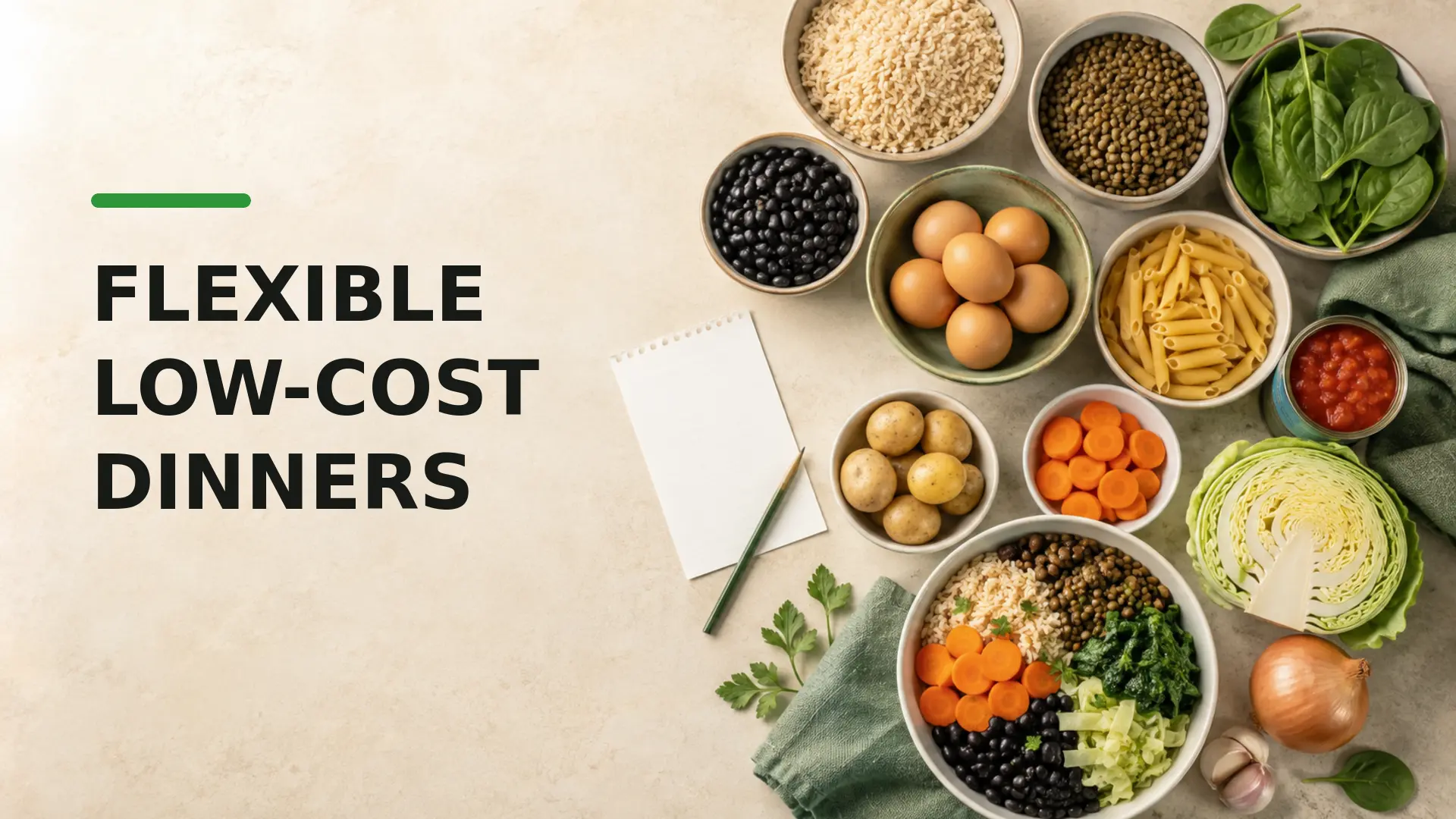
A $5 dinner blueprint is best treated as a flexible low-cost meal framework, not a universal price promise. Grocery prices, package sizes, appetites and currencies vary widely. The useful idea is to combine an affordable protein, a filling base, vegetables and a simple flavour builder, then calculate the cost from your own receipt.
How to use the $5 dinner blueprint realistically
Choose a target that fits your household and local prices. A dinner that exceeds five dollars can still be economical, especially if it serves more people or creates usable leftovers. Measure success by cost per serving, food used and whether the meal meets your household’s needs—not by forcing every dinner below one fixed number.
Cost per serving = total amount of ingredients used ÷ servings actually eaten
Count only the portion of each package used in the meal. If half a bag of rice goes into dinner, use half the bag’s purchase price in your calculation. Include small amounts of oil, sauces and seasonings when they materially affect the total.
The four-part low-cost dinner formula
- Protein or protein-rich component: lentils, beans, eggs, tofu, canned fish, poultry or another option that suits your diet and current prices.
- Filling base: rice, pasta, potatoes, flatbread, oats, noodles or another grain or starch.
- Vegetables: fresh, frozen or canned options selected for price, intended use and storage life.
- Flavour builder: onions, garlic, herbs, spices, tomato, citrus, cheese, stock or a sauce already in the kitchen.
The components can overlap. Beans add protein and carbohydrate; potatoes provide a filling base plus useful nutrients. The formula is a planning aid, not a rule about what a balanced meal must look like for everyone.
Start with a pantry and freezer check
Before shopping, identify ingredients that need to be used first. A partial bag of rice, half an onion or frozen vegetables can reduce what dinner requires from the store. This pantry audit checklist provides a quick inventory method.
Build the dinner around one or two available ingredients, then buy only the missing pieces. This prevents the common mistake of purchasing a complete recipe while usable food sits at home.
A flexible low-cost dinner shopping list
Choose from the list rather than buying every item:
- One or two proteins: dry or canned legumes, eggs, tofu, canned fish or a sale-priced meat option
- One base: rice, pasta, potatoes, tortillas or another locally affordable staple
- Two vegetables: one hardy or frozen option and one seasonal or sale item
- One flavour base: onion, garlic, canned tomatoes, herbs, spices or a versatile sauce
- One optional finishing item: yogurt, grated cheese, seeds, fresh herbs or citrus
Compare unit prices, but also choose a package size you can store and finish. The lowest unit price is not better value when the excess becomes waste.
Five adaptable dinner templates
Bean, vegetable and grain bowls
Combine cooked beans or lentils with rice or another grain, sautéed or roasted vegetables and a simple dressing. Change the seasonings to use what is already available.
Lentil tomato pasta
Add cooked lentils to a tomato-based pasta sauce with onion, garlic and any suitable vegetables. Adjust the ratio to match the amount of sauce and pasta your household uses.
Egg and vegetable skillet
Cook potatoes or leftover grains with vegetables, then add eggs. A frittata, scramble or skillet works; choose the method that fits your equipment and portions.
Flexible sheet-pan dinner
Roast a protein, potatoes or another firm base, and vegetables that cook at compatible rates. Cut dense vegetables smaller or give them a head start so every component finishes safely and evenly.
Cabbage, protein and rice skillet
Cook sliced cabbage with beans, tofu, eggs or a modest amount of meat and serve it with rice. If using ground meat, these methods for stretching ground meat offer flexible additions without promising a fixed yield.
Plan around actual local specials
Do not assume one protein or vegetable is always cheapest. Scan current flyers, identify one useful discount, and substitute it into the formula. Our guide to planning dinners around supermarket flyers shows how to check unit prices and avoid buying a promotion you cannot use.
Store brands, seasonal produce, frozen vegetables and larger packages can help, but none is automatically the best choice. Compare the final price, edible amount, storage needs and likely waste.
Use leftovers deliberately
Planned leftovers can lower the effective cost of tomorrow’s lunch, but only if they are cooled, stored and eaten safely. Label containers, refrigerate promptly and freeze portions you will not use soon. Follow current food-safety guidance for the ingredients and storage method you use.
Cooking rules that protect the budget
- Use ingredients at home before buying replacements.
- Calculate recipe cost from the portion used, not the full package price.
- Keep substitutions flexible when a planned ingredient is expensive or unavailable.
- Cook a realistic quantity for your household rather than an arbitrary serving count.
- Follow safe cooking and storage practices; a low price never compensates for unsafe food.
- Record meals that worked so they can become reliable future options.
When the target is too low
If the available budget cannot provide enough food, do not rely on smaller portions or an unnecessarily restrictive list. Adapt the target, use an emergency grocery list as a short-term planning tool, and look for reputable food-assistance resources in your area when needed.
Bottom line
The $5 dinner blueprint works best as a prompt to build meals from flexible components and verify the real cost yourself. Start with what you have, compare local prices, calculate cost per serving and protect nutrition, food safety and realistic portions. A repeatable affordable dinner is more useful than a headline price your local store cannot support.
For general healthy-eating guidance, consult Canada’s Food Guide or the public-health guidance where you live.
Frequently Asked Questions
Can a family dinner really cost $5?
It may in some locations when pantry ingredients are already available, but $5 is not a universal promise. Currency, household size, appetites, dietary needs, and local prices change the result. Use the blueprint to calculate a realistic local target.
What is the basic formula for a low-cost dinner?
Combine an affordable protein, a filling grain or starch, vegetables, and a simple flavor builder. Examples include beans with rice and cabbage, lentil tomato pasta, or eggs with potatoes and vegetables. Choose components your household will eat.
How do I calculate the total cost of a dinner recipe?
Price only the amount used from each ingredient, including oil, seasoning, and toppings, then add meaningful energy or special consumable costs. Divide by portions eaten. Record waste and leftovers so an apparent low cost reflects the real meal.
Which proteins work best for very cheap dinners?
Beans, lentils, split peas, eggs, tofu, canned fish, ground meat used in smaller amounts, and dairy may offer value depending on local prices and dietary needs. Compare cost per usable serving and consider preparation time and household acceptance.
How can I add vegetables without exceeding the meal budget?
Compare seasonal fresh, frozen, canned, and longer-lasting vegetables. Cabbage, carrots, onions, potatoes, canned tomatoes, and frozen mixed vegetables are often worth checking. Buy the form and quantity most likely to be used.
Do spices and sauces count toward a $5 dinner?
Yes. Price the portion used, even when the container serves many meals. Expensive garnishes and specialty sauces can quietly break the target. Build flavor with a small set of versatile seasonings already used across the weekly plan.
Can leftovers make the dinner cheaper per serving?
Yes, but only when they become safely eaten portions. Label and schedule them or freeze suitable servings promptly. Dividing by theoretical leftovers that later go to waste makes the cost per meal look better than it really is.
What if local prices make a $5 dinner impossible?
Raise the target and keep the same value principles: use food on hand, compare units, choose flexible ingredients, and reduce waste. Adequate food and dietary needs matter more than achieving a headline number from another location.
Are low-cost dinners nutritionally complete?
Nutrition depends on the full ingredients, portions, and overall eating pattern, not price alone. Include suitable variety across meals and follow local dietary guidance. Anyone with medical or specialized nutritional needs should seek qualified advice before major restrictions.
How can I avoid getting bored with cheap meals?
Reuse the same affordable components in different formats—bowls, soup, tacos, pasta, curry, or baked dishes—and rotate seasonings. Change one element at a time rather than buying separate specialty ingredients for every dinner.